Glass-walled suites perch on the slopes of Guadalest Valley, their ultra-modern architecture designed by the hoteliers themselves to frame the stark mountain scenery. This adults-only retreat of 35 rooms pairs a spa with sauna and jacuzzi against panoramic views, while the restaurant channels Slow Food principles through farm-to-table organic cooking. A contemplative escape for design-minded travelers seeking landscape immersion.
Where to Stay
A former Dominican convent turned boutique hotel, Hospes Amerigo retains its original stone walls and arched windows beneath a distinctly modern aesthetic—creamy whites offset by dark wood in 59 rooms designed to quiet the mind. The revelation comes on the roof: a swimming pool and terrace surveying Santa Bárbara castle and the city's blue-tiled domes. A top-floor spa with sauna and Family Suites accommodate both wellness seekers and those traveling with children.
Perched in the hills above Costa Blanca, this Bali-inspired retreat trades beachfront crowds for Mediterranean panoramas viewed through tropical gardens. Seven pools—indoor and seasonal outdoor—anchor the property, while an extensive spa complex features hammam, sauna, and jacuzzi. Families find dedicated infrastructure here: a children's pool and age-segmented clubs for four-to-sixteen-year-olds make it a rare luxury option that genuinely accommodates younger travelers.
An off-grid finca in the Costa Blanca hills, Caserío del Mirador operates as a working farmstead where Shetland ponies, pigs, and rabbits roam freely. Owners Sarah and Johnny Robinson raised three children on the property, and that lived experience shapes everything—from hillside playgrounds to comprehensive baby kit provisions. Parents can finally exhale over local wine while young ones explore the menagerie.
Where to Eat
Trained under Martín Berasategui, chef Joaquín Baeza brings that lineage's precision to this intimate one-Michelin-starred address. His modern Mediterranean menus pivot on Alicante's seasonal harvest—wild herbs he forages himself (lemon basil, mint, lemon verbena) and characterful local olive oils like Elipse Gourmet. The kitchen delivers remarkable intensity of flavor in an unfussy, personal setting run alongside sommelier Esther Castillo.
Chef Pablo Montoro orchestrates a theatrical dining progression through four immersive spaces—Black Tech, Hi Line, Cocoon Lab, and Geoda Verde—each with its own visual effects and signature aromas. The Mediterranean-focused tasting menus reveal playful creativity: trompe l'oeil vegetable sausages, onion royale with fermented skin jelly and crayfish. Even the ceramic tableware is crafted in-house, in the basement below.
Tasting menus reign supreme at this intimate Alicante address, where the chef channels formative years at the Hotel Ritz in Paris into inventive French-inflected fusion plates. Seasonal market produce anchors each course, shifting with the calendar and local harvests. Reservations prove essential — the compact dining room fills quickly with gastronomes seeking a refined, unhurried evening built around creative multicourse storytelling.
Two Dutch chefs helm this gastro-bar on Calle Navas, channeling Central European, French, and Spanish influences into a contemporary Mediterranean repertoire. Sauces play a starring role throughout the daily and seasonal menus, while the grill imparts smoky depth to many plates. The modern, convivial setting suits travelers seeking an international culinary perspective rooted in Alicante's coastal terroir.
Perched on the scenic climb toward Castillo de Santa Bárbara, this striking modern restaurant commands sweeping views across Alicante's rooftops and coastline. Local chef Dani Frías showcases his Mediterranean roots through two contemporary tasting menus—Ereta and Degus—built around pristine seafood. The signature caldereta de gamba roja, a refined take on traditional red shrimp stew, exemplifies his approach: regional soul filtered through precise modern technique.
Adjacent to La Lonja del Pescado, a striking historicist landmark now housing exhibitions, Monastrell channels Alicante's culinary heritage through a resolutely contemporary lens. Chef María José San Román sources raw ingredients from Terramón, her own vegetable garden nine miles distant, delivering Mediterranean plates of unadorned purity across three tasting menus. The marina-facing terrace adds a luminous backdrop to this celebration of regional tradition.
A gleaming seafood display greets diners at Nou Manolín—towers of red prawns, crayfish, and oysters signaling the kitchen's market-driven focus. The Michelin-recognized address offers identical menus whether seated at the ground-floor bar or beneath the designer ceiling upstairs: media-ración plates, local rice preparations, and a chocolate supermousse so light it borders on ethereal. Peak Alicante gastronomy, unapologetically coastal.
Among Alicante's most celebrated tapas addresses, Piripi draws crowds to its ground-floor bar where guests perch at the counter amid the bustle of a proper Spanish taberna. Upstairs, the mood shifts to a refined dining room serving traditional cuisine with particular strength in rice dishes. Fish and seafood arrive daily from the auctions at Dénia and Santa Pola, ensuring irreproachable freshness.
Generations of the same family have tended the fires at this Bib Gourmand address in the village of Xinorlet, where an open grill remains central to the kitchen's identity. Rice dishes dominate—particularly the memorable arroz with rabbit and snails—alongside regional classics like gachamiga. Behind a modest façade, the renovated dining room pairs contemporary lines with a glass-fronted wine cellar, honoring tradition without standing still.
Chef Rafael Molina runs his Bib Gourmand kitchen in the historic Benalúa district with an uncompromising philosophy: no freezers, no vacuum packs, only ingredients at their freshest. The menu shifts almost daily, built around Alicante's rice traditions—the pork rib and vegetable rice exemplifies this honest, technically precise approach. A compelling address for travelers seeking regional authenticity over culinary theatrics.
Frequently Asked Questions
What are the best neighborhoods to stay in Alicante?
+
The Centro district puts you within walking distance of the Explanada, the port, and the city's main cultural sites. Santa Cruz offers a quieter, more atmospheric setting at the foot of the castle. For beach access, the Playa de San Juan area — about fifteen minutes north — provides wider sand and a more resort-oriented environment with direct waterfront properties.
When is the best time to visit Alicante?
+
Late spring (May–June) and early autumn (September–October) offer warm temperatures without the peak summer crowds. The city enjoys over 300 days of sunshine annually. June brings the Hogueras de San Juan, a festival of bonfires and fireworks that transforms the city for a week — book well ahead if visiting then.
What local dishes should visitors try in Alicante?
+
Arroz a banda — rice cooked in rich fish stock, served with alioli — remains the signature dish. Gambas rojas (red prawns) from nearby Dénia are prized throughout Spain. For dessert, turrón from neighboring Jijona appears in both hard and soft varieties. The local Monastrell wines from Alicante DOP pair well with the region's seafood-heavy cuisine.
Nearby Destinations
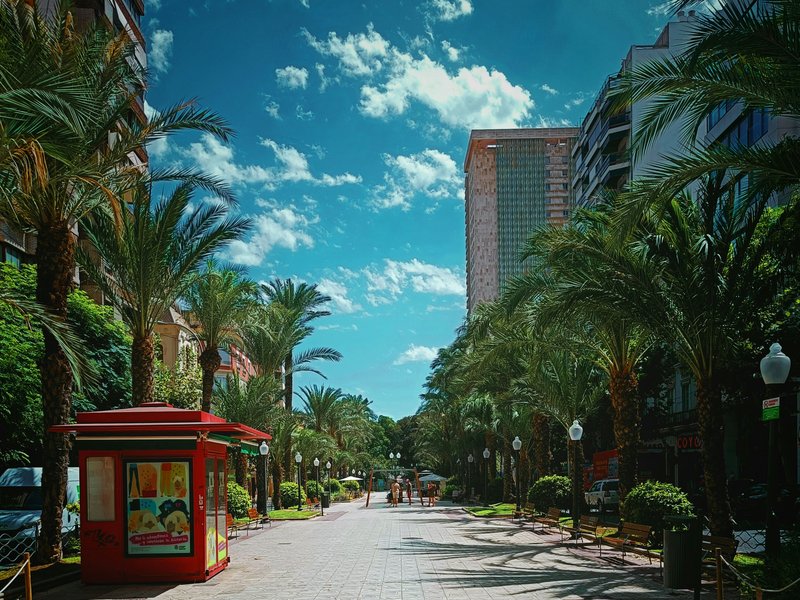
Explore SpainAlicante stretches along the Costa Blanca with the Castillo de Santa Bárbara watching over its old quarter. The Barrio de Santa Cruz climbs the hillside in whitewashed tiers, its narrow lanes dotted with bougainvillea and small plazas where neighbors gather at dusk. Below, the Explanada de España — a mosaic promenade of 6.6 million marble tiles — runs parallel to the yacht-filled marina, anchoring the city's social life between palm trees and café terraces.
The dining scene draws heavily from the surrounding huerta and the morning catch at the fish market. Rice dishes dominate menus: arroz a banda, caldero, and variations on paella cooked over wood fire. The Mercado Central, housed in a 1921 modernist hall, supplies the ingredients — rock octopus, red prawns from Dénia, tomatoes from El Campello. After dinner, the action shifts to El Barrio, where tapas bars spill onto cobblestones and conversation carries late into the warm Mediterranean nights.