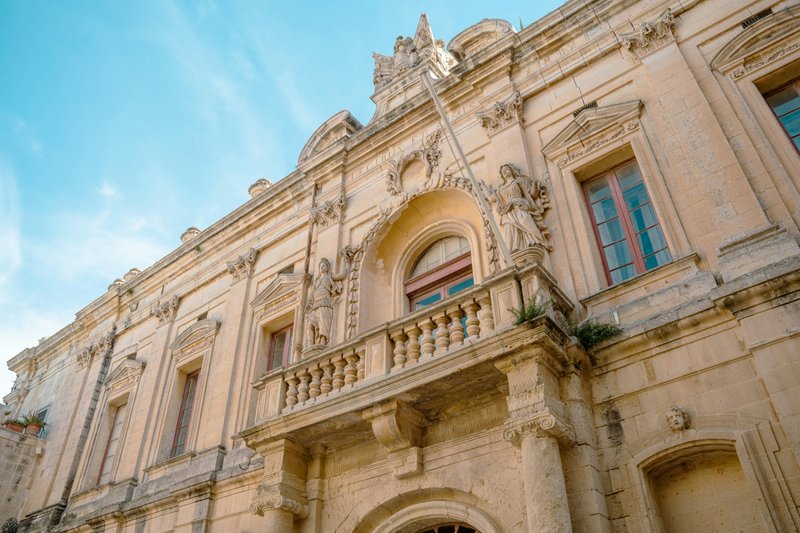
The sole hotel within Mdina's ancient bastion walls, this 17th-century palazzo immerses guests in the Silent City's aristocratic past through original antiques, period tapestries, and just 17 individually appointed rooms. The Michelin-starred de Mondion restaurant commands sweeping terrace views across the Maltese countryside, while wine tastings with international producers and guided food tours appeal to cultured travelers seeking substance over flash.
Where to Stay
A fourteenth-century palazzo once belonging to a Knight of Malta now houses just six suites behind Mdina's ancient walls. The restoration pairs limestone arches with herringbone floors and moody decorative wallpaper, striking a balance between medieval gravitas and contemporary flair. On the rooftop, a pool terrace with waterfall overlooks the skyline, while Lumiere Restaurant serves flame-grilled Mediterranean dishes at sunset. Below, afternoon tea unfolds in an ivy-draped courtyard.
Bold contemporary architecture and sweeping countryside panoramas have made the Verdala an instant sensation on the Maltese hotel scene. This adults-only retreat channels wellness through every detail: a holistic spa anchors the experience, while the kitchen delivers dishes that balance nutrition with genuine pleasure. The five-star property earns its reputation through sharp design and an atmosphere calibrated for restoration.
Where to Eat
Perched atop a 16th-century palazzo within Mdina's ancient bastion walls, this one-Michelin-starred table commands sweeping views across Malta's eastern plains to the distant coastline. Chef Clint Grech applies a lighter, French-inflected touch to Mediterranean cooking—his sea bass with pomelo and mushrooms drawing particular acclaim. An extensive international wine list and polished service complete the picture for evening occasions demanding both drama and refinement.
Descending a few steps from Rabat's St Paul's Square, diners enter an intimate subterranean world where a natural cave carved into the rock serves as the most dramatic setting. The exclusive Grotto Experience tasting menu unfolds within these ancient stone walls, while the plant-filled Garden Dining Room offers a brighter alternative. The kitchen reinterprets Maltese traditions through a modern creative lens, earning Michelin recognition.
Perched on Saqqajja Hill in Rabat, Root 81 earns its Michelin Plate through Mediterranean cooking that draws deeply from Maltese terroir. The kitchen demonstrates genuine craft with local ingredients, while the outdoor terrace provides an unhurried setting for long afternoons. A thoughtfully assembled wine and cocktail list rounds out meals that reward those seeking substance over spectacle.
Behind ancient stone walls on Saqqajja Hill, chef-patron Carl Zahra crafts contemporary Mediterranean plates rooted in Maltese terroir. His slow-cooked lamb shank—braised with white beans, chorizo, and Kalamata olives—exemplifies the kitchen's commitment to local ingredients treated with modern finesse. The tranquil dining room, awarded a Michelin Plate, suits unhurried evenings exploring Mdina's culinary depth.
A period building in Rabat's historic center houses this Michelin Plate restaurant, where diners choose between a covered inner courtyard and intimate upper-floor rooms just steps from Mdina's silent city walls. The kitchen draws on Maltese culinary traditions, then pushes them toward creative, elaborate compositions that reward adventurous palates seeking modern cuisine with genuine local roots.
Behind Mdina's fortified walls, where Malta's ancient Arab capital preserves its labyrinthine streets in amber stillness, The Medina occupies a historic building with considerable charm. The kitchen honors the island's position as a Mediterranean crossroads, presenting modern interpretations of Maltese classics alongside dishes from neighboring coastal cultures. Sharing plates—the 'casual bites'—suit the convivial spirit of the setting. Michelin Plate.
Frequently Asked Questions
Is Mdina actually as quiet as people say?
+
During midday tour-bus hours, the main street can feel crowded. By late afternoon, however, the coaches depart and the citadel empties. Evening visitors and overnight guests experience genuine stillness — the nickname 'Silent City' becomes accurate after sunset, when residents outnumber tourists and the only sounds are footsteps echoing off limestone walls.
What is the relationship between Mdina and Rabat?
+
They were once a single city. The Arabs built the walls dividing them in the 9th century, keeping the fortified citadel (Mdina) separate from the suburb (Rabat, meaning 'suburb' in Arabic). Today Rabat offers the everyday Maltese life — bakeries, markets, residential streets — that Mdina's museum-like preservation lacks.
Where should I eat in Mdina and Rabat?
+
Mdina's restaurants occupy historic buildings with atmospheric courtyards and rampart views, though menus tend toward Mediterranean-international. Rabat delivers more authentic local cooking at lower prices — seek out family-run establishments near St. Paul's Church serving fenkata (rabbit) and other Maltese standards. The pastizzi from Rabat's traditional bakeries remain among the island's best.
Nearby Destinations
Explore MaltaMalta's former capital sits on a rocky promontory at the island's geographic center, its honey-colored bastions visible for miles across the surrounding countryside. Within the walls, Mdina's population has dwindled to fewer than 300 residents, lending its narrow lanes an almost sepulchral quiet broken only by the clip of horse-drawn carriages on limestone paving. The Cathedral of St. Paul anchors the main square, its baroque facade hiding a much older Norman structure beneath.
Rabat sprawls beyond the city gates, its character entirely different — a working Maltese town where elderly men gather at pastizzerias and church bells mark the hours. The two settlements share more than a border: Roman catacombs run beneath both, and the grotto where St. Paul reportedly sheltered during his shipwreck draws pilgrims to Rabat's parish church. Dining options favor traditional Maltese fare — rabbit stew, ftira bread, local wines from Ta' Qali — served in converted medieval buildings or on terraces overlooking the Mtarfa valley.