A 1930s building that once housed the American embassy now operates as a twenty-room boutique hotel where period architecture meets bold contemporary design. The Presidential Suite commemorates a young John F. Kennedy's stay in Riga, while the intimate sixteen-seat JOHN Chef's Hall delivers refined gastronomy in an exclusive setting. Pet-friendly, with sauna facilities for unwinding after exploring the Latvian capital.
Where to Stay
Riga's first electrified hotel has occupied its prime position facing the National Opera House since 1878, and the Grand Hotel Kempinski maintains that theatrical sensibility today. The 141 rooms pair period grandeur with contemporary restraint, while Stage 22, the rooftop bar, draws a well-dressed local crowd for skyline views that stretch late into the night. Below, a spa with hammam, sauna, and indoor pool provides quieter pleasures.
Where to Eat
Twenty seats arranged across seven tables face the open kitchen at this Michelin-starred restaurant within the A22 Hotel, where chefs personally present each course of their seasonal Latvian tasting menu. The cooking balances modern technique with playful touches—pikeperch paired with dill and rhubarb, strawberries rendered three ways—while bespoke wine pairings reward those wise enough to book a room upstairs.
A red-brick former warehouse on Riga's outskirts houses this one-Michelin-starred table where chef Max Cekot controls every detail—furniture, crockery, and the surprise tasting menu itself. The evening unfolds theatrically: cocktails and amuse-bouches below, then a climb up a narrow spiral staircase to the dining room. Dishes layer sweet, savoury, and acidic notes with precision, sauces binding home-grown ingredients like petunia to langoustine and pumpkin.
An early twentieth-century art nouveau landmark in Riga's Old Town houses this seafood-focused restaurant where the day's catch—drawn from Baltic and northern waters—rests on ice at the room's center, presented to diners upon arrival. The kitchen excels with preparations like smoked eel paired with oysters, velouté, and spruce needles, while a spacious terrace and deep champagne list complete the Nordic-inflected experience.
Concealed within the base of the Zunda Towers skyscraper, this sleek steakhouse takes its bovine theme seriously—cowhides mounted as bulls adorn the walls. The kitchen sources prime cuts from Latvia, Spain, California, Japan, and Australia, preceded by house-cured charcuterie from the restaurant's own farm. Crispy thyme-scented potatoes prove essential, while a 300-bin cellar leans heavily on North American labels for ideal pairings.
A cocktail at the bar sets the tone before settling into this chic Riga brasserie's leather banquettes. The kitchen runs a confident French playbook—oysters, tartare, burrata—but the real draw is prime beef sourced from the Netherlands, UK, and USA, with sharing cuts commanding the most attention. Game dishes and seasonal specials round out a menu built for lingering evenings.
Chef-Owner Māris has built Ferma around Latvia's native bounty, with local beef, seasonal seafood, and herring preparations taking center stage on a concise à la carte menu. The sprawling terrace overlooks Riga's oldest park, while inside, a chef's table offers front-row views of the open kitchen's precise choreography. A well-priced lunch menu makes this modern cuisine accessible without compromising on craft.
Named for John F. Kennedy, who stayed at this address in 1939, JOHN occupies the A22 hotel with views across Viesturdārzs park. Original art nouveau details have been meticulously restored beneath a romantic rose-covered ceiling. The modern menu mines Latvia's larder—Arctic char, locally farmed ostrich—while the King crab with lemon aioli and pickled apples remains the signature to order.
Within a four-century-old building along Riga's cobbled Old Town lanes, Le Dome serves classical French cuisine inflected with Mediterranean warmth. The kitchen, led by a classically trained chef, applies modern finesse to seasonal ingredients, allowing their natural flavors to emerge through precise seasoning and careful balance. Summer dining moves to a rooftop terrace with views across the Daugava River.
Inside the Grand Palace Hotel, Seasons orchestrates its French cuisine around an unusual artistic conceit: each seasonal menu draws inspiration from master painters, resulting in plates as visually arresting as they are flavourful. Lightly smoked trout arrives with béarnaise sauce; the toffee pudding with buttermilk sorbet deserves attention. A bar filled with antiques and fine art sets the tone, while a premium wine list completes the gallery-like experience.
Named for the bronze figure crowning Riga's Freedom Monument, this unassuming Old Town address earns its Bib Gourmand through hearty Latvian classics served in generous portions. The kitchen excels at pelmeni, the beloved meat dumplings, alongside grey peas enriched with bacon and sour cream. Lithuanian cepelinai make welcome appearances, reflecting Baltic culinary kinship. Warm service and honest pricing make this essential for travelers seeking authentic regional fare.
Frequently Asked Questions
Which Riga neighborhoods offer the best dining experiences?
+
The Old Town concentrates traditional Latvian restaurants within historic cellars, while Miera iela in the Quiet Centre has emerged as the contemporary dining corridor. Kipsala across the river provides waterfront settings, and the streets surrounding the Central Market feature casual spots favored by locals for lunch.
What is the best season to visit Riga?
+
Late May through September brings white nights and outdoor terrace culture along the canal and Daugava riverfront. December transforms the Old Town into one of Europe's original Christmas market settings — the city claims to have erected the first decorated tree in 1510. Winter also means fewer crowds for exploring the Art Nouveau district and museum collections.
How does Riga's Art Nouveau heritage shape the city?
+
Over 800 Art Nouveau buildings survive, comprising roughly one-third of the city center. The Alberta iela and Elizabetes iela corridors display the most elaborate examples, many designed by Mikhail Eisenstein. Several of these structures now house boutique accommodations that preserve original staircases, tilework, and decorative elements within their interiors.
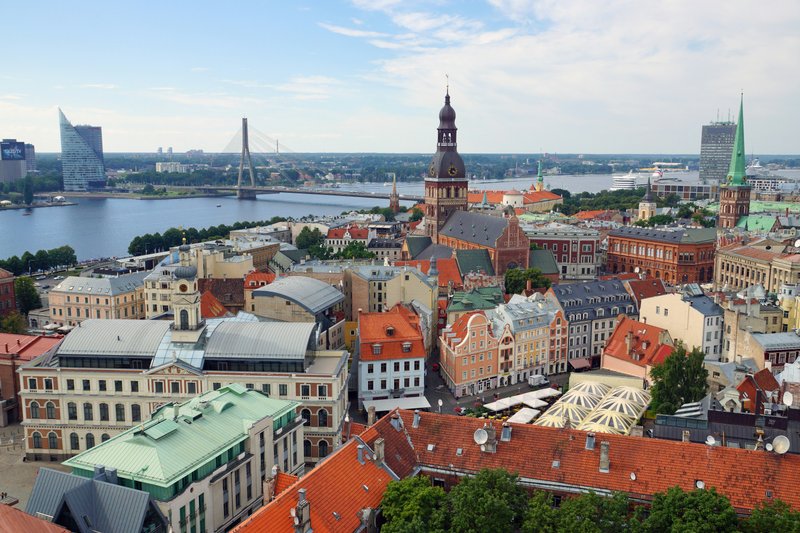
Riga's Old Town, a UNESCO World Heritage site, unfolds along cobblestone lanes where Gothic church spires punctuate the skyline and medieval merchant houses have been converted into intimate properties. The Alberta iela district holds the world's densest concentration of Jugendstil facades — sinuous ironwork, mythological reliefs, and geometric ornament that rewarded the city's turn-of-century prosperity. Across the Daugava River, the Kipsala neighborhood offers industrial-chic conversions and waterfront terraces facing the historic center.
The local table draws from Baltic and Nordic traditions: smoked fish from the Gulf of Riga, wild game from Latvian forests, dark rye bread that remains a national staple. The Central Market, housed in five repurposed Zeppelin hangars from the 1930s, supplies the city's kitchens with seasonal produce and serves as a morning ritual for chefs and residents alike. Evenings shift to the Miera iela corridor in the Quiet Centre, where wine bars and contemporary restaurants occupy converted apartment buildings along tree-lined streets.