A thirteenth-century pilgrim inn outside Siena, painstakingly restored by Danish owners who filled its luminous suites with Fortuny silks and Rubelli velvets against Scandinavian restraint. The 120-hectare organic estate—sheep, pigs, kitchen gardens—feeds the Michelin-starred Saporium and a trattoria built around an ancient oak. Guests harvest ingredients before cooking classes, while the spa laboratory crafts Seed to Skin treatments from estate botanicals using centuries-old protocols.
Where to Stay
A tenth-century tower anchors this Belmond estate where filmmaker Luchino Visconti once hosted legendary outdoor gatherings. The hilltop setting delivers sweeping Chianti views from a Bisazza-glass infinity pool, while Spa Essere occupies the vaulted stone wine cellar with Etruscan-inspired treatments using local rosemary and grape seeds. Summer evenings bring stargazing sessions in an ancient amphitheater, breakfast arrives in the restored limonaia, and three restaurants—including gastronomic Tosca—showcase regional flavors.
A fourteenth-century Chianti hamlet converted into a 52-room relais, Borgo Scopeto commands sweeping views toward Siena's medieval skyline. Original timbered ceilings anchor rooms decorated with contemporary flair, while La Tinaia restaurant occupies the old cellars, serving estate wines alongside dishes sourced from organic gardens. Families spread across interconnected suites; couples drift between Turkish bath, pools, and tennis courts—or borrow Vespas to chart the surrounding hills.
Siena's sole five-star property within the historic walls occupies Palazzo Gori, a seventeenth-century aristocratic residence where original frescoes, terracotta floors, and a grand ballroom remain meticulously preserved. Each of the 51 rooms bears individual character, with beamed or painted ceilings and period furnishings. Sapordovino restaurant operates beneath a striking glass-domed courtyard, while interconnecting suites accommodate families and pets are welcomed throughout.
Ten minutes from Siena's medieval towers, this adults-only farmhouse commands one of Tuscany's most coveted vantage points: the city skyline at golden hour, when terracotta roofs catch the fading light. Character-filled rooms in vibrant hues reflect the property's relaxed country spirit, while attentive hosts ensure every guest feels genuinely welcomed rather than merely accommodated.
Ten minutes from Siena's medieval towers, this golf and spa resort occupies a tranquil hamlet surrounded by extensive Tuscan grounds. Families find particular appeal here: suites accommodate up to four guests, while larger parties can reserve an entire building at Borgo Bagnaia. Children explore freely on complimentary bikes, and reception arranges tailored tours—making this a rare luxury property that genuinely welcomes all generations.
A 13th-century brick palazzo with its original wrought-iron façade now showcases contemporary Italian design: Pedrali armchairs, Artémide lighting, and furniture in Siena's heraldic black and white. Nine rooms reveal playful contrasts—Suite 3 places a bathtub within a glass-and-concrete cube, while others feature antique fountains converted to sinks. The candlelit enoteca and pet-friendly policy suit oenophiles and design devotees exploring Tuscany with four-legged companions.
Where to Eat
Chef Gaetano Trovato, recipient of the 2024 Mentor Chef Award, orchestrates a two-Michelin-star kitchen framed dramatically by yellow Siena marble. His seasonal menus celebrate Tuscan terroir—Chianina beef, Valdarno chicken, house-baked bread—while the modern iron-and-glass architecture ensures panoramic views from every table. A 7,000-label cellar spanning Italy, France, and beyond completes the experience for serious gastronomes.
Beneath a 13th-century portico at Borgo Santo Pietro, Saporium delivers one-starred dining rooted in estate agriculture. Executive chef Ariel Hagan and resident chef Luca Ottogalli craft modern, delicate plates from olive groves, orchards, and kitchen gardens steps away—think saddle of hare with cavolo nero and pear. The Green Star signals genuine sustainability, while 1,300 wine labels include the property's own elegant Pinot Nero.
Stone arches and weathered walls frame an interior where classic Tuscan architecture meets refined comfort—think deep armchairs and elegant sofas arranged for unhurried dining. The kitchen draws heavily from regional traditions, reworking familiar ingredients with contemporary precision. A Michelin Plate holder, Tosca suits travelers seeking an intimate meal steeped in local character, just beyond Siena's busier tables.
Medieval stone walls meet crisp contemporary design at this address in the Leocorno contrada, mere steps from Piazza del Campo. The kitchen honors Tuscan tradition through refined interpretations of regional meat and fish, while a handsome wine cellar—accessible to diners—deepens the experience. A smart choice for those seeking local roots expressed with modern polish.
Particolare di Siena scaled back to just ten tables in 2020, sharpening its focus on biodynamic produce from the restaurant's own kitchen garden and certified organic ingredients from local suppliers. The Italian contemporary cooking reflects this restraint—seasonal, precise, environmentally conscious. A Michelin Plate holder, it suits travelers seeking substance over spectacle in Tuscany's medieval heart.
Skiers descending the nearby slopes find refined sustenance at this wood-clad dining room within Gourmethotel Tenne Lodges. The kitchen delivers modern cuisine rooted in regional ingredients, inflected by the chef's globe-spanning experience. Before dinner, guests retreat to a stone wine cellar for aperitifs, browsing an extensive list that rewards exploration. The atmosphere balances alpine warmth with gastronomic ambition.
Beneath the medieval village of Abbadia Isola, vaulted cellars that once stored monastic wines now house this Bib Gourmand address. The kitchen works with fierce seasonality, turning Tuscan ingredients into straightforward, satisfying plates that justify the pilgrimage along the Via Francigena. A secluded terrace and thoughtfully assembled wine list reward those who venture beyond Siena's walls.
Occupying the storied premises of the former Arnolfo in Colle di Val d'Elsa's old town, Bis brings a young chef's contemporary vision to Tuscan ingredients. The concise menu pivots between meat and fish, with pigeon as the signature preparation. Excellent house-baked bread—including scarpetta specifically for mopping up Cinta Senese pork jus—and a tranquil terrace complete a refined yet unfussy dining experience.
Tucked away from Siena's tourist circuits, Campo Cedro rewards those who seek it out. Japanese chef Sugihara, drawing on two decades of Italian experience, crafts contemporary dishes where East meets Mediterranean—most notably a seafood risotto layered with fish, mussels, and shrimp, finished with crumbled seaweed and tomato paste. The Michelin Plate recognition confirms what locals already know: exceptional cooking at remarkably fair prices.
A nineteenth-century olive mill provides the atmospheric setting here, its original millstone and press still anchoring the vaulted dining room. The creative kitchen defies rustic expectations with technically precise plates—smoked spaghetti dressed in anchovy, capers, and black garlic cream; liver paired with sour cherries and pistachios. Summer brings tables to the piazza, where Tuscan evenings unfold over inventive cooking.
Frequently Asked Questions
Which neighborhoods are best for walking to Siena's main sights?
+
The Terzo di Città surrounds the Duomo and offers the densest concentration of museums and churches. The Terzo di Camollia, near the northern gate, provides a slightly quieter residential atmosphere while remaining within easy reach of the Campo. Both areas keep you inside the pedestrianized centro storico.
When does the Palio take place and how does it affect hotel availability?
+
The Palio runs twice yearly, on July 2nd and August 16th. Rooms book months in advance for these dates, and many properties enforce minimum stays. The days surrounding each race see the city at its most electric — trial races, neighborhood dinners in the streets, and processions in medieval costume.
Is Siena a practical base for exploring Tuscan wine country?
+
Chianti Classico begins just north of the city walls, while Montalcino and the Brunello zone lie about forty minutes south. San Gimignano sits a half-hour northwest. Staying in Siena offers urban comforts and cultural depth, with vineyards accessible as day trips by car or organized tour.
Nearby Destinations
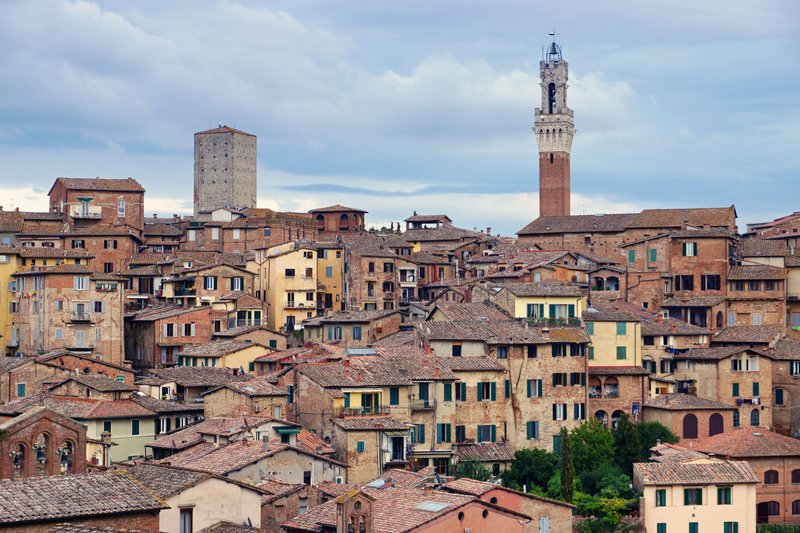
Explore ItalyThe shell-shaped Piazza del Campo anchors a city that has changed remarkably little since its medieval banking zenith. Siena's seventeen contrade — the neighborhood districts that compete in the famous Palio horse race — still define local identity, each with its own church, fountain, and fierce civic pride. The historic center, a UNESCO site since 1995, unfolds across three converging hills, its brick towers and Gothic palaces connected by steep vicoli that reward wandering on foot.
Hotel options cluster around the centro storico, with several converted palazzi offering rooms that look onto terracotta rooftops and the striped marble of the Duomo. Beyond the walls, the Chianti hills begin almost immediately — wine estates offer an alternative base with easier parking and swimming pools among the vines. Dining follows the Tuscan playbook: hand-rolled pici pasta, wild boar ragù, pecorino from the nearby crete senesi, and Brunello poured with appropriate reverence. Enoteche tucked into medieval cellars serve local vintages by the glass alongside plates of finocchiona and aged cheeses.