Skip to content

Romagna Hills

1. Magnolia

★★ Michelin

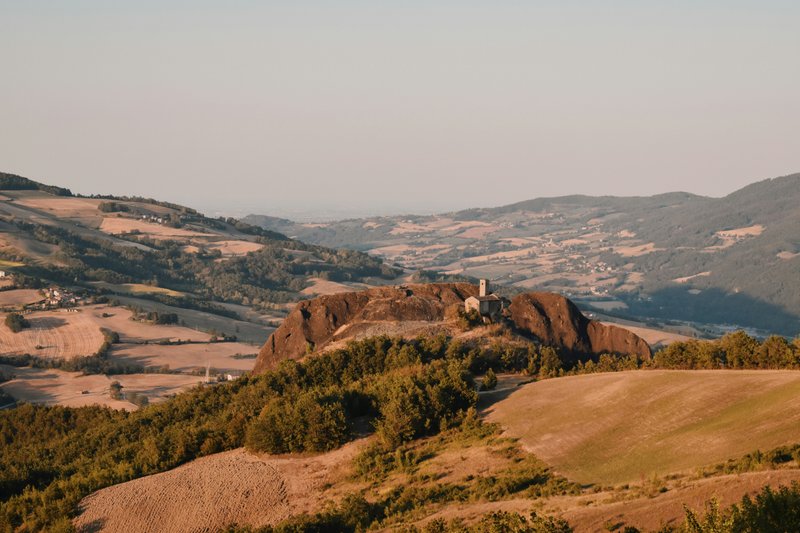
Chef Alberto Faccani holds two Michelin stars at this veranda-style dining room within an 18th-century villa, where floor-to-ceiling windows frame the Romagna hills rolling toward San Marino's distant peak. His contemporary seafood cuisine balances refined classics with restless experimentation—witness the signature cuttlefish paired with caviar and peas, finished with a delicate coconut milk sauce that captures his elegant, precise approach.

2. Da Gorini

★ Michelin

Young chef Gianluca Gorini anchors his Michelin-starred table in San Piero in Bagno's historic quarter, drawing deeply from Romagna's hilly terroir. Mushrooms, game, freshwater fish and Mora Romagnola suckling pig form the backbone of a menu that ventures into more exotic pairings. The signature barbecue grill lends lamb, eel and pigeon a smoky depth and textural contrast that defines the kitchen's inventive yet rooted approach.

3. Il Piastrino

★ Michelin· Green Star ●

Amid the Montefeltro hills, chef Riccardo Agostini demonstrates remarkable technical command while honoring Romagna's terroir. His signature "Collina" tasting menu traces an imaginative path from the Marecchia River springs across twelve hills to the Adriatic, each course rooted in seasonal, local ingredients. The one-starred table also holds a Green Star for sustainability, served in an intimate dining room where rustic warmth meets refined contemporary design.

4. Ristorante del Lago

★ Michelin

A winding mountain road climbs to Acquapartita, nearly 800 meters above the Romagna plains, where chef Simone Bravaccini holds a Michelin star for his fiercely local cooking. Wild boar arrives sliced tartare-style under juniper-scented mashed potatoes; forest mushrooms and trout follow the seasons. Brother Andrea commands a two-volume wine list of nearly 1,600 labels, with French bottles claiming an impressive forty percent of the collection.

5. Paolo Teverini

Michelin Selected

The Teverini name carries decades of culinary weight in Bagno di Romagna, a village wrapped in Emilian hills where foraging culture runs deep. The kitchen honors this terroir through its prized local mushrooms while steering toward a modern sensibility—seafood and vegetable-forward plates share the menu with regional classics. A table here rewards those seeking thoughtful, multi-tradition cooking in unhurried surroundings.

6. Terre Alte

Michelin Selected

Fish enthusiasts across the Romagna region know this address well. The kitchen takes a creative yet restrained approach to seafood, allowing impeccably fresh catches to speak through preparations rooted in tradition rather than technique. A panoramic terrace surveys the surrounding hills, while the cellar rewards champagne lovers with depth and breadth. The mood suits long, unhurried lunches.

7. Dei Cantoni

Bib Gourmand

Beneath the shadow of a Malatesta castle in the medieval hamlet of Longiano, Dei Cantoni earns its Bib Gourmand through creative interpretations of Romagna's larder. The kitchen shapes fresh pasta daily, turning out silky carbonara and robust amatriciana alongside more inventive seasonal plates. A bistronomic address for travelers seeking regional authenticity without formality, where craft and locality take precedence.

8. La Campanara

Bib Gourmand

A Bib Gourmand address outside Galeata, La Campanara occupies a hamlet setting where summer tables sit beside an old church, shaded by trees with views across the Romagna hills. The kitchen draws from three regional traditions—Romagna, Marche, and Tuscany—yielding dishes like lampredotto enriched with porcini. An adjoining shop stocks house-made preserves and pastas from the restaurant's own workshop.

9. Da Marchesi

Bib Gourmand

On a winding Apennine road between Romagna and the Marche, this Bib Gourmand trattoria draws travelers with its honest, ingredient-driven cooking. The kitchen excels at hand-rolled pasta—particularly the tortelloni dressed in melted butter and black truffle—alongside daily specials dictated by the season. Local fossa cheese from nearby Perticara adds pungent depth, earning the affection of Michelin inspectors who count it among their regional favourites.

10. La Baita

Bib Gourmand

Half delicatessen, half trattoria, La Baita operates from Faenza's historic center with the ease of an establishment that knows its craft. The Bib Gourmand holder stocks an impressive array of regional cheeses and cured meats, while the kitchen turns out handmade pasta and robust meat preparations rooted in Romagna tradition. Simple, informal, and rewarding for those who value substance over ceremony.

Frequently Asked Questions

What makes the Romagna Hills different from Tuscany for food-focused travel?

+

Romagna's culinary identity centers on filled pastas like cappelletti in brodo and passatelli, alongside the ubiquitous piadina flatbread. The region produces Sangiovese in a fresher, more fruit-forward style than Chianti. Prices remain significantly lower than Tuscany, and tourist infrastructure is minimal — expect Italian to be the primary language at most establishments.

Which towns in the Romagna Hills are worth visiting?

+

Bertinoro functions as an informal wine capital with its Enoteca Regionale. Brisighella, one of Italy's borghi più belli, produces prized olive oil in its hillside groves. Santarcangelo di Romagna maintains an artistic tradition with underground tuff caves and a vibrant Saturday market. Bagno di Romagna offers thermal waters that have drawn visitors since Roman times.

When is the best season to visit the Romagna Hills?

+

Late September through November brings grape harvest, truffle season, and the Festa dell'Ospitalità in Bertinoro. Spring offers wildflowers across the hills and fewer visitors. Summer can be hot but the elevation provides relief from coastal humidity, and many sagre (food festivals) fill village piazzas with outdoor dining through August.