The crystal-clear Santa Susanna canal flows past the dining room where the Serva family has spent six decades perfecting freshwater fish cookery. Their Michelin-starred kitchen transforms locally caught trout, tench, pike, and crayfish into refined preparations that challenge the primacy of seafood. Tables on a small wooden bridge span the water itself, while departing guests leave with wild herb extracts—a fragrant memento of Sabina's pristine waterways.
On a tranquil piazza tucked into Rieti's historic center, Bistrot delivers regional cooking with personality. The signature maltagliati pasta, dressed in the kitchen's proprietary sauce, anchors a menu that moves confidently between Sabine traditions and fresh seafood preparations. Michelin Plate-recognized, the intimate dining room rewards those seeking a romantic evening steeped in local flavor rather than spectacle.
Four generations of the same family have shaped this countryside restaurant into a guardian of Lazio's culinary heritage. The kitchen works exclusively with regional traditions, pairing dishes with local wines and estate olive oils while panoramic views stretch across the Sabine hills. Before leaving, visitors browse La Bottega delle Delizie for house-made preserves and oils—edible souvenirs of a meal rooted in terroir.
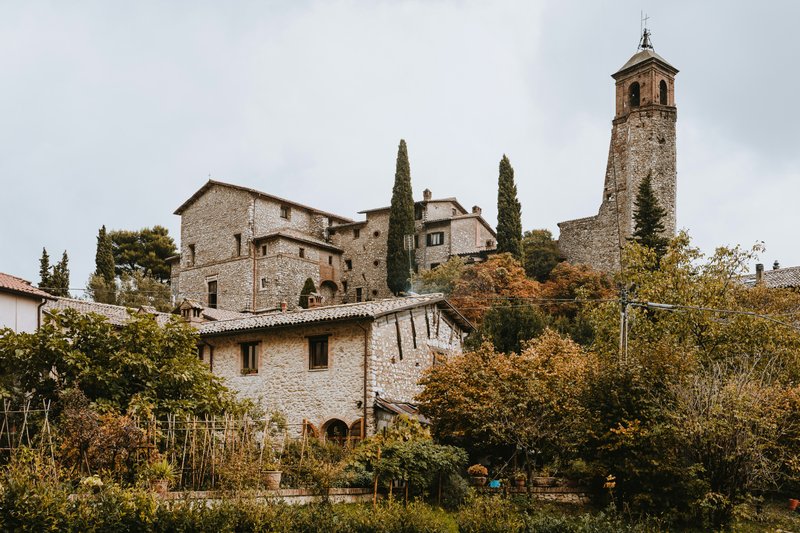
Chef Carlotta Delicato draws on cross-regional traditions at this medieval hilltop address in Contigliano, where minimalist stone-walled dining rooms open onto a terrace beneath the village church. Her deliberately unfussy cooking spotlights local ingredients—the spaghettone mare e lago with its delicate courgette brunoise exemplifies this restrained approach. The wine list favors small Lazio producers, including the aromatic Cabernet Sauvignon Masseria Baroni.
The Centofanti family has championed Abruzzo's land-based cuisine from this address for nearly four decades, serving a deliberately fish-free menu built on seasonal local ingredients. House-made chitarra pasta, regional charcuterie, and grilled porcini give way to a signature crème caramel scented with Navelli saffron. The wine cellar hides behind a door playfully labeled "sagrestia."
Frequently Asked Questions
How do I reach the Sabina region from Rome?
+
The Sabina lies approximately 80 kilometers northeast of Rome, accessible by car via the Via Salaria or A1 motorway. Regional trains connect Roma Tiburtina to Rieti in about two hours, though a car provides essential flexibility for exploring the scattered hilltop villages and rural estates throughout the territory.
When is the olive oil harvest season in Sabina?
+
The olive harvest runs from late October through December, when the hillsides come alive with nets spread beneath ancient trees and the frantoio mills press fresh oil. This period offers opportunities to visit working estates, witness traditional harvesting methods, and taste olio nuovo directly from the press—an experience that defines the agricultural calendar here.
Which villages are worth visiting beyond Rieti itself?
+
Farfa centers on its magnificent Benedictine abbey, founded in the sixth century and once among the most powerful monasteries in medieval Europe. Casperia preserves an atmospheric medieval core with narrow vicoli and panoramic views. Fara in Sabina offers both the Renaissance Palazzo Orsini and access to several prestigious olive oil estates in the surrounding countryside.
Nearby Destinations
Explore ItalyThe Sabina region unfolds northeast of Rome across a landscape of terraced olive groves, Romanesque abbeys, and hilltop borghi that time has largely forgotten. Rieti itself occupies a valley floor where the Velino River once formed a vast lake, drained by the Romans to create the fertile plain now planted with vegetables and orchards. The surrounding hills—Farfa, Fara in Sabina, Casperia—preserve their medieval street plans intact, stone houses climbing toward castle ruins and bell towers.
This is olive oil country, and the Sabina DOP designation marks one of Italy's oldest and most respected productions. Many of the region's accommodations operate within working agricultural estates, offering rooms in converted farmhouses surrounded by centuries-old trees. The thermal waters at Cotilia, where Roman emperors once bathed, still feed pools open to visitors. Rieti's centro storico retains its quiet provincial character, with morning markets beneath the porticos of Piazza Vittorio Emanuele II and evening passeggiata along the Velino's banks.