A 1775 palazzo turned ten-suite retreat, La Fiermontina reflects its owners' deep ties to the art world—the Fernand Léger suite hangs with the French modernist's works, while another bears Lady Astor's name. The John & Yoko Wellness suite anchors a small spa program extended by rooftop yoga sessions. Gardens, a swimming pool, and pet-friendly policies suit collectors and aesthetes exploring Baroque Lecce on foot.
Where to Stay
A 16th-century estate reimagined by architect Antonio Annicchiarico, La Fiermontina channels the arched grandeur of Pugliese masserie through a contemporary lens. Galleries of paintings and sculpture fill the interiors, while the on-site Fiermonte Museum honors the artistic legacy of the owners' grandmother. At Zèphyr, modern Puglian cuisine arrives amid courtyard citrus groves; cooking classes and peninsula tours extend the immersion for culturally curious travelers.
Directly facing Santa Croce's ornate Baroque façade, this 18th-century palazzo channels Belle Époque elegance through deco furnishings and contemporary art. Piano nobile rooms retain their original proportions—tall windows, soaring ceilings—while the top-floor suite adds a private terrace with jet pool. Morning rituals include breakfast accompanied by live harp or violin, setting a refined tone for exploring Lecce's limestone labyrinth on foot.
Stone archways and vivid frescoes survive intact within this fifteenth-century Dominican monastery, now housing eighteen rooms in the former monks' cells. High ceilings and poured concrete floors maintain an ascetic elegance, while private balconies open onto a photogenic central cloister. A seasonal outdoor pool occupies the historic grounds, and the tranquil garden rewards those seeking contemplative Pugliese retreats.
A Parisian architect-art collector couple transformed this 16th-century palace near Lecce's Baroque cathedral into a 12-room boutique retreat filled with hand-painted frescoes, antique marble sculptures, and murals by Roberto Ruspoli. Stone archways frame quiet courtyards, while a secret garden conceals a plunge pool. The rooftop terrace delivers striking views over the Roman amphitheater and the Duomo's bell tower; the spa includes sauna and jacuzzi.
Beneath the glass floors of this Baroque palazzo, ancient Roman ruins lie preserved—a striking foundation for nine rooms appointed with contemporary Italian furnishings and artworks from the owners' collection. Rough-hewn stone vaults frame marble bathrooms and lofty ceilings, while one suite conceals a private Turkish bath. The rooftop pool, intimate and adults-only, hosts breakfast and evening aperitifs overlooking Lecce's golden spires.
Four suites occupy this intimate Lecce address where the proprietors' personal art collection lines the walls and the owners themselves often greet arrivals. The connection to the original 300mila—a hybrid of restaurant, café, sushi bar, and pastry shop—brings culinary credentials, while a private dining room accommodates small groups under the hotelier's direct supervision. An outdoor pool, jacuzzi, and garden complete the guest house atmosphere.
A weathered stone farmhouse west of Lecce, this nine-room retreat pairs polished stone floors and vaulted ceilings with unexpected Belgian contemporary furniture—a deliberate contrast against the Mediterranean architecture. The intimate scale ensures personal attention, while the converted wine cellar now houses a spa complete with hammam, jacuzzi, and sauna. Ideal for design-minded travelers seeking Puglia's quieter countryside.
Art collector Anna Maria Enselmi converted this 14th-century residence—once home to Queen Maria d'Enghien of Naples—into a seven-room gallery hotel showcasing her personal collection. The Maria d'Enghien suite pairs Gio Ponti and Hans-Agne Jakobsson pieces with a David Tremlett fresco. Available exclusively as a full buyout, the property includes an outdoor pool, jacuzzi, and private garden for collectors seeking total immersion.
Where to Eat
Chef Solaika Marrocco, a Gallipoli native born in 1995, has earned a Michelin star for her visually striking contemporary cuisine at this Lecce address. Her eight-course menu reimagines Puglian traditions with inventive flair, while a seven-course surprise option showcases her creative range. Each dish arrives as a carefully composed study in regional ingredients and modern technique.
A compact dining room near Treporti draws seafood enthusiasts to Ai Do Campanili, where young, spirited staff present Venetian fish cookery with contemporary flourishes. Raw preparations share the menu with inventive modern plates, each dish reflecting the Adriatic's daily catch. The wine list warrants attention—bottles can be purchased to take home—making this intimate address a rewarding detour from nearby Lecce.
Dim lighting and an intimate scale make Duo a natural choice for romantic evenings in Lecce's historic center. The kitchen holds a Michelin Plate for its refined take on Puglian tradition—regional specialities arrive with personal, creative inflections that feel neither forced nor formulaic. Tasting menus allow the full arc of the chef's vision; a concise à la carte suits lighter appetites.
Mighty stone columns and vaulted ceilings from a 1442 Dominican monastery frame Gimmi's deliberately minimalist dining room, where a glass-walled wine cabinet draws the eye. The Mediterranean kitchen delivers precise compositions: palamita paired with fennel tarallo, burrata, and tarragon oil; grilled snapper enriched with saffron pistil extract and provolone mousse. Attentive service matches the cooking's ambition.
Frequently Asked Questions
When is the best season to visit Lecce?
+
Late spring (May–June) and early autumn (September–October) bring warm temperatures without the August crowds. The Festa di Sant'Oronzo in late August fills the city with processions and fireworks, though accommodation books months ahead.
Which beaches are accessible from Lecce?
+
The Adriatic coast lies thirty minutes east — Torre dell'Orso and the twin sea stacks of Le Due Sorelle draw swimmers to clear shallow waters. The Ionian side near Gallipoli offers sandier stretches and beach clubs, roughly forty-five minutes by car.
What local crafts and products should visitors look for?
+
Artisans still carve pietra leccese into decorative objects along Via Giuseppe Libertini. Cartapesta workshops produce elaborate papier-mâché figures, a tradition tied to the city's Baroque churches. For edibles, seek out Primitivo wines, Cellina di Nardò olive oil, and the dense local honey.
Nearby Destinations
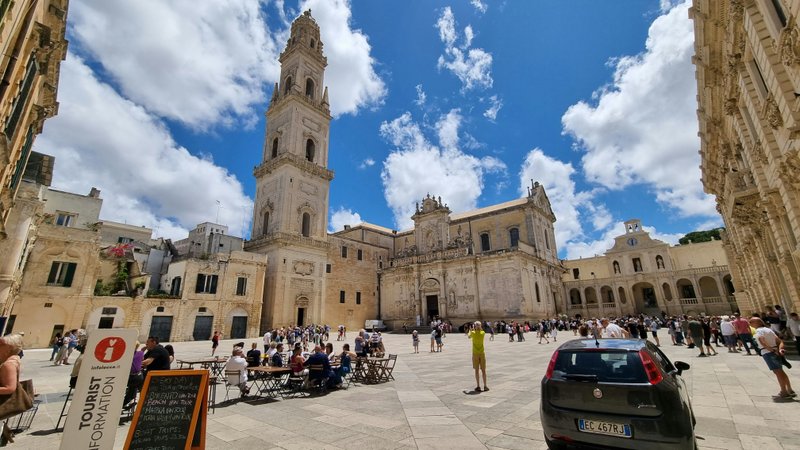
Explore ItalyThe centro storico unfolds as an open-air museum of seventeenth-century craftsmanship, where local pietra leccese — a honey-colored limestone — adorns every facade, balcony, and church portal. Via Libertini and Via Palmieri carve through this ornate quarter, their narrow passages opening onto Piazza del Duomo and the theatrical Basilica di Santa Croce. Beyond the walls, the quieter neighborhoods of San Lazzaro and Santa Rosa offer converted palazzi with interior courtyards shaded by citrus trees.
The aperitivo ritual begins at dusk across Piazza Sant'Oronzo, where café tables spill beneath the Roman amphitheater's exposed arches. Restaurants here favor Salentine cooking: friselle dressed with raw tomato, orecchiette with cime di rapa, rustico pastries stuffed with béchamel and mozzarella. The surrounding countryside — Martano, Corigliano d'Otranto, the olive groves stretching toward Gallipoli — supplies the oils, wines, and produce that define the local table.