Hexagonal pavilions from the 1960s scatter across Mediterranean gardens, their modernist geometry softened by pastel interiors and views of a white-sand bay. The 150-room resort delivers substance for families: the Bee Happy kids' club runs twelve hours daily with cooking classes and play areas, while parents explore four on-site restaurants or the full-service spa with hammam and jacuzzi.
Where to Stay
Born from the 1960s Costa Smeralda experiment in Mediterranean utopianism, Belmond Romazzino commands Rosemary Bay with an unrivaled coastal position. The whitewashed architecture channels traditional Sardinian village life, while shallow waters and manicured lawns create a natural playground for children. Families return across generations, drawn by connecting rooms, small villas, and a kids' club offering pizza-making and treasure hunts.
Forever linked to cinema through its starring role in The Spy Who Loved Me, this 1960s landmark commands one of the Emerald Coast's most photogenic bays. The architecture channels Mediterranean village whimsy, all terracotta and winding pathways, while the atmosphere retains a relaxed, flower-power spirit. Families find genuine welcome here: playgrounds, a daily kids' club, and summer football camps keep younger guests engaged.
A former farming estate converted into an intimate nineteen-suite retreat within a private natural park, Cascioni pairs rustic Sardinian architecture with contemporary comfort—each suite opens onto its own garden, patio, and freshwater pool. The restaurant Ulìa draws from an on-site organic garden for regional dishes, while the spa employs local olive oil and sea salt. The lounge pours Sardinian wines and craft beers for guests seeking slow-paced coastal immersion.
Traditional stone cottages scatter across five hectares of juniper and holm oak forest above San Pantaleo, each converted into refined accommodations with private verandas and stone-clad bathrooms—some with heated plunge pools. A spa carved into natural granite grottos offers Oriental treatments, while chef Luigi Bergeretto's Michelin-starred restaurant draws from the property's organic farm. Views sweep across the Gulf of Arzachena to the Maddalena archipelago.
Sprawling across 37 acres of cypress-shaded Mediterranean gardens, this beachfront retreat offers four secluded coves, two pools, and a lively beach club along the Costa Smeralda shoreline. Complimentary electric bikes wind through fragrant paths, while the rooftop bar delivers panoramic sunset views over signature cocktails made with local Sardinian spirits. The Pure Seven Spa emphasizes eco-friendly treatments and oceanfront yoga, appealing to wellness-minded families and couples alike.
Conceived in the 1960s as a fantastical Mediterranean fishing village, this sprawling resort rises from the rocky Sardinian coastline in a cascade of archways, towers, and sun-bleached terraces. Guests retreat to a secluded private beach or one of the Mediterranean's largest saltwater pools, while the Japanese-inspired Shiseido Spa and Nobu Matsuhisa's bay-view restaurant add polish to the old-money glamour. The 121 rooms, each uniquely decorated with hand-painted furniture and whimsical frescos, suit families and couples seeking coastal extravagance.
Luigi Vietti's 1960s masterwork emerges from granite outcrops above Liscia di Vacca bay, its rooftop gardens and terracotta accents dissolving boundaries between architecture and landscape. A saltwater pool carved into natural rock anchors the Mediterranean gardens, while the private golden beach lies steps away. Beneath a thatched roof, The Grill pairs Sardinian specialties with sweeping bay views. Villas with private pools suit families seeking seclusion ten minutes from Porto Cervo's boutiques.
Five lagoon-style pools cascade through the grounds, their waterfalls setting the rhythm for lazy Sardinian days before guests wander down to Piccolo Pevero's white sand, where dedicated beach attendants ensure effortless comfort. Rooms dressed in traditional tile floors and beamed ceilings keep the aesthetic grounded, while two restaurants showcase the island's seafood traditions. The Maddalena archipelago awaits by boat; Porto Cervo's boutiques, by foot.
Low-rise architecture with terracotta roofs and stucco walls anchors this beachfront five-star in classic Sardinian style. Seven pools cascade across the property, complementing direct access to Cala Granu beach. The isolated setting suits both couples seeking seclusion and families drawn to the multilingual kids' club, where daily activities range from creative workshops to cinema screenings. All-inclusive packages keep costs manageable for the Costa Smeralda.
Where to Eat
Perched on a panoramic terrace at 7Pines Sardinia, this one-Michelin-starred restaurant captures the drama of sunset over Baja Sardinia's coastline. Campanian chef Pasquale D'Ambrosio delivers modern Mediterranean cuisine on refined Sardinian porcelain—his signature fusilloni with black lemon butter, mussel water, and spirulina 'caviar' demonstrates precise balance between acidity and richness. Three tasting menus reward those seeking a contemplative evening meal.
Perched above Porto Cervo's marina, chef Italo Bassi's one-starred table delivers precise Mediterranean cooking in a setting of mirrors and golden accents. The signature sole—paired with mint-marinated zucchini and an ethereal beurre blanc foam—demonstrates his technical command, while à la carte options of oysters, caviar, and pristine raw seafood cater to purists. Two tasting menus offer either beloved classics or contemporary inventions.
Set back from Porto Rotondo's marina, Deste commands sweeping views from its terrace—the prime seat for dinner. The kitchen works a modern register, balancing meat and seafood with equal confidence. Beyond the wine list, tea and kombucha provide refreshing counterpoints, while the house-distilled gin deserves attention. A Michelin Plate address with genuine personality.
Phi Restaurant occupies the terrace of Phi Beach, the Costa Smeralda's most glamorous nightclub-lounge hybrid, where tables overlook the water and sunsets demand attention. A Lombardy chef brings contemporary precision to Italian and Mediterranean plates, balancing fashion-forward energy with serious cooking. The Michelin Plate distinction confirms the kitchen's ambition. Lunch offers lighter fare; dinner turns theatrical as the coastline fades to silhouette.
Two brothers helm this beloved Costa Smeralda address, where the ritual begins at the daily-changing fish display—guests select their catch before it heads to the kitchen for Mediterranean preparation. The informal dining room buzzes with regulars who return season after season, though the new terrace-lounge, commanding sweeping coastal views, has become the preferred setting for sunset aperitifs and lingering digestifs.
Perched above Cala di Volpe bay, Frades La Terrazza commands sweeping views of the Sardinian coastline from its panoramic terrace. The kitchen channels the island's culinary heritage through seafood-driven plates and regional specialities, while an extensive sparkling wine list complements the Mediterranean repertoire. Enthusiastic young staff set a convivial tone—ideal for lingering aperitifs as the sun dips toward the water.
Granite columns frame a terrace with sweeping views toward Porto Cervo and the Sardinian coastline, setting the stage for this family-run address now entering its fifth decade. The kitchen honors Gallura's culinary heritage through handmade chijusoni gnocchetti and inland flavors, while seafood dominates a menu rooted in classic preparations rather than contemporary flourishes.
Frequently Asked Questions
When is the Costa Smeralda season and when do hotels open?
+
The season runs from late June through early September, with peak activity in July and August. Most hotels and restaurants operate only during these months, closing entirely from October through May. A handful of properties extend their season into late September, but services diminish considerably after the first week.
How do visitors typically get around the Costa Smeralda?
+
A car is essential for exploring beyond Porto Cervo — the coastline stretches roughly twenty kilometers and public transport is minimal. Many hotels offer shuttle boats to nearby beaches. Olbia airport lies thirty kilometers south, connected by a winding coastal road that passes through the main resort areas.
What distinguishes Porto Cervo from other Costa Smeralda villages?
+
Porto Cervo functions as the commercial center, with designer boutiques, yacht services, and the majority of restaurants clustered around its marina and piazzetta. Other settlements like Cala di Volpe and Romazzino are quieter, organized around individual hotels rather than shared village infrastructure.
Nearby Destinations
Explore ItalyThe Costa Smeralda stretches along northeastern Sardinia's coastline, a planned resort development that Prince Karim Aga Khan IV transformed from scrubland into a Mediterranean retreat in the 1960s. Porto Cervo serves as its social and commercial hub — a purpose-built village of pink stucco and terracotta where yacht crews outnumber residents in summer. The architectural code established by Jacques Couelle still governs construction: no building may exceed the height of surrounding maquis, and exteriors must blend with the granite outcrops.
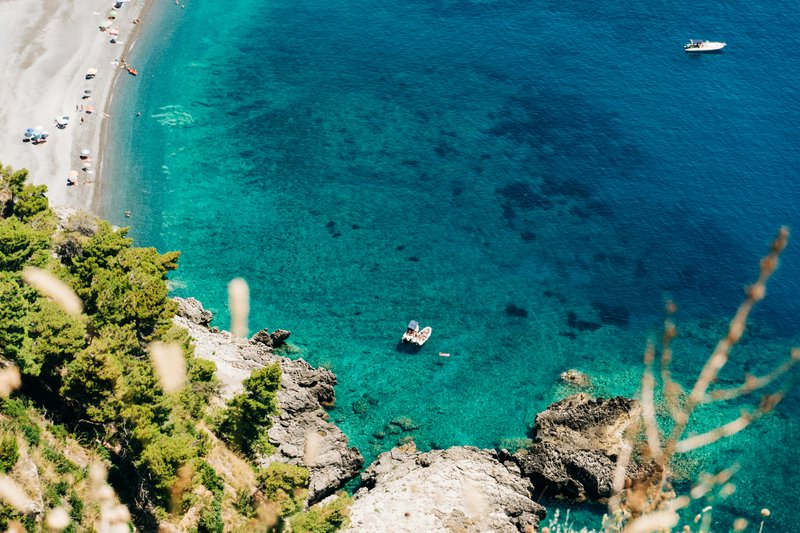
Beyond Porto Cervo, the coastline fragments into a succession of coves accessible by boat or unmarked footpaths. Cala di Volpe curves around a shallow bay where the water shifts from aquamarine to deep cobalt. Romazzino faces Mortorio island across a channel favored by day sailors. The dining scene ranges from beach clubs serving Sardinian fregola with clams to formal restaurants where Vermentino flows freely and the clientele arrives by tender. The season compresses into twelve weeks between late June and early September — outside this window, most establishments close entirely.