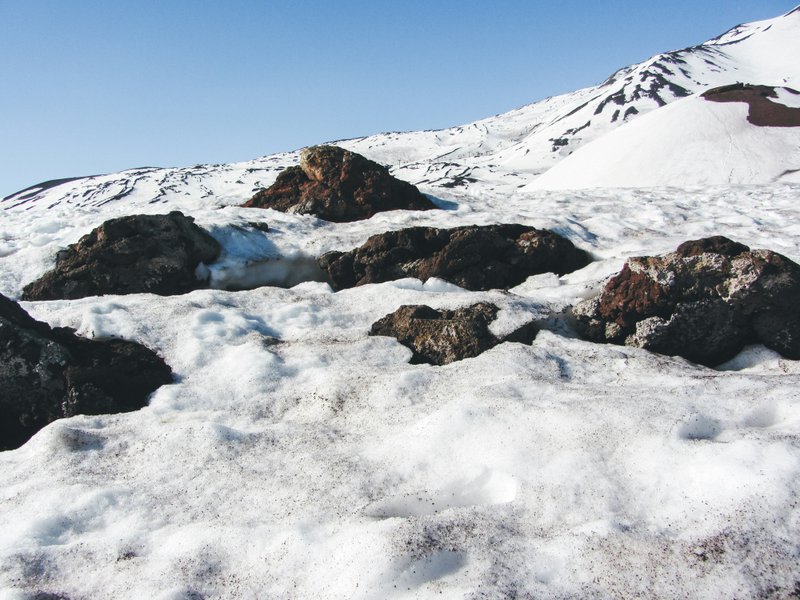
An 18th-century aristocratic villa sprawls across 25 hectares of volcanic terrain on Etna's lower slopes, its weathered stone facades overlooking both the crater and the sea. The estate's own vineyard supplies Locanda Nerello, a Slow Food restaurant where organic produce meets terrace dining above the terre nere. Cooking classes, wine tastings with estate bottles, and Ayurvedic treatments complete an immersion into fertile Sicilian terroir.
Where to Stay
An 18th-century aristocratic palazzo reimagined by a celebrated team of architects and artists, Asmundo di Gisira displays bold installations throughout its eleven rooms—a lifelike crocodile here, Gaetano Pesce's sculptural foot chair there—against backdrops of ornate ceilings and contemporary murals. This adults-only boutique sits at the edge of Catania's storied Pescheria market, with staff well-versed in local art and wine tours.
Eight contemporary lodges in avant-garde bio-architecture stand apart from a restored Sicilian farmhouse, its rough stone walls now framing a vast nursery garden of subtropical and Mediterranean species. With only 26 units, intimacy prevails—whether poolside gazing at Mount Etna and the Ionian Sea or at the restaurant savoring contemporary Sicilian cuisine paired with local wines. Ideal for travelers seeking agricultural heritage with modernist design.
An 18th-century Baroque palace turned minimalist retreat, this intimate twelve-room property celebrates Italian cinema through suites named after classics like Cinema Paradiso and Il Postino, their walls animated by pop art murals. Geometric interiors give way to theatrical touches—round beds dressed in red velvet, a Turkish bath for unwinding. The rooftop terrace delivers sunset aperitivi with the Cathedral of Santa Ágata as backdrop.
Perched directly on Mount Etna's volcanic slopes, this 24-room retreat pairs minimalist design—floating beds, Arco lamps, hand-painted Sicilian tiles—with the drama of an active UNESCO landmark. At restaurant Le Dodici Fontane, al fresco tables overlook vineyards stretching toward the crater. A Turkish bath and seasonal pool fill the gardens, while private beach access near Taormina extends the experience to the coast.
A retired winery transformed into a sixteen-suite retreat, Zash lets guests sleep within restored stone cellars or in glass-walled rooms surrounded by citrus-framed vineyards. The manor house offers views stretching from Mount Etna to the sea, while a small spa with sauna and jacuzzi complements the outdoor pool. Evening finds travelers on the wide terrace, local Nero d'Avola in hand.
A former rural retreat of the Marquises of San Giuliano, this 18th-century estate has been thoughtfully reimagined into a 15-room boutique hotel. The old wine press, carriage shed, and stables now house elegant accommodations where traditional Sicilian materials meet contemporary design. A wellness circuit with Turkish bath, sauna, and jacuzzi complements the outdoor pool, while the restaurant champions regional plant-based cuisine.
Where to Eat
Alessandro Ingiulla earned his Michelin star with a mature command of Sicilian produce—olive oil, vegetables, and fruit harvested from his own garden—presented through inventive contemporary preparations. The setting, a restored warehouse hosting rotating art exhibitions, matches the cuisine's ambition. Guests can opt for the chef's table within the working kitchen or dine in a cellar lined with Sicilian vintages, guided by sommelier Andrea's astute selections.
The winding drive up Mount Etna's slopes delivers guests to Dodici Fontane, where the volcanic terroir shapes every plate. The kitchen works exclusively with Sicilian ingredients, crafting tasting menus that oscillate between elaborate meat and fish preparations. The estate produces its own wine and olive oil, complementing a cellar deep in local Etna labels—bottles born from the same ashen soil visible through the dining room windows.
Nunzio Fisichella's moody Etna paintings line the walls of this Michelin-starred address between Catania's historic palazzi. The kitchen navigates Italian tradition through a Sicilian lens—grilled quail emerges with textbook precision, while the signature Minnuzza di Sant'Agata pairs stuffed cuttlefish with potato foam and candied lemon. A knowledgeable sommelier steers diners toward aged Marsala from Intorcia to close.
On the slopes of Mount Etna, this one-Michelin-starred table specializes in grilled meats through four distinct tasting menus, including a rotating chef's inspiration selection. The kitchen demonstrates particular finesse with its creamy Provola risotto layered with lemon, wild herbs, and black truffle. A dedicated seafood menu offers an alternative, while desserts—notably a lemon finale—provide elegant closure to considered Sicilian cooking.
Chef Salvo's return to Sicily after training with Giorgio Locatelli in London shapes Alloro's bold, travel-inflected cooking. From a small baroque-quarter dining room—one side framing the bell tower of the Basilica Collegiata—dishes like 'Ti Porto alle Bahamas' and 'Mai-Thai' channel memories of distant shores through striking, confident flavors. The playful 'tiratisù' dessert closes meals with characteristic wit. Michelin plate.
The name translates as "fish and seafood butcher's"—a fitting declaration for a kitchen devoted to cured and seasoned seafood preparations. Chef Alberto Angiolucci works from an open kitchen in a pared-back dining room, offering three tasting menus alongside à la carte. The smartest approach here is surrendering choice entirely, letting the young chef's creative instincts guide the meal from first course to last.
Behind the minimalist facade of a historic Catanian building, chef Manuel Tropea has emerged as one of the city's most compelling culinary voices. His approach anchors itself in local tradition—dishes like 'L'Asina e la lattuga' showcase Catania's gastronomic heritage through a deeply personal lens. The surprise tasting menu draws from Tropea's own memories, delivering unexpected contrasts beneath ornate original ceilings.
On Mount Etna's fertile slopes, chef Seby Sorbello draws from the volcanic terroir's wild herbs and the Ionic coast's maritime larder to compose dishes of layered complexity. The restaurant's name—Sabir, the old lingua franca of Mediterranean traders—signals his approach: a dialogue between mountain and sea, expressed through tasting menus or à la carte selections that shift with the seasons.
A former barrel warehouse down Riposto's narrow alleyways houses chef Massimiliano Vasta's self-taught kitchen, where Sicilian traditions receive vibrant contemporary treatment. His signature Zuppa di Pietro reimagines his father's beloved recipe, while tasting menus and à la carte options balance meat and seafood with equal conviction. The family estate supplies exceptional olive oil; the cellar, an impressive depth of regional and Italian wines.
A monumental 16th-century wine press dominates the dining room at iPalici, setting a theatrical stage for cuisine that draws deeply from Sicilian soil. Within the Relais San Giuliano, beneath Etna's shadow, the kitchen channels local vegetables and island traditions through a refined contemporary lens. The historic building's inner courtyards reveal unexpected grandeur behind an unassuming facade—a fitting metaphor for the quietly accomplished cooking within.
What to Do
Volcanic energy infuses every treatment at this wellness retreat within Etna National Park's fertile slopes. Guests receive personalized massages in private villas or dedicated spa spaces, using natural products drawn from the surrounding estate. Morning yoga unfolds against the smoking crater's silhouette, while meditation sessions beneath ancient olive trees and guided walks through 25 hectares of Mediterranean terrain complete a distinctly Sicilian approach to restoration.
Frequently Asked Questions
What is the best area to stay in Catania for exploring Mount Etna?
+
The villages along the eastern slope — Zafferana Etnea, Milo, and Sant'Alfio — position you closest to the main hiking routes and cable car access at Rifugio Sapienza. These towns sit at cooler elevations surrounded by vineyards and offer a quiet alternative to the city. For those preferring urban comforts with volcano excursions, central Catania provides easy access to tour operators departing daily from Piazza Stesicoro.
When is the best time to visit Catania and Mount Etna?
+
Late spring and early autumn deliver mild temperatures ideal for both city exploration and mountain trekking. May and June see wildflowers blooming on Etna's slopes, while September and October bring the grape harvest and food festivals. Summer crowds peak in August when Sicilians take their holidays, though coastal breezes temper the heat. Winter brings snow to Etna's upper reaches, opening a small ski season from December through March.
What local dishes should visitors try in Catania?
+
Pasta alla Norma — named for Bellini's opera — combines eggplant, tomato, basil, and salted ricotta in the city's signature primo. Street food thrives here: arancini filled with ragù or butter and ham, cartocciate pastries stuffed with mozzarella, and granita served with warm brioche for breakfast. Seek out horse meat at traditional macellerie, grilled as steaks or minced into polpette. Desserts lean heavily on pistachios and almonds, from cassata to cannoli filled to order.
Nearby Destinations
Explore ItalyCatania spreads beneath Europe's tallest active volcano in a dramatic sweep of black lava stone and white limestone. The city's baroque centro storico, rebuilt after the 1693 earthquake, radiates from Piazza del Duomo where the elephant fountain — the city's symbol — presides over daily life. Via Etnea cuts north through the grid, lined with nineteenth-century palazzi whose wrought-iron balconies overlook the evening passeggiata. Morning markets at La Pescheria spill down Roman-era steps in controlled chaos, fishmongers shouting over mounds of swordfish and sea urchins.
The volcanic terroir shapes everything here. Restaurants serve dishes built on Etna's bounty — pistachios from Bronte, wild mushrooms from the mountain's chestnut forests, wines from vineyards planted in ash-black soil. The port district of San Berillo has transformed from its gritty past into a pocket of cocktail bars and contemporary trattorias. Beyond the city, the strada dell'Etna winds through villages like Zafferana and Nicolosi, where country estates offer proximity to hiking trails and the silent drama of lava fields stretching toward the summit craters.