Iceland's first official five-star hotel commands the harbour waterfront, its charred timber facade echoing volcanic terrain. Roman and Williams dressed the interiors with stacked lava-rock totems and Northern Lights-inspired digital art, while floor-to-ceiling windows frame Mount Esja and the Harpa concert hall. Chef Gunnar Karl Gíslason's Tides restaurant showcases inventive Icelandic plates; upstairs, The Roof terrace bar delivers panoramic sundowners above the city.
Where to Stay
Two restored heritage buildings on Reykjavik's harbour shelter just seven generously proportioned suites, each finished with plush textiles and contemporary Scandinavian lines. The intimate scale allows for private service on request, while pull-out sofas and cot availability make the residence equally practical for families of four or solo visitors seeking a refined waterfront base.
Housed in a former Social Democratic party headquarters, this 38-room boutique pioneer brings unapologetic minimalism to Reykjavik's coolest postal code. Black-and-white interiors give way to a glass-roofed lounge displaying permanent murals, while the 101 Gallery rotates work by leading Icelandic artists. Open-plan bathrooms feature Balmain amenities and occasional claw-foot tubs; downstairs, a spa with jacuzzi and steam rooms awaits. Pet-friendly and effortlessly urbane.
Guðjón Samúelsson designed this 1917 Art Nouveau landmark before creating Reykjavik's iconic Hallgrímskirkja church, and his architectural vision still defines the 45-room boutique. Century-old details meet contemporary Scandinavian design throughout, while a spa with sauna and jacuzzi offers respite from Nordic explorations. Downstairs, Apotek Kitchen + Bar serves Argentine grill fare, its bartenders mixing cocktails in white pharmacists' coats—a playful nod to the building's heritage.
Icelandic architect duo Minarc shaped this 18-room boutique hotel on Laugavegur with futuristic lines tempered by Scandinavian restraint—a design language first proven at sister property ION Adventure Hotel near Thingvellir. Suites reward upgrades with private saunas and city panoramas. Downstairs, the independent Sümac brasserie brings Middle Eastern and North African flavors to downtown Reykjavik's busiest stretch.
A 1900 landmark beside Iceland's parliament, Kvosin Downtown Hotel inhabits a historic shell filled with modernist and contemporary furnishings that feel more stylish city apartment than stuffy luxury retreat. The 24 rooms range from Normal to Biggest, all bright and spacious with understated Nordic design. Downstairs, an award-winning cocktail bar and Vinbarinn wine bar fuel evening explorations of Reykjavik's compact center.
A 1940s industrial building transformed by Icelandic-born designer Gulla Jónsdóttir into a minimalist monochrome retreat, Thingholt delivers 52 rooms steps from Laugavegur's shops and Austurvöllur Square. The full-service spa with sauna and jacuzzi provides genuine respite after city exploration, while families find welcome touches like board games and colouring books—a polished four-star boutique suited to design-minded travelers.
Laugavegur's boutique three-storey address delivers a polished urban base for exploring Reykjavik on foot. Behind an understated façade, rooms prove smart and well-appointed, while the on-site bar draws both guests and locals. Family configurations with king beds and sofa beds suit traveling households, making Alda a practical choice for style-conscious visitors who prefer central access over secluded retreat.
Black Pearl delivers apartment-style luxury near Reykjavik's harbour through chic, minimalist suites equipped with full kitchens and coffee machines. The spacious layouts accommodate up to six guests, making extended family stays practical without sacrificing design sensibility. Thoughtful touches like children's bath amenities and complimentary cribs signal genuine family-friendliness, while optional breakfast service and grocery shopping add hotel convenience to residential freedom.
Six interconnected heritage buildings form this downtown Reykjavik address, where design-forward public spaces set the tone for well-appointed rooms that balance historic character with contemporary comfort. The on-site restaurant delivers reliable dining, while a 24-hour fitness area suits active travelers. Families benefit from connecting rooms, babysitting services, and children's menus—practical touches within a polished urban setting.
Where to Eat
A spiral staircase delivers diners into the open kitchen at Dill, where chefs personally present each course with infectious enthusiasm. Holding one Michelin star and a Green Star for environmental commitment, the kitchen practices restraint rather than spectacle—free-range Icelandic pork cheek arrives with warm spiced cream, belly paired with pine and mushrooms. Clever combinations coax depth from humble Nordic ingredients without unnecessary flourish.
Behind a brass lion's-head doorbell on Laugavegur, a four-hour gastronomic ritual unfolds across just seventeen counter seats. The Michelin-starred kitchen delivers rich, unapologetically intense cooking—smoked Icelandic salmon dressed with caramelised sea urchin and cod head emulsion, finished with pickled pine and grilled quinoa. A Green Star signals the commitment to sustainability, while the retro cocktail bar channels mid-century nostalgia before the feast begins.
Sharing its harbour-front home with the Saga Museum, this Michelin Plate restaurant takes its name from a classic Icelandic cookbook—and its inspiration from the recipes within. The kitchen reinterprets traditional preparations with contemporary technique, building a tasting menu around the finest seasonal ingredients. Each dish arrives refined and precisely balanced, served by a team whose warmth matches their professionalism.
Three friends run this single-storey dining room on a quiet street near the House of Collections, where an industrial aesthetic—high ceilings, central bar, striking trapezoid window—draws Reykjavik locals in unusual numbers. The market-driven menu stays deliberately concise: expect dishes like halibut paired with sweet potato gratin and miso, served in the laid-back atmosphere that earned Hosiló its loyal following.
Italian-Japanese fusion finds vibrant expression at OTO, where an ingredient-led philosophy yields unexpected harmonies—scallops Florentine brightened with ponzu and the gentle heat of shichimi, for instance. The bustling Hverfisgata address has become one of Reykjavik's most coveted reservations, its energy matching the inventive spirit of dishes that reveal pure, unadorned flavours. A kaiseki-style tasting menu offers the fullest immersion.
Concrete walls and burnished leather banquettes set an industrial tone at this Laugavegur brasserie, where a charcoal grill anchors a kitchen bridging Iceland and the Eastern Mediterranean. Local ingredients meet North African and Lebanese influences in rustic, smoke-laced dishes best experienced through the meze sharing menus. The atmosphere runs lively, the flavours bold and uncompromising.
Sleek lines and harbour views define this modern dining room within The Reykjavík EDITION, positioned steps from Harpa Concert Hall. The evening tasting menu showcases Icelandic terroir—1,000-day aged Feykir cheese, Nordic salmon, North Icelandic lamb—while à la carte options include handmade lobster ravioli and Uruguayan ribeye from the Josper grill. A skyr and white chocolate Basque cheesecake provides a memorable finish.
Frequently Asked Questions
When is the best time to visit Reykjavik for northern lights?
+
Aurora season runs from late September through March, with peak activity often occurring in October and February. Clear skies are essential, so monitoring weather forecasts matters more than choosing a specific month. Many hotels offer wake-up calls when lights appear.
Which neighborhoods should visitors explore beyond the main street?
+
Grandi, the former fishing-warehouse district, has emerged as a cultural hub with the Marshall House arts complex and several acclaimed restaurants. Vesturbær offers quieter residential streets, seaside walks along Ægisíða, and the Nauthólsvík geothermal beach. The area around Hlemmur, once a bus terminal, now hosts some of the city's most interesting food halls and cocktail bars.
What local customs should visitors be aware of in Reykjavik?
+
Icelanders remove shoes when entering homes and many guesthouses. Tipping is not expected — service charges are included, and leaving extra can feel awkward. Before entering geothermal pools, thorough showering without a swimsuit is mandatory, a hygiene practice taken seriously. Locals often eat dinner late, around 8 or 9pm, especially on weekends.
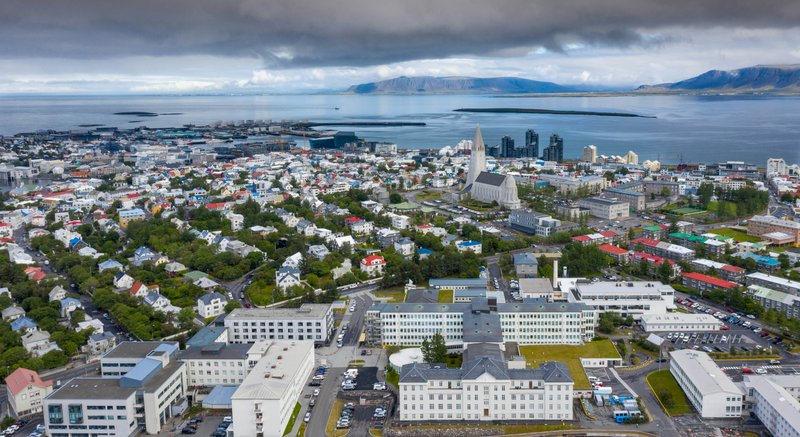
Reykjavik spreads along the southwestern coast of Iceland, a compact capital where corrugated-iron houses painted in ochre, teal, and barn red line streets that slope toward the North Atlantic. The old town clusters around Laugavegur, the main commercial artery, and extends to the harbor district of Grandi, once industrial fish-processing territory now home to galleries, microbreweries, and restaurants serving hákarl and langoustine tails. Hallgrímskirkja's basalt-column silhouette dominates the skyline, while Tjörnin pond reflects the parliament building and wandering greylag geese. The city runs on geothermal heat — steam rises from sidewalk vents and rooftop pipes, and the faint sulfur scent becomes oddly comforting.
Accommodation ranges from harbor-facing properties with floor-to-ceiling views of Mount Esja to converted warehouses in the 101 district, the postal code synonymous with downtown cool. Icelandic hospitality tends toward restraint: service is warm but never fawning, interiors favor local wool, driftwood, and lava-stone textures. The dining scene has matured rapidly since the early 2000s, with New Nordic techniques applied to Arctic char, lamb from the Westfjords, and foraged herbs like Arctic thyme. After dinner, many visitors migrate to the geothermal pools — some built into cliffsides, others floating on lagoons — where the ritual of moving between hot water and cold air under a possible aurora constitutes its own form of refinement.