


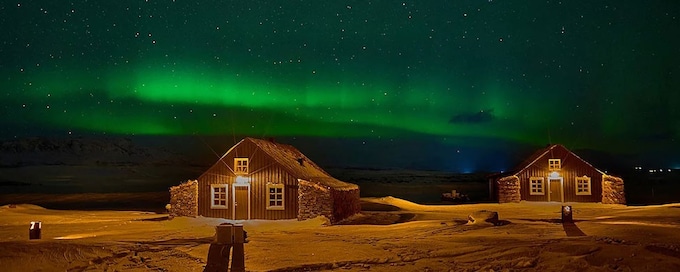
Twenty-five turf-roofed houses scatter across Icelandic farmland adjacent to the Golden Circle, each equipped with a private basalt hot tub for soaking beneath the aurora borealis. Torfhús Retreat operates its own restaurant and stables, cultivating an adult-oriented atmosphere suited to couples and small groups seeking seclusion. The rural darkness here offers prime conditions for Northern Lights viewing without leaving the property.
Golden Circle Travel Guide: Best Hotels, Restaurants & Experiences 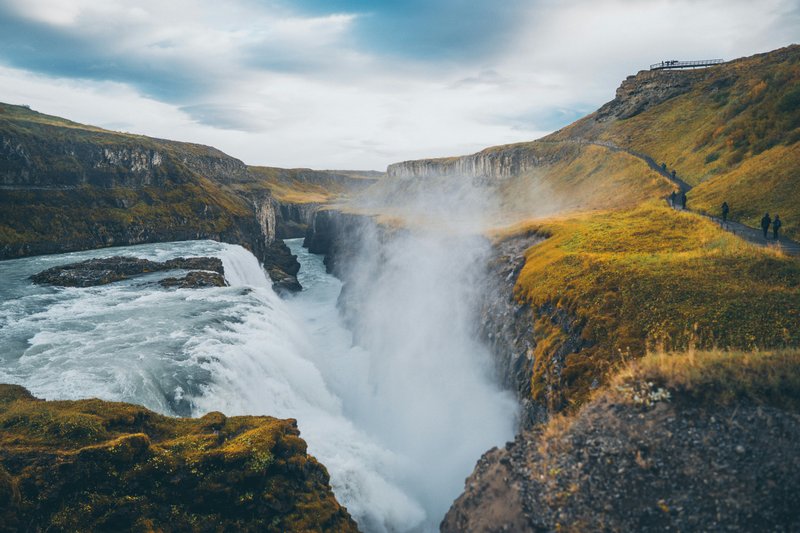
Explore Golden Circle
Hotels (3)

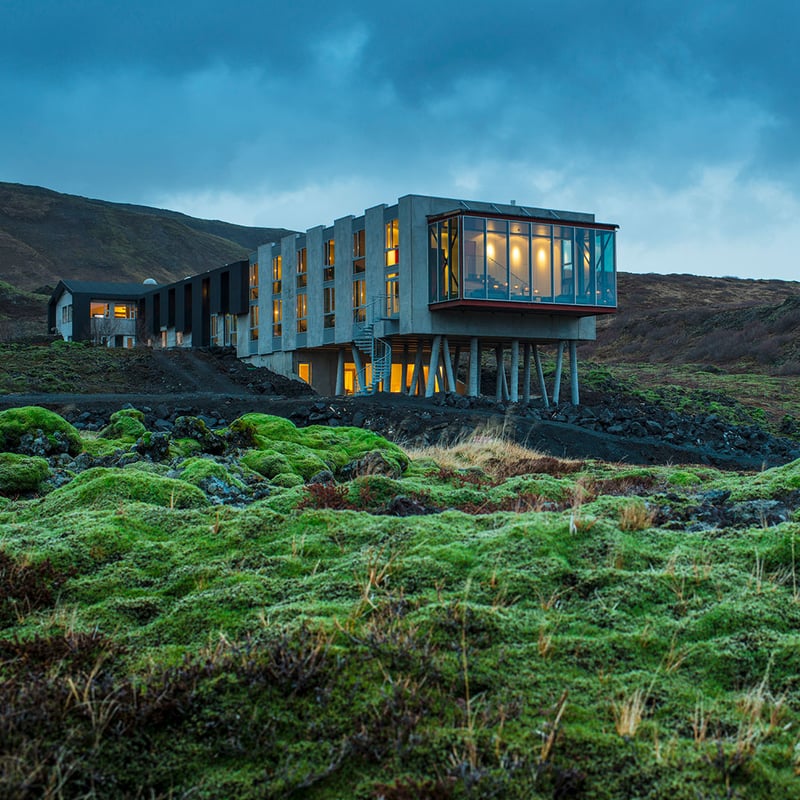
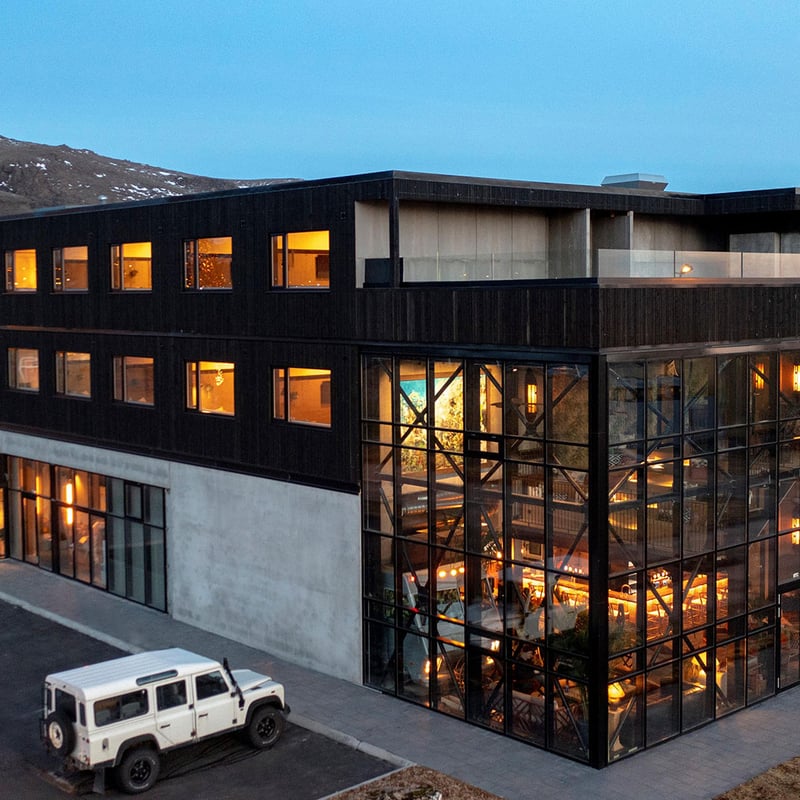
Built from reclaimed materials on the edge of Þingvellir National Park, ION Adventure Hotel rises from a lunar landscape of dormant lava fields and lichen. Guest rooms pair rough concrete walls with driftwood furniture, while geothermal springs heat the property—including a ten-meter outdoor hot tub surveying the volcanic terrain. The adventurous can dive between tectonic plates; others simply soak in Iceland's stark beauty.

Steam rises from the earth just steps away at Hotel Geysir, positioned directly beside Haukadalur's legendary geothermal field and central to Golden Circle exploration. This eco-conscious family-run property delivers refined accommodations and attentive service within striking distance of erupting geysers. The on-site Geysir restaurant serves quality Icelandic cuisine, while connecting rooms and a playground make it particularly suited to traveling families.

Hundreds of indoor plants fill this sustainability-driven property in Hveragerði, earning it the Icelandic name Gróðurhúsið. A short hike through geothermal fields leads to the Reykjadalur hot springs, where bathers soak in naturally heated waters amid dramatic mountain scenery. The food court gathers five culinary stands alongside boutiques stocking local goods, while the hotel arranges Icelandic horseback rides, black-sand beach cycling, and whitewater rafting—all under an hour from the Golden Circle.

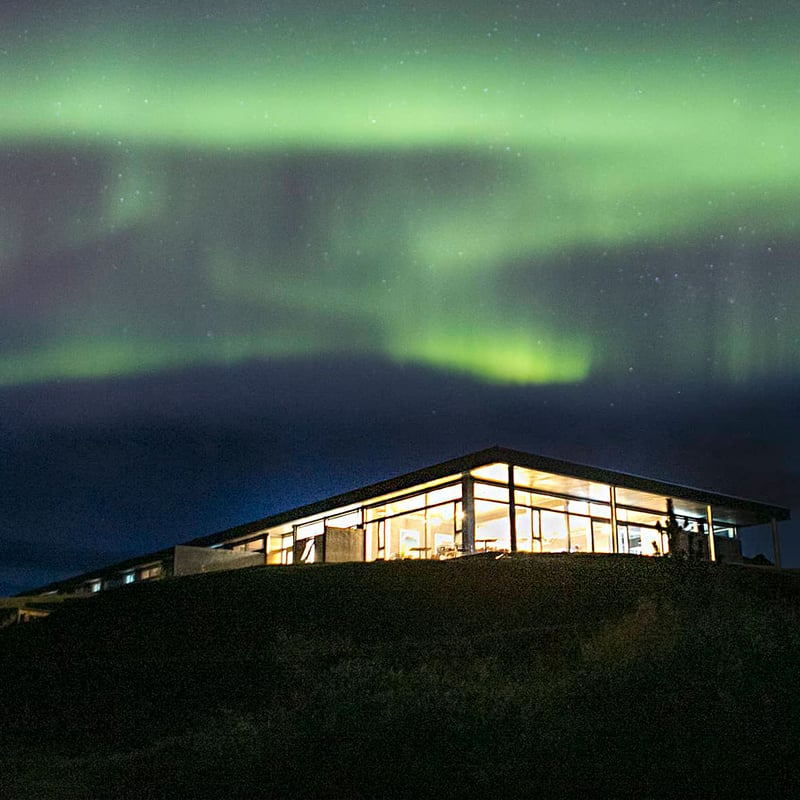
Fifteen minutes beyond Selfoss, this 13-room glass-walled retreat captures southern Iceland's wilderness in every direction—forests sweeping toward distant glaciers, mountains framing the aurora when skies cooperate. The spa draws from a geothermal spring a thousand feet underground, feeding thermal baths alongside cold plunge pools, saunas, and steam rooms. A striking base for exploring Eyjafjallajökull, waterfalls, and the Golden Circle's geysers.
Frequently Asked Questions
When is the best time to visit the Golden Circle?
+
Summer (June–August) offers midnight sun and the easiest driving conditions, while winter (November–February) brings shorter days ideal for Northern Lights viewing. September and early October provide autumn colors with fewer crowds. The route remains accessible year-round, though winter requires vehicles equipped for icy roads.
How long does it take to drive the Golden Circle?
+
The basic loop takes three to four hours of driving time from Reykjavík, but most visitors spend a full day to explore properly. Staying overnight allows for early-morning visits to Þingvellir before tour buses arrive, evening soaks in geothermal pools, and detours to lesser-known sites like Kerið crater or the Friðheimar tomato greenhouse.
What distinguishes accommodation in the Golden Circle from Reykjavík hotels?
+
Properties here prioritize landscape immersion over urban amenities. Expect hot tubs with views of volcanic ridges, farm-to-table dining featuring ingredients from neighboring producers, and architecture that incorporates turf roofs or floor-to-ceiling glass. The trade-off: fewer restaurant options and limited nightlife, but silence and dark skies that the capital cannot offer.
Nearby Destinations
Explore Iceland



Golden Circle
The Golden Circle traces a 300-kilometer loop through Iceland's southwest, linking three geological landmarks that have drawn travelers since the 19th century. Þingvellir sits in a rift valley where the North American and Eurasian tectonic plates drift apart — the Althing, Europe's oldest parliament, convened here from 930 AD. The Geysir geothermal area gave its name to all the world's geysers, though Strokkur now performs the regular eruptions. Gullfoss, the 'Golden Waterfall,' drops 32 meters into a narrow canyon carved during the last ice age.
Accommodation clusters around three main areas: Selfoss, the largest town with services and restaurants; Flúðir, known for its greenhouse agriculture and the Secret Lagoon hot spring; and the farms scattered between Þingvellir and Geysir. Most properties embrace the landscape rather than competing with it — converted farmsteads, timber lodges, and low-slung buildings designed to frame views of moss fields and distant glaciers. Dining leans toward Icelandic produce: lamb from free-roaming sheep, Arctic char from nearby rivers, and dairy from small producers.