Behind the historic façade of a 1408 estate, chef duo Robin Hofmann and Patrick Grieshaber craft ingredient-driven modern cuisine that has earned a Michelin star. Four- to six-course menus showcase precise dishes—pike-perch paired with black pearl caviar, or lion's mane mushroom with ponzu—served in a warmly elegant dining room of earthy tones and designer lighting. The knowledgeable team excels at thoughtful wine pairings.
Explore Wurzburg
Chef Konstantin Kuntzsch earned a Michelin star for his creative seven-course seasonal menus at this intimate address near the Main River. The kitchen draws from Bavarian producers—witness the perfectly roasted fawn saddle under a hazelnut crust, paired with celery, apple, and silken Japanese hollandaise. Sommelier Florian Mack matches each course with regional wines, while contemporary artwork punctuates the modern dining room.
A 400-year-old Renaissance palace in the winegrowing village of Sommerhausen provides the setting for Michael Philipp's one-Michelin-starred cuisine. The 'Classique' menu weaves Mediterranean and Asian influences through modern French foundations, while weekend diners can opt for a carte blanche surprise. Heike Philipp's two decades of sommelier expertise guide wine pairings with assured finesse, matching the historic intimacy of the dining room.
Chef Bernhard Reiser has reimagined the site of Würzburg's former covered market as a convivial creative dining room. Daytime brings a streamlined menu with an appealing three-course option, while evenings shift toward more ambitious cooking offered à la carte or as a surprise sequence. The split-level layout grants some diners direct sightlines into the open kitchen below, and summer extends service onto a terrace facing the market square.
Frequently Asked Questions
Which Würzburg neighborhoods are best for wine taverns and local dining?
+
The Altstadt between Marktplatz and Juliuspromenade concentrates the city's traditional weinstuben, where Franconian wines are served in the distinctive Bocksbeutel bottles. The Mainviertel across the Alte Mainbrücke offers quieter options with river views, while student-oriented restaurants cluster around Sanderstraße near the university.
What is the significance of the wine foundations in Würzburg?
+
The Bürgerspital zum Heiligen Geist (founded 1319) and Juliusspital (founded 1576) are charitable institutions that operate extensive vineyard holdings to fund hospitals and elderly care. Their wine estates rank among Germany's oldest and most respected, and both maintain public weinstuben where visitors can taste their productions alongside traditional Franconian dishes.
How does Würzburg's location on the Main river shape the visitor experience?
+
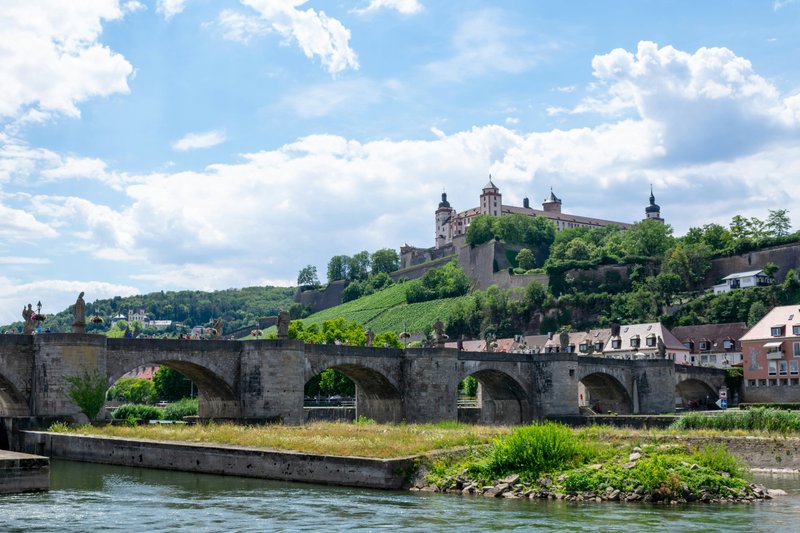
The Main bisects the city, with the Altstadt and Residenz on the east bank and the Marienberg fortress crowning the western hills. The Alte Mainbrücke, lined with Baroque statues, serves as an outdoor gathering spot where locals drink wine at sunset. River cruise ships dock regularly, and cycling paths follow both banks through the surrounding wine country.
Nearby Destinations
Explore GermanyThe Residenz palace dominates this university city on the Main river, its UNESCO-listed ceiling frescoes by Tiepolo drawing visitors into a Baroque fantasy of mythological excess. Beyond the palace gates, the Altstadt unfolds in a grid of reconstructed merchants' houses and wine taverns, while the Marienberg fortress surveys the scene from across the river. Student life animates the Sanderstraße quarter with affordable Franconian cooking, though the city's culinary reputation rests on its weinstuben — traditional wine rooms where Silvaner and Müller-Thurgau flow from local estates.
The vineyards climb steep slopes on both banks, and several wine estates operate their own guesthouses where visitors wake to views of terraced vines. The Käppele pilgrimage church rewards those who climb its Stations of the Cross with panoramas across red rooftops to the river below. Dining here favors regional honesty: bratwurst, sauerbraten, and river fish prepared without pretension, accompanied by wines from the Bürgerspital or Juliusspital charitable foundations that have tended these vineyards since medieval times.