


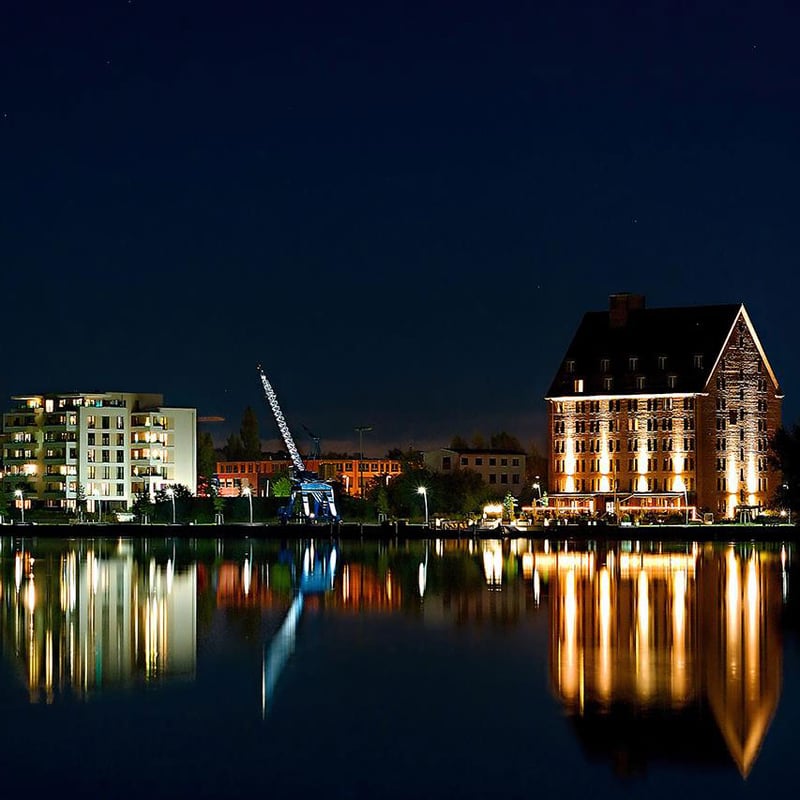
This 1939 brick granary rises eight storeys above Ziegelsee, its pointed roofline a local landmark now housing 77 warmly appointed rooms. The ground-floor restaurant pairs parquet floors with floor-to-ceiling lake views, while a spa and sauna offer post-exploration recovery. Outside, a private garden and tennis court extend the retreat for active guests traveling with pets.
Wismar & Schwerin Travel Guide: Best Hotels, Restaurants & Experiences 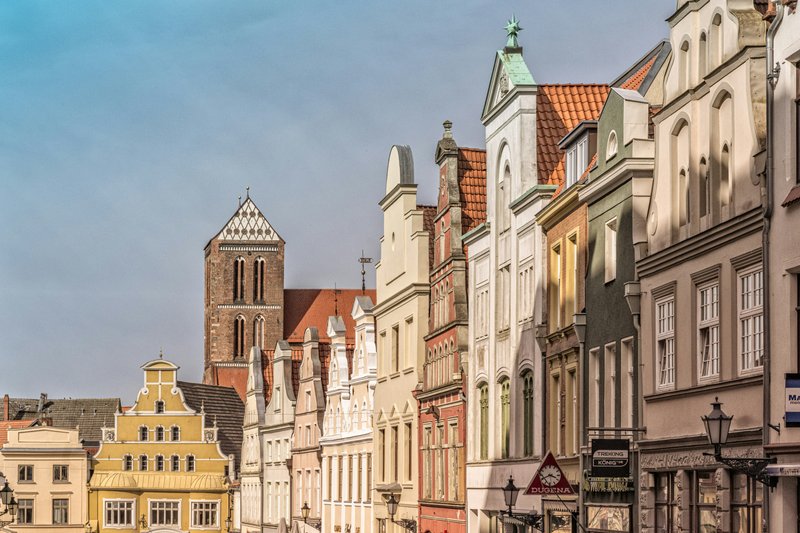
Explore Wismar Schwerin
Restaurants (4)
Where to Stay

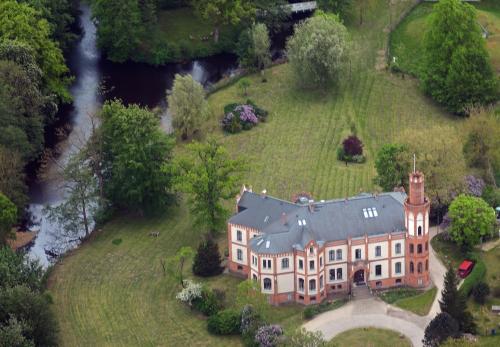
A 19th-century manor house converted into an intimate 19-room retreat, Schloss Gamehl delivers refined country-house elegance through cream-and-white interiors and grounds that sweep down to a private lake. Morning light floods the winter garden at breakfast, while a sauna offers post-exploration respite. The pet-friendly policy and secluded estate setting suit couples and families seeking pastoral quiet near the Baltic coast.
Where to Eat

Michelin Selected
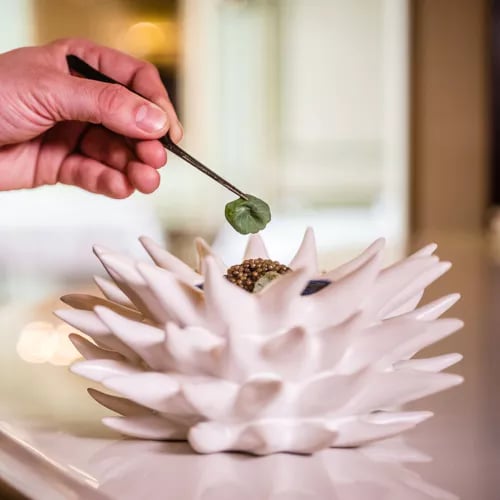
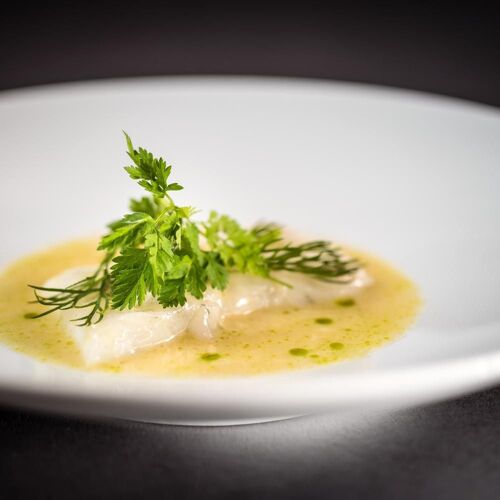
Chef Marcel Kube's plant-forward tasting menus—five or seven courses, with fish and meat options—showcase regional ingredients through a resolutely modern lens. The setting amplifies the experience: a meticulously restored barrel-vaulted cellar within a 250-year-old wine merchant's house, now part of a UNESCO World Heritage Site. The wine list harbors rare bottles worth exploring, and guest rooms upstairs extend the evening.

Bib Gourmand
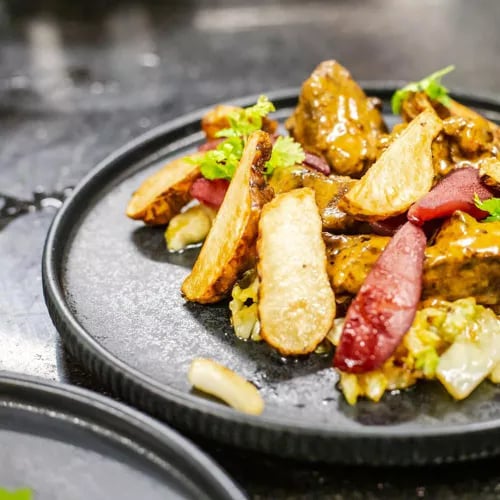
A Bib Gourmand izakaya steps from Schwerin's cathedral, Cube by Mika channels Tokyo's convivial sharing-plate culture through a farm-to-table lens. The maisonette layout offers counter seats overlooking the open kitchen, where chefs assemble vibrant Asian small plates meant for grazing. On select evenings, an ambitious tasting menu rewards those who book ahead. The mood runs relaxed and sociable—ideal for casual yet curated dining.

Michelin Selected
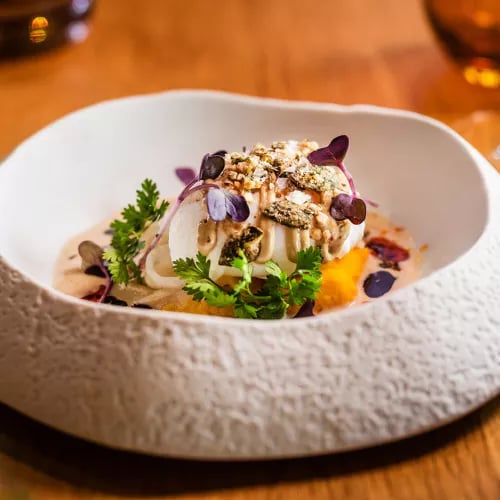
Lake Schwerin laps at the edges of this relaxed dining room, where an open kitchen delivers izakaya-inspired plates built on regional, seasonal produce. The terrace overlooks a small harbour, lending an almost coastal ease to evenings that might begin with dishes from the daily-changing specials board and end with plans for their popular cookery classes. A Michelin Plate address with genuine local character.

Michelin Selected
Steps from Schwerin's cathedral, this two-level bistro pairs a cosy ground-floor dining room with an upstairs space, both serving the same farm-to-table Mediterranean menu. The signature beef bourguignon, prepared with French Charolais beef, anchors a card that swings between à la carte plates and tapas-style sharing menus. A pedestrian-zone terrace adds warmth-weather appeal; service throughout remains notably cordial.

Michelin Selected
Part wine shop, part all-day bistro within the Weinhaus Uhle hotel, this Michelin Plate address lets chef Marcel Kube showcase regional German ingredients through signatures like Die Fischsuppe and Der Uhlsche Klops. Guests choose between à la carte plates or structured three- to four-course menus, paired with bottles from the on-site selection. Summer brings street-side tables for unhurried afternoon meals.
Frequently Asked Questions
When is the best time to visit Wismar and Schwerin?
+
Late spring through early autumn offers the most pleasant conditions, with June through September ideal for lakeside activities around Schwerin. The Christmas markets in December transform both town centers, though temperatures hover near freezing. Wismar's Hafenfest in June and Schwerin's Schlossfestspiele summer opera series provide cultural anchors for timing a visit.
How do I travel between Wismar and Schwerin?
+
Regional trains connect the two in roughly thirty minutes, running hourly throughout the day. By car, the B106 covers the thirty-kilometer distance in about twenty-five minutes. Both towns are compact enough for walking once you arrive, though Schwerin's lakeside paths reward having a bicycle.
What makes Wismar's old town architecturally significant?
+
Wismar preserves one of the most complete examples of a medieval Hanseatic trading town, earning UNESCO World Heritage status in 2002 alongside Stralsund. The brick Gothic churches — St. Nikolai, St. Georgen, and the ruined St. Marien tower — demonstrate the wealth and ambition of Baltic merchants. Swedish rule from 1648 to 1803 added baroque elements without erasing the medieval street plan.
Nearby Destinations
Explore Germany



Wismar Schwerin
Wismar's UNESCO-listed Altstadt delivers red-brick Gothic at every turn — step through the Wassertor gate and you're walking cobblestones that Hanseatic merchants trod six centuries ago. The Marktplatz, one of northern Germany's largest medieval squares, anchors a compact old town where gabled warehouses have found second lives as intimate hotels. Schwerin, twenty minutes inland, operates at a different register entirely: the Schweriner See and its satellite lakes create a watery geography of promontories and islands, the castle perched on one like something borrowed from a Romantic painting.
Dining here leans toward the regional and seasonal. Smoked fish from Baltic smokeries appears on most menus; wild game from Mecklenburg forests takes over in autumn. The wine lists tend toward German estates, with good Spätburgunder from Baden and crisp Silvaner from Franken. Schwerin's Schelfstadt quarter, north of the Pfaffenteich pond, concentrates the better restaurants within walking distance of each other — useful when winter darkness falls by four o'clock and you'd rather not drive.