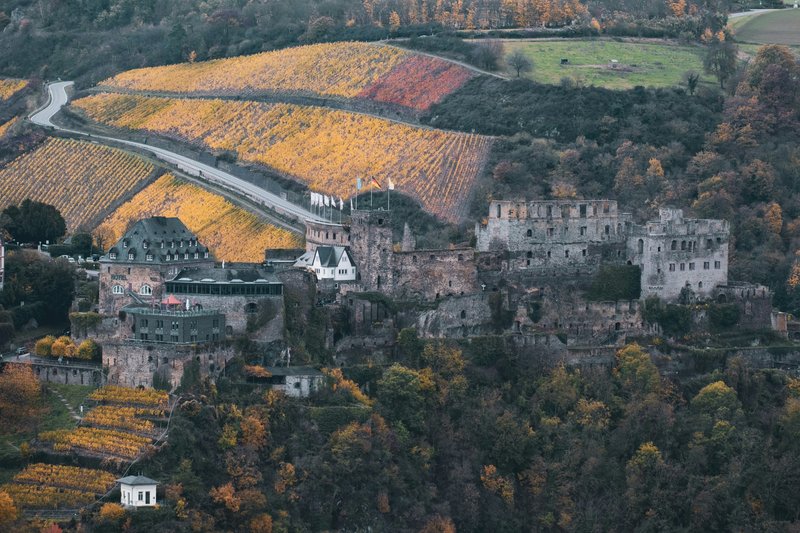
Rising from Mediterranean-style parkland above the Rheingau vineyards, this 1873 castle presents a fairy-tale silhouette of stone turrets and thick walls against sweeping Rhine Valley panoramas. Seven tower rooms preserve the romance—exposed stone, wooden beams, silk-canopied four-poster beds—while the Burgrestaurant's vine-facing terrace pairs regional Riesling with the landscape that produced it. Wine lovers and history enthusiasts find equal reward here.
Explore Rheingau
Where to Stay
An 1894 riverside manor meticulously restored to preserve its period character, Hotel Kronenschlösschen sits directly on the Rhine with just 33 rooms ensuring an intimate atmosphere. The on-site bistro draws guests and locals alike, while the garden and complimentary bicycles encourage leisurely exploration of the surrounding Rheingau vineyards. A refined base for wine-country wandering.
Where to Eat
Beneath ornate historical ceilings or on a garden-fringed terrace overlooking the Rhine, Kronenschlösschen presents four- to six-course menus rooted in traditional French technique yet shaped by creative ambition. The kitchen emphasizes regional ingredients, while the wine cellar ranks among Germany's finest — a particular strength in this storied viticultural region. Elegant dining for those exploring Rheingau's gastronomic landscape.
Vineyard views sweep across the Rauenthaler Baiken from this terrace restaurant on the historic Kloster Eberbach wine estate. Dirk Schröer's kitchen delivers classical French cooking without pretense—saddle of venison in bread crust with wild mushrooms demonstrates the approach. The wine list draws heavily from Hessische Staatsweingüter estates, making this an essential stop for Rheingau wine enthusiasts seeking refined regional gastronomy.
Third-generation chef Johannes Frankenbach brings Mediterranean finesse to this one-starred table in Eltville, his training at Salzburg's Ikarus evident in precise, ingredient-driven plates that balance aroma and contrast. The former wine bar retains its character—half-height panelling, vintage photographs—while a plane tree courtyard offers warm-weather dining. Thoughtfully matched wines at fair prices complete an intimate, unhurried experience.
A Molteni stove commands the entrance of this half-timbered tavern, where Franz Keller's family has practiced traditional Rhineland hospitality since the early 1990s. The fixed-price format—small or large evening menu—showcases Bentheim Black Pied pork and pasture-raised Charolais beef from their own Taunus farm, Falkenhof. Summer dining moves to a shaded rear terrace. Tables settle as one bill.
A former Asbach Uralt brandy distillery provides the atmospheric backdrop for this Michelin-recognized table in Rüdesheim. The contemporary kitchen, partially visible from the chic dining room, dispatches seasonal set menus of four courses or more alongside à la carte options. When weather permits, a summer terrace extends the experience outdoors—ideal for leisurely meals overlooking the Rhine valley.
A 400-year-old half-timbered house in Idstein provides the atmospheric setting for this regional seasonal restaurant, where historical character meets contemporary sensibility. The owner's warm personal service enhances intimate dining rooms, while summer brings the pleasure of a secluded courtyard terrace. Guests seeking refinement can reserve the 'Genusswelten' tasting menu, available Thursday evening through Saturday.
Within the historic walls of Weingut Künstler, chef Christian Aguilar composes three- to seven-course set menus rooted in French tradition—a nod to the Dienstbach sisters who first brought their Norman heritage to this Rheingau address. The dining room pairs muted tones with contemporary design, while estate wines and French bottles accompany each course. Sunday lunch offers à la carte flexibility.
Steve Eulenstein's pedigree from prestigious kitchens shows in every meticulously composed plate at this Idstein address. The cooking follows seasonal rhythms, drawing on carefully sourced ingredients for dishes that arrive fresh and full of flavor. Two tasting menus anchor the offering alongside hearty classics like rump steak, served in a pared-back dining room where friendly, polished service matches the minimalist aesthetic.
The 17th-century Liefrink House anchors one corner of Usingen's market square, its half-timbered facade concealing a contemporary dining room with clean lines and warm hospitality. The kitchen draws on seasonal ingredients for an internationally inflected repertoire, presented through a chef's tasting menu or well-constructed à-la-carte dishes. A worthwhile detour for those exploring the Taunus hills beyond the Rhine.
Three centuries of hospitality inform the seasonal cooking at this family-run address, where a gorgeous historic façade gives way to intimate dining rooms filled with traditional charm. The kitchen favors regional preparations—notably a Sauerbraten of organic pasture-fed beef paired with potato dumplings and cranberries—complemented by estate-grown Rheingau wines. A courtyard terrace provides an idyllic summer setting.
Frequently Asked Questions
When is the best season to visit the Rheingau wine region?
+
Late spring through early autumn offers the fullest experience. April brings asparagus season and the first Straußwirtschaften openings. Summer means long evenings in vineyard courtyards. September and October coincide with harvest festivals and the grape-picking atmosphere that animates every village.
What is a Straußwirtschaft and where can I find them?
+
These are temporary taverns where winemakers serve their own production directly to guests, typically in rustic courtyards or converted cellars. Look for a broom or wreath hung outside — the traditional sign that one is open. They operate seasonally, most commonly from spring through late autumn, throughout villages like Hattenheim, Hallgarten, and Johannisberg.
How do I reach the Rheingau from Frankfurt?
+
Frankfurt Airport lies roughly 45 minutes by car from Eltville. Regional trains connect Frankfurt Hauptbahnhof to stations along the Rhine, including Eltville and Rüdesheim, in under an hour. Rhine river cruises also stop at several Rheingau towns for those arriving from Mainz or Koblenz.
Nearby Destinations
Explore GermanyThe Rheingau stretches along the northern bank of the Rhine between Wiesbaden and Lorch, where south-facing slopes and slate soils have produced exceptional Riesling for centuries. Kloster Eberbach, the former Cistercian monastery made famous by The Name of the Rose, anchors the region's wine culture. Villages like Eltville, Oestrich-Winkel, and Rüdesheim retain their half-timbered cores, with accommodation ranging from converted aristocratic estates to contemporary vineyard lodges.
Dining follows the rhythm of the wine calendar. From April through autumn, Straußwirtschaften — seasonal taverns run by winemakers — open their courtyards, serving house wines alongside platters of Handkäs, smoked meats, and fresh bread. More formal restaurants, particularly around Eltville's rose gardens and the Rüdesheim waterfront, offer refined regional cooking: pike-perch from the Rhine, local asparagus in season, game from the Taunus forests. The cable car ascending to the Niederwald monument provides panoramic views across the valley, while the narrow-gauge railway and river cruises offer alternative approaches to this compact but richly layered wine country.