This family-run restaurant delivers ambitious Italian-influenced cooking rooted in regional German traditions. The kitchen offers both à la carte selections and thoughtfully composed set menus, including a dedicated vegetarian option. Service maintains the warmth characteristic of generations-long hospitality. A lovely terrace extends the dining experience outdoors, while comfortable guestrooms across two buildings accommodate those wishing to linger.
A half-timbered farmhouse from 1589 anchors this country retreat, its 11,000 square meters of grounds setting the stage for farm-to-table cooking that draws on both regional traditions and international techniques. The interior maintains a rustic elegance befitting the building's heritage. Guests seeking to extend the experience can book one of several contemporary rooms on site.
Behind the open kitchen at Taverna & Trattoria Palio, cooks shape fresh pasta in full view of the dining room — a theatrical touch befitting the relaxed trattoria spirit. The seasonal set menus rotate with the market, while summer draws guests to the terrace beneath century-old chestnut trees, their shade dappling white tablecloths. Italian comfort, executed with precision.
Sven Hütten and Petra Tiecke-Hütten run this welcoming address where country cooking meets worldly influences. The kitchen builds on regional German foundations, layering in international accents that keep the menu fresh without abandoning its roots. A Michelin Plate acknowledges the careful, skillful preparation. Behind the main building, a rear terrace offers an appealing setting for warm-weather dining in relaxed surroundings.
Frequently Asked Questions
What architectural heritage defines Celle's old town?
+
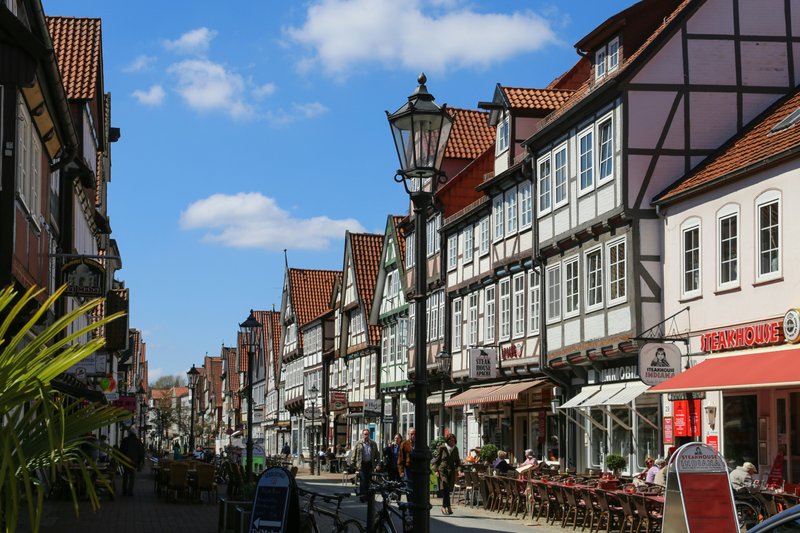
Celle contains approximately 500 half-timbered houses spanning five centuries, making it one of the best-preserved Fachwerk towns in Germany. The buildings feature painted façades with carved inscriptions, ornamental beams, and the distinctive Lower Saxon style of exposed timber framing filled with brick or plaster.
Which local specialties appear on Celle's restaurant menus?
+
Regional cuisine emphasizes Heidschnucke, a heritage moorland sheep breed from the Lüneburg Heath, typically braised or roasted. Spring brings Spargel season with white asparagus from the sandy soils nearby. Buckwheat dishes reflect the area's historical grain cultivation, and local honey production supports various traditional desserts.
How does Celle's location relate to the Lüneburg Heath?
+
Celle sits at the southern edge of the Lüneburg Heath nature reserve, Germany's largest heathland. The town serves as a gateway for exploring the purple-flowering moorland, particularly during August and September when the heather blooms. The Celle Palace gardens and French Garden extend this natural connection into the urban landscape.
Nearby Destinations
Explore GermanyCelle's Altstadt presents one of Northern Germany's most complete ensembles of half-timbered architecture, with nearly 500 preserved Fachwerk houses lining crooked lanes that date to the medieval period. The Ducal Palace anchors the town's southern edge, its white Renaissance façade overlooking formal gardens that stretch toward the French Garden district. Visitors find the pedestrianized Zöllnerstraße and Poststraße forming the commercial spine, where ground-floor storefronts occupy centuries-old merchant houses.
The dining scene draws on Lower Saxony's agricultural traditions — Heidschnucke lamb from the nearby Lüneburg Heath, white asparagus in spring, and Celle's own buckwheat cakes appear on menus throughout the old quarter. Evening atmosphere concentrates around the Stechbahn, the former jousting ground now functioning as the main square, where café terraces spill onto cobblestones beneath gabled rooflines. Beyond the historic core, the Blumlage district offers quieter residential streets with occasional neighborhood restaurants serving regional standards.