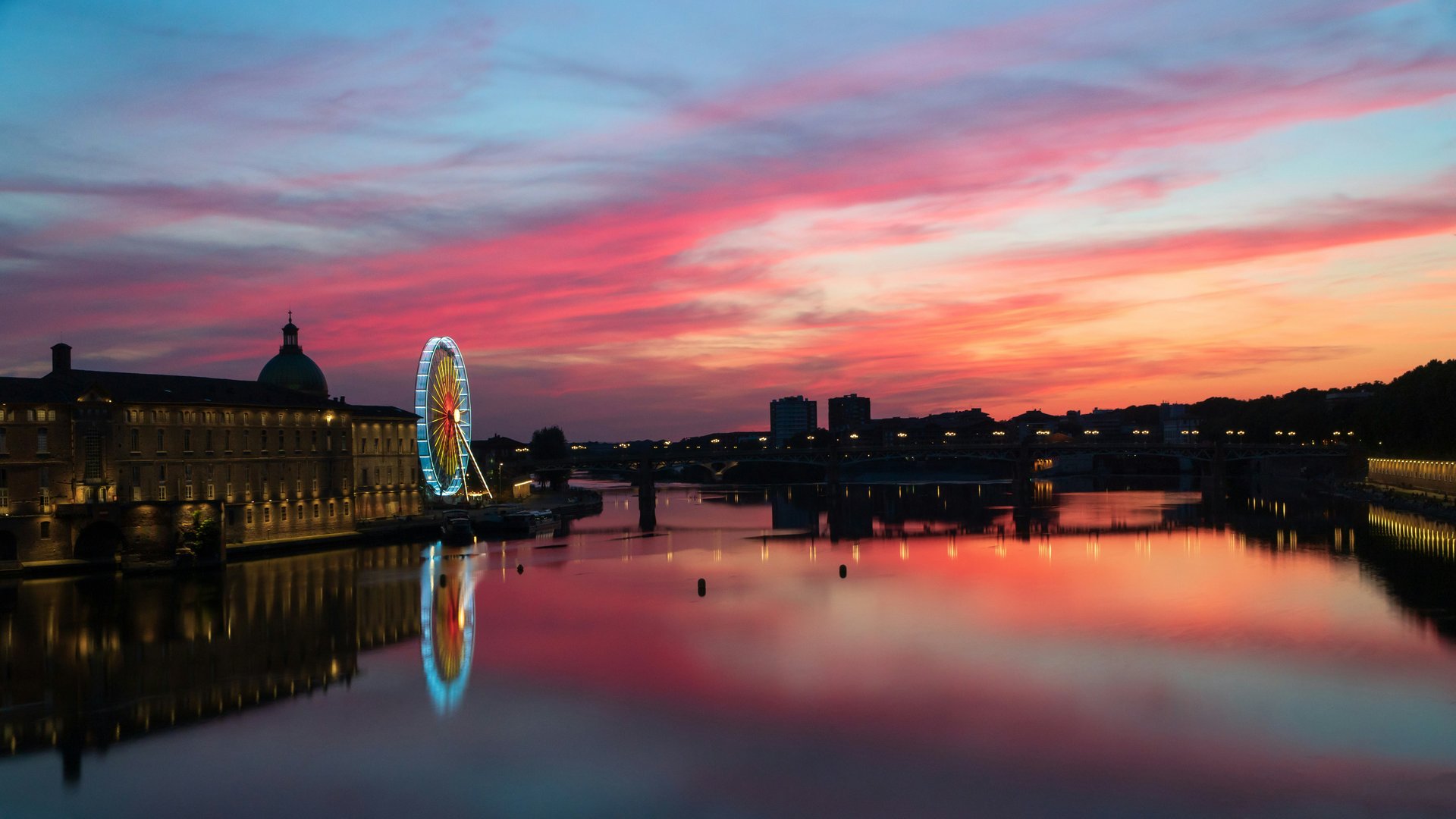
This 18th-century townhouse near the Garonne marries residential heritage with boutique-hotel refinement across just sixteen rooms. Each interprets British cosiness through a French lens—think orderly compositions warmed by rough-hewn textures and playful teddy bears. A seasonal pool anchors the garden, where Gaspard's Bar extends cocktails and light fare from breakfast through evening, while pet-friendly policies welcome four-legged companions for an additional fee.
Explore Toulouse
Where to Stay
Once the preferred lodging of French air mail pilots, Le Grand Balcon channels its aviation heritage through Jean-Philippe Nuel's design—sober modernist lines punctuated by cloud murals and portraits of flying adventurers. The Suite Saint-Exupéry, preserved in 1930s style, honours the literary aviator who once resided here. Connecting rooms and pet-friendly policies make it a practical choice for families exploring Toulouse's walkable historic centre from the Place du Capitole.
Behind a neo-classical façade on Rue des Couteliers, this five-star property reveals a hidden courtyard where 16th-century stonework frames contemporary interiors. The Michelin-starred restaurant delivers refined dining, while the spa provides a tranquil retreat after exploring the Garonne's nearby banks. Families are well accommodated with connecting rooms, baby beds, and babysitting services, making it a rare blend of historical gravitas and modern family hospitality.
This four-star aparthotel serves both corporate travelers and multi-generational families with its hybrid formula—hotel-level concierge support paired with full kitchens and separate living spaces. Duplex units accommodate six, featuring dedicated twin rooms, while family provisions extend to cots, highchairs, and even infant bathtubs. The formula has cultivated a repeat clientele drawn to the flexibility of self-catering without sacrificing professional service standards.
A former cinema transformed by designer Thierry Gaugain into a boldly styled urban retreat, this Toulouse outpost celebrates local culture through Occitan-themed interiors and chalk art by Beniloys. The 120 rooms prioritize comfort with premium bedding and organic bath products, while a basement CineMama theatre honors the building's heritage. An Argentine grill restaurant, lively bar with table football and DJ sets, and a panoramic rooftop terrace overlooking the city's rose-colored tiles draw both traveling families and design-conscious explorers.
The Best Western Athénée by Happy Culture operates as a well-maintained city-centre property near the Matabiau station, distinguished by its complimentary wine tastings and evening nibbles for guests. Three interconnecting rooms accommodate families, with cots, high chairs, and bottle warmers provided on request. Children under two are offered complimentary accommodation, making this an accessible option for budget-conscious travelers seeking central Toulouse lodging with family-oriented amenities.
Two historic buildings—a former monastery among them—house this refined Toulouse address overlooking place du Capitole and the opera house. Lavish furnishings reflect seventeenth-century origins while boutique-scale service ensures a personal touch. Families benefit from connecting rooms, babysitting, and complimentary breakfast for younger guests, blending period character with practical modern hospitality in the center of the Ville Rose.
A rare city-centre address offering free parking, Hôtel de Brienne pairs practical convenience with exuberant pop-art interiors and a tranquil garden terrace anchored by a koi pond. Family rooms accommodate children under twelve without charge, including breakfast, while a well-stocked library caters to younger guests. The hotel's bold, colourful aesthetic creates a playful counterpoint to Toulouse's terracotta façades, making it an appealing base for families seeking both character and ease of access.
Occupying the site of Toulouse's former fish market along the Garonne, this 14-room hotel delivers a personal experience anchored by attentive service and a welcoming atmosphere. The intimate scale allows staff to cater to individual needs, while family-friendly amenities—connecting rooms and complimentary extra beds—make it a practical choice for traveling with children. The historic riverside setting provides both charm and easy access to the city center.
A budget-conscious choice in central Toulouse, Hôtel Royal Wilson welcomes families with three dedicated rooms featuring double two-bed configurations, while its Moorish-influenced courtyard offers a peaceful retreat from the city. The property caters particularly to cyclists through its Accueil Vélo certification and private garage accommodating both bicycles and vehicles—a practical advantage for those exploring the region on two wheels.
Where to Eat
Pierre Lambinon, trained at Monaco's Louis XV and London's Dorchester, holds Toulouse's sole two-Michelin-star address in a vaulted white-brick cellar in the Carmes quarter. His modern compositions favor line-caught hake from Saint-Jean-de-Luz, Pyrenean trout gravlax with wild garlic pesto, and pigeon roasted on the carcass with black fig—each plate balancing grilled notes, garden herbs, and seasonal vegetables with acute precision. In summer, the chef decamps to Domaine de Preissac, twenty minutes outside the city.
Chef Yannick Delpech operates this one-Michelin-starred table in a converted sawmill, where music and video projections accompany surprise tasting menus for around fifteen diners per service. His signature robust-flavoured sauces and jus define modern dishes like octopus braised in red wine daube with lamb shoulder confit, red mullet with bottarga butter, and slow-simmered beef cheek. The organic and natural wine list complements the bohemian table d'hôtes atmosphere.
Stéphane Tournié's Michelin-starred restaurant occupies a flower-filled courtyard beneath a glass roof on Place du Capitole, offering theatrical tableside service including flambéed crêpe Marie-Louise. Trained under Lucien Vanel, André Daguin, Philippe Legendre and Christian Constant, Tournié champions traditional French technique through dishes like scallops with nori-infused rice cream and foie gras ravioli with black truffle, with a dedicated truffle menu throughout winter.
Arnaud Darbas brings rigorously trained technique to this compact Saint Aubin address, plating Italian-inspired dishes that balance precision with bold flavor: green asparagus under frothy sabayon with smoked olive oil, line-caught hake from Saint Jean de Luz dressed with yuzu shellfish, Ibaïama pork alongside seasonal vegetables and punchy gravy. Virginie Béziaud orchestrates the intimate dining room and guides guests through a carefully chosen wine list, making each service feel personal and considered.
Chef Ugo Plazzotta brings Shanghai and London influences to his father's former table, housed in a red-brick mansion overlooking the Garonne. The Michelin Plate kitchen delivers modern cuisine that honours southwestern terroir while embracing exotic detours—gravlax of Ispeguy trout with ponzu, pluma de porc with fig, grilled croaker with fennel and orange. A 300-label cellar spans continents, and the riverside terrace offers rare bucolic calm within city limits.
Chef Clément Lessoud, formerly sous-chef at Marseille's Une Table au Sud, grounds his carbon-conscious cooking in Mediterranean tradition and garden-focused philosophy. Organic vegetables anchor a concise menu renewed weekly, with limited animal protein: pissaladière draped in creamy potato and caper sauce, aubergine caponata brightening Basque duck, apricot from Roussillon layered with rosemary and mahaleb cherry stone. Clémentine Puech, ex-Le Cénacle, orchestrates the intimate dining room with Michelin-honed precision.
At this intimate 20-cover dining room facing the kitchen, the chef crafts contemporary French plates with a sure hand. Expect balanced compositions like a vegetable-seaweed tart, John Dory with mushrooms and passion fruit, or Aveyron veal prepared two ways, each supported by precise sauces and carefully sourced ingredients. The focused wine list offers well-chosen labels with excellent by-the-glass pairings, making this a refined yet accessible modern table.
Le Cénacle occupies a historic setting distinguished by a 16th-century sculpted fireplace and exposed timber beams, enhanced by a Caravaggio print. The kitchen forges direct partnerships with regional artisans—organic Gers vegetables, Béarn lamb, line-caught fish—to craft inventive Mediterranean-inflected plates. The plush dining room suits both leisurely lunches, when prices drop considerably, and celebratory dinners beneath the vaulted ceiling.
Frequently Asked Questions
Which Toulouse neighborhoods are best for dining and nightlife?
+
Place Saint-Pierre and the surrounding streets host the liveliest bar and restaurant concentration, particularly along rue Gabriel Péri. The Carmes district offers more refined dining options, while Victor Hugo market's first-floor restaurants serve excellent regional cuisine until mid-afternoon.
What is the best time of year to visit Toulouse?
+
Late April through June brings warm days without summer crowds, ideal for outdoor dining along the Garonne. September and October offer harvest season, when local menus feature fresh duck and early truffles from Quercy. Winter remains mild by French standards, with terrace heaters extending outdoor café culture into November.
How does Toulouse compare to other French cities for food?
+
Toulouse anchors France's southwest culinary tradition — cassoulet, foie gras, violet-scented confections, and wines from Fronton and Gaillac. The dining scene balances robust regional cooking with contemporary technique, drawing chefs who appreciate access to Rungis-quality producers without Parisian rents.
Nearby Destinations
Explore FranceThe Ville Rose earns its name from the terracotta brick that glows amber at sunset along rue du Taur and the quays of the Garonne. Toulouse operates at its own pace — markets at Victor Hugo run until early afternoon, apéro begins promptly at six on Place Saint-Pierre, and dinner reservations before eight-thirty are considered early. The gastronomic restaurants around Carmes and Saint-Étienne draw chefs trained in Paris and Lyon who return south for the duck, the Armagnac, and the quality of light.
Accommodation clusters in three distinct zones: the medieval streets near the Capitole suit those who want theatre and late-night cassoulet within walking distance; Saint-Cyprien across the river offers quieter boutique hotels with views back toward the basilica; and the Carmes quarter appeals to design-minded visitors seeking converted hôtels particuliers. Morning rituals matter here — third-wave coffee shops have multiplied along rue des Filatiers, where roasters pull shots for aerospace engineers and architecture students alike.