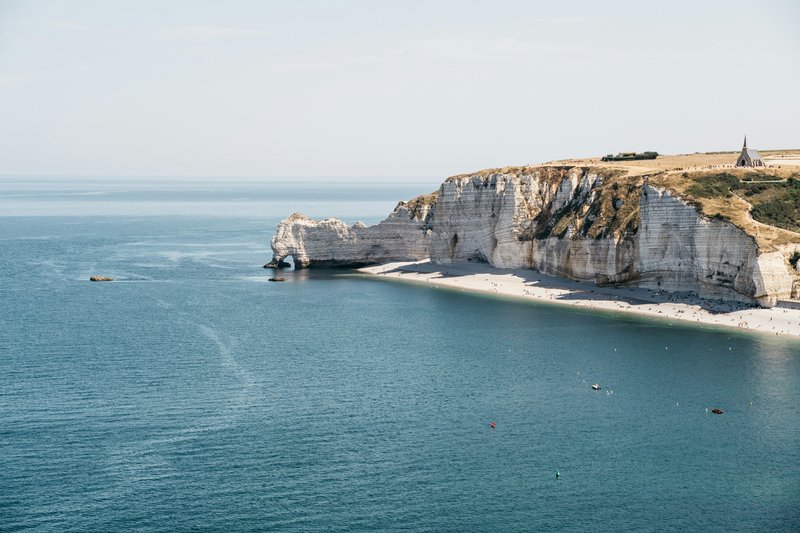
A contemporary villa rising from the dunes above La Gravette's harbor, Anne de Bretagne commands sweeping Bay of Biscay views from its Italian-style terraces. Chef-owner Mathieu Guibert, schooled under Yannick Alléno and Christian Le Squer, orchestrates a two-Michelin-star kitchen where line-caught sea bass meets sardine concassé and sea lettuce emulsion. The oceanside Bib Gourmand bistro Beau Boucot offers sunset dining ten minutes' walk away, while sommelier Michèle Vételé leads tastings from an exceptional cellar.
Where to Stay
Where to Eat
Perched on the dunes above the port of La Gravette, this two-Michelin-starred table showcases chef Mathieu Guibert's deep roots in the Retz region. A farmer's son, he works closely with local producers to craft seafood-driven plates—slow-cooked line-caught sea bass with sardine concassé, winkles, and sea lettuce emulsion; haddock risotto crowned with langoustine carpaccio. Sommelier Michèle Vételé's pairings complete the coastal experience.
Perched above Plage de la Birochère, this address from chef Sylvain Belouin and sommelier Valérie Belouin draws on a decade of Bib Gourmand experience. The kitchen favors local sourcing—pigeon, pork, and impeccably crisp sole meunière prepared with confident simplicity. A cellar of 500 predominantly biodynamic labels rewards those who linger, while the rocky cove below provides an unhurried coastal backdrop.
Chef Mathieu Guibert's beachfront bistro on Grande Plage de Tharon delivers Bib Gourmand-worthy cooking in a sun-flooded setting with ocean panoramas. The creative menu draws on an impeccable network of suppliers for generous sharing platters and inventive plates—smoked trout, a reimagined vitello tonnato—while a young team navigates the dining room with easy professionalism. The wine list rewards exploration, and the set menu offers remarkable value.
Chef Julien Lainé's pedigree reads like a masterclass roster—Dutournier, Lorrain, Ducasse—and the cooking reflects that lineage with confident precision. His Bib Gourmand kitchen oscillates between comforting tradition (veal vol-au-vent, chocolate fondant with cocoa sorbet) and bright modernity: croaker carpaccio dressed in blood orange, line-caught seabass lifted by haddock emulsion. Two intimate, colourful dining rooms frame an open kitchen where the Jade Coast finds its culinary anchor.
Chef Samuel Duchêne's monthly-changing menu reflects a deep commitment to Pays de Retz terroir — local fish, free-range eggs, Atlantic sea salt sourced from neighboring artisans. Dishes reveal bold combinations: beetroot marinated in cider paired with confit egg yolk, sea bass lifted by coconut emulsion and turmeric. House-baked bread accompanies each course. The intimate dining room fills quickly; reservations remain essential.
Chef Maxime Roullier returned to his roots on the Atlantic coast, converting his parents' brasserie into a destination for creative market cooking. His training under Éric Guérin shows in dishes like pea tartlet crowned with burrata espuma, while a 48-hour pork belly glazed with raspberry vinegar, honey, and soy demonstrates precise technique. The pared-back dining room feels bright and unhurried, with Johanna orchestrating service.
Frequently Asked Questions
Why is it called the Jade Coast?
+
The name derives from the distinctive green coloration of the sea along this stretch of coastline, caused by light reflecting off the shallow sandy bottom and mixing with Atlantic currents.
What is the connection between Pornic and Gilles de Rais?
+
The medieval Château de Pornic was once owned by Gilles de Rais, the notorious 15th-century nobleman who served alongside Joan of Arc before his execution for crimes. The castle still dominates the harbor today.
When is the best season to visit the Jade Coast?
+
Late spring through early autumn offers ideal conditions, with June and September particularly appealing for those seeking warm weather without peak summer crowds. The thalassotherapy centers operate year-round.
Nearby Destinations
Explore FranceThe Jade Coast takes its name from the particular green hue of its waters, a phenomenon created by the reflection of light on the sandy seabed. Pornic anchors this stretch of the Loire-Atlantique coastline, its fishing harbor still active beneath the medieval château that Gilles de Rais once called home. The old town climbs steeply from the port, its narrow streets lined with granite houses and independent boutiques that have resisted the standardization found elsewhere on the French Atlantic.
Beyond Pornic proper, the coastline unfolds through a succession of small resort towns — La Bernerie-en-Retz, Les Moutiers, Préfailles — each with its own character and beach culture. The dining scene here reflects the Atlantic terroir: seafood pulled from local waters, salt-marsh lamb from the nearby Guérande marshes, Muscadet from vineyards just inland. Thalassotherapy has deep roots along this coast, with seawater treatments drawing visitors since the nineteenth century.



