Benjamin Patissier, a 2015 Meilleur Ouvrier de France, commands the kitchen of this one-starred table within a historic Vendée manor house. His creative repertoire draws deeply from regional larder—flame-seared Sables d'Olonne mackerel with confit fennel, bread-crusted saddle of local lamb accompanied by roast artichoke and tarragon jus. Pastry chef Élie Bremont's rosemary-scented strawberry composition with pistachio cream delivers a memorable finale.
Simon Bessonnet honed his craft under Alexandre Couillon at the celebrated La Marine before taking over an 1860 building in the wine-producing village of Marais Poitevin's Fiefs Vendéens. His contemporary dining room frames a kitchen rooted in regional ingredients yet driven by bold invention—precise emulsions, thoughtful jus, and desserts of remarkable finesse. One Michelin star confirms the ambition.
An ivy-draped façade overlooks the old stone bridge spanning the River Vendée, setting an unmistakably pastoral tone for this Marais Poitevin table. The kitchen leans into regional produce and aromatic herbs, with menus rotating fortnightly to track the seasons. Desserts here earn particular devotion. Afterwards, guests can borrow boats or mountain bikes to drift deeper into the marshlands—a rare pairing of serious cooking and outdoor adventure.
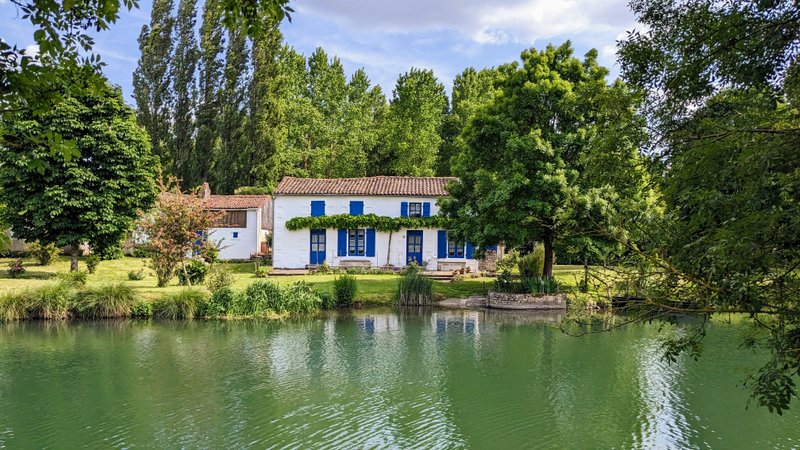
A former lock-keeper's house on the banks of the Sèvre provides the bucolic backdrop for this address, where the riverside setting enchants without overshadowing the kitchen's precision. The chef works with top-tier ingredients, applying careful technique while avoiding unnecessary embellishment. Each plate reflects a philosophy of restraint—modern cuisine grounded in quality produce, presented with clarity rather than spectacle.
A roadside inn with serious culinary intent, Au Fil des Saisons draws vegetables and herbs from its own cottage garden to fuel a menu rooted in regional Vendée tradition. Dishes like duck foie gras perfumed with juniper and herb-crusted guinea fowl reflect a stripped-back philosophy where quality ingredients speak plainly. The conservatory and garden offer seasonal settings for unhurried country meals.
Frequently Asked Questions
When is the best time to visit Marais Poitevin?
+
Late spring through early autumn offers the best conditions for boat excursions, with May and June particularly scenic when wisteria and water irises bloom along the canals. Summer brings warmer water temperatures but also more visitors to Coulon and Arçais. September provides excellent light for photography and fewer crowds on the waterways.
What is the difference between the wet marsh and dry marsh?
+
The "marais mouillé" or wet marsh — the famous Green Venice — consists of flooded prairies and narrow canals shaded by dense tree cover, centered around Coulon, Arçais, and La Garette. The "marais desséché" or dry marsh spreads toward the coast, comprising drained agricultural land protected by dykes, used primarily for grazing and cereal cultivation. Both landscapes reward exploration, though most visitors focus on the atmospheric wet marsh.
How do you explore the canals of Marais Poitevin?
+
Traditional plate boats poled by local guides depart from embarcadères in Coulon, Arçais, La Garette, and Maillezais. Self-guided options include kayaks and small electric boats available for hourly or daily rental. Cycling paths follow the canal towpaths and connect the main villages, while walking trails cross the bocage hedgerows of the dry marsh toward the Benedictine ruins at Maillezais.
Nearby Destinations
Explore FranceThe Marais Poitevin stretches across three departments — Vendée, Deux-Sèvres, and Charente-Maritime — a vast network of hand-dug canals dating to medieval monastic engineering. The "Green Venice" section near Coulon and Arçais draws visitors into tunnels of ash and willow, where flat-bottomed boats called plates navigate channels too narrow for anything else. Beyond this photogenic core, the dry marshland spreads toward Niort and the Atlantic coast, its bocage hedgerows sheltering a quieter rural France.
Accommodation here tends toward converted farmhouses and maisons de maître rather than large establishments. Many properties sit directly on the water, offering private moorings and dawn mist rising over the canals. The regional table centers on butter from Échiré, mogettes beans, farci poitevin, and eels prepared every which way. Restaurants cluster in Coulon and Maillezais, often serving lunch on riverside terraces where herons fish between courses.