The Park Hôtel Grenoble overlooks the Parc Paul Mistral, balancing city convenience with green-edged calm. Monochrome rooms gain personality through crimson or turquoise accents, Clarins amenities, and Nespresso machines; suites expand into lounge spaces fitted for meetings and hung with notable artwork. A fitness center includes steam rooms, the wine cellar supplies curated bottles, and winter shuttles ferry skiers to nearby resorts, making this a practical base for both alpine pursuits and Grenoble's tech and university quarter.
Explore Grenoble
Where to Stay
Where to Eat
Stéphane Froidevaux returned Grenoble to the Michelin constellation in 2021 after a three-decade absence, working from a refined 19th-century hôtel particulier whose garden shelters foraging chickens beneath a century-old linden. Trained under Marc Veyrat, he layers wild alpine botanicals—lavender from La Meije, lemon verbena—into precise modern compositions that honour mountain terroir. A fully vegetarian tasting menu runs alongside gastronomic and brasserie formats, each shaped by seasonal ingredients and the chef's own foraged herbs.
Guillaume Dubœuf, who honed his craft under Christophe Aribert, brings uninhibited modern cuisine to this charming bistro on a lively pedestrian street. His Bib Gourmand-recognized cooking showcases seasonal ingredients through varied set menus, each dish dynamic and flavour-forward. The vintage-meets-contemporary dining room provides a relaxed yet polished backdrop for this precision-driven bistronomic experience, ideal for travelers seeking accomplished cooking without formality.
A family legacy stretching back to 1852 anchors this central Grenoble address, where chic baroque interiors frame a confident repertoire of Gallic brasserie classics—beef tartare, magret of duck à l'orange, fish glossed with beurre blanc. The kitchen's signature ravioles of langoustine, foie gras, and truffles reveal ambitions beyond the expected, earning Michelin Plate recognition for polished execution without pretense.
Frequently Asked Questions
What is the best way to reach the Vercors plateau from Grenoble?
+
The D531 road climbs from Sassenage through the Gorges d'Engins to Villard-de-Lans in roughly forty minutes by car. Regular bus services also connect Grenoble's main station to Vercors villages, though a vehicle offers greater flexibility for exploring the plateau's scattered hamlets and trailheads.
Which neighborhoods in Grenoble are best for dining and evening walks?
+
The historic centre around Place Grenette, Place Notre-Dame, and the pedestrianised streets near the Jardin de Ville concentrates most of the city's established restaurants and wine bars. The Berriat-Saint-Bruno quarter west of the station has emerged as a younger, more eclectic dining district with natural wine shops and contemporary bistros.
When is the ideal season to visit Grenoble and the Vercors?
+
Winter brings skiing to resorts like Villard-de-Lans and Lans-en-Vercors, with reliable snow from December through March. Summer opens the plateau's hiking trails and via ferrata routes, while autumn offers quieter days, golden larch forests, and the walnut harvest that supplies the region's distinctive nut oil and cakes.
Nearby Destinations
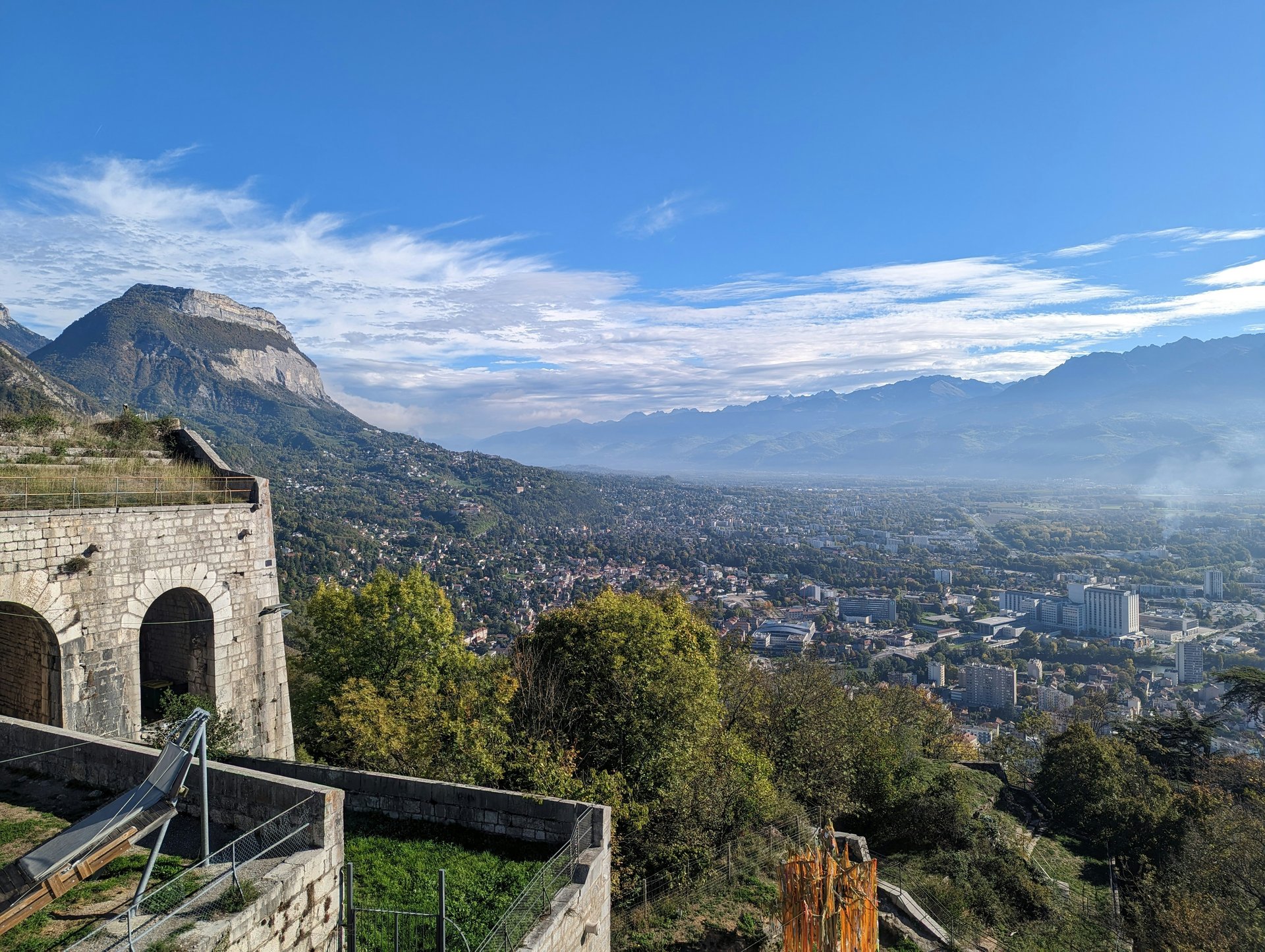
Explore FranceGrenoble sits at the confluence of the Drac and Isère rivers, a university city of 160,000 framed by the Chartreuse, Belledonne, and Vercors massifs. The old town clusters around Place Grenette and Place Saint-André, where café terraces fill medieval squares and the Palais du Parlement du Dauphiné recalls centuries of regional governance. A cable car — the Téléphérique de la Bastille — lifts visitors from the riverbank to a nineteenth-century fort with commanding views across the valley to Mont Blanc on clear days.
The Vercors plateau, rising southwest of the city, presents a landscape of limestone cliffs, high pastures, and villages like Villard-de-Lans and Autrans that have hosted skiers since the 1920s. This is Bleu du Vercors-Sassenage cheese country, and local tables feature ravioles, gratin dauphinois, and game from the surrounding forests. The restaurant scene spans traditional Dauphinois cooking to contemporary Alpine cuisine, while outdoor terraces make the most of the mountain light. Hotels range from properties with pools in the valley to intimate chalets on the plateau — a base for both cultural exploration and high-altitude pursuits.