An 18th-century manor with a pink façade and Italianate columns surveys the Saône valley, its classical grandeur now housing a pared-back designer dining room. Chef Romuald Fassenet, trained under Jean-Paul Jeunet, channels deep knowledge of Jura terroir into refined plates—his AOC poularde de Bresse with morels, bathed in Château-Chalon sauce, demonstrates masterful command of vin jaune reductions.
Chef Laurent Barberot brings formidable pedigree to this modern inn on Dole's outskirts—his résumé spans the Plaza Athénée, La Pyramide, and Le Clos des Sens. A single set menu distills Jura's terroir into refined plates: smoked eel, hand-dived scallops, Bresse poultry, local cheeses. The one-star kitchen operates exclusively from Friday to Saturday evening, demanding advance planning from serious gastronomes.
Chef Aurélien Moutarlier, trained under Romuald Fassenet at Château du Mont Joly, brings precision and creativity to this Bib Gourmand address housed in a renovated 19th-century building. His modern cuisine showcases local artisanal ingredients through vibrant, meticulously plated compositions where seasoning demonstrates particular finesse. The bright contemporary dining room, dressed in neutral tones, opens onto a terrace for warmer months.
Behind a minimalist façade on rue Arney, a Japanese chef orchestrates a Franco-Japanese repertoire that has earned Bib Gourmand recognition. The open kitchen reveals precise technique applied to confit pork belly glazed with ginger, alongside textbook sushi, maki, and tempura. A curated sake list accompanies each course. The pared-back dining room, serene and contemporary, suits both business dinners and leisurely gastronomic exploration.
Chef Laurent Barberot brings serious credentials to this Dole address, having trained at Plaza Athénée, Clos des Sens, and Bastide Saint-Antoine. His weekday bistro offers precise modern cooking—soft-yolked eggs in mushroom froth, duck breast paired with roasted figs and butternut squash—served in a contemporary dining room or on the garden-facing terrace. Come weekends, the space shifts to fine dining with a single tasting menu.
Regional Jura flavors anchor the kitchen at Les Jardins Fleuris, where dishes like venison terrine with foie gras and rabbit tournedos with mushroom duxelles and morel-enriched beef jus demonstrate confident terroir cooking. A frozen soufflé perfumed with Marc d'Arbois provides a fitting finale. The rear terrace offers a leafy retreat, and the welcome remains genuinely warm throughout.
Frequently Asked Questions
What makes Dole's old town distinctive for visitors?
+
The tanners' quarter along the Canal des Tanneurs preserves its 15th-century streetscape, with narrow passages opening onto the Doubs waterfront. The area between the Collégiale and Pasteur's birthplace concentrates the town's architectural heritage in a compact, walkable circuit.
How does Dole connect to the Jura wine region?
+
The Jura vineyards begin just east of town, with Arbois — the appellation's historic capital — less than 30 minutes away. Many restaurants in Dole maintain close relationships with local vignerons, offering deep selections of vin jaune, Savagnin, and Trousseau by the glass.
When is the best time to visit Dole?
+
Late spring brings the Percée du Vin Jaune festival to the region, while autumn offers harvest activity in surrounding vineyards. Summer evenings along the canal are particularly atmospheric, with the Saturday market operating year-round regardless of season.
Nearby Destinations
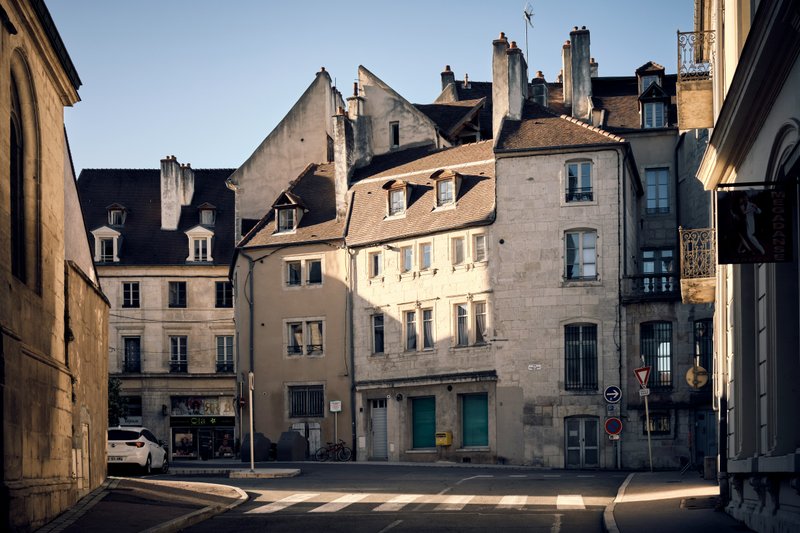
Explore FranceDole occupies a strategic bend of the Doubs River, its medieval tanners' quarter now a labyrinth of stone passages and Renaissance courtyards. The Collégiale Notre-Dame dominates the skyline, its bell tower visible from the towpath of the Canal du Rhône au Rhin. Louis Pasteur was born here in 1822; the house on Rue Pasteur now a museum, the surrounding streets lined with 16th-century facades that speak to the town's former status as capital of the Franche-Comté.
The dining scene draws heavily from Jura traditions — vin jaune reductions, Comté aged in the cellars of Poligny, Morteau sausage, freshwater fish from the Doubs. Restaurants cluster around the covered market hall and Place aux Fleurs, where Saturday mornings bring regional producers with Arbois wines and mountain honey. The canal banks offer quieter spots for evening aperitifs, the water reflecting the ochre stonework of the old quarter.