Chef Frédéric Doucet returned to his childhood home in Charolles—Burgundy's Little Venice—to create a fifteen-room retreat where guests wander freely through intimate spaces, kitchen included. Original wood-beamed ceilings and locally sourced objects anchor the contemporary rooms, while the one-Michelin-starred restaurant celebrates seasonal terroir. A full spa with hammam, sauna, and hot tub complements the heated outdoor pool overlooking landscaped gardens.
Where to Stay
Centuries-old stone walls along the Saône conceal twenty rooms where weathered brick meets contemporary steel and glass—no two spaces identical, each shaped by the building's historic bones. Chef Jean-Michel Carrette continues his father's Michelin-starred legacy in the dining room, while sommelier Julien Buiret presides over more than 900 wines. Family suites with mezzanine sleeping accommodate six; dogs welcome in rooms.
A century-old townhouse once built by the personal chef to Austria's last emperor now operates as a four-room boutique retreat in medieval Cluny. The intimate scale—just four guest rooms—belies sophisticated contemporary interiors that rival any urban design hotel. A small swimming pool and manicured garden provide quiet escapes, while the kitchen prepares picnic lunches and dinners for guests who book ahead.
Where to Eat
Frédéric Doucet returned to his childhood home in Charolles—known locally as 'The Little Venice of Charolais'—after training under Pierre Orsi, Paul Bocuse, and Maison Troisgros. His one-star kitchen draws exclusively from Saône-et-Loire: Charolais beef, snails, pike, and goat's cheese, transformed into dishes like 'The ox is in the meadow' and an alfalfa soufflé finished with hay-infused ice cream. Regional gastronomy at its most personal.
Within the unexpected setting of a former orphanage, chef Yohann Chapuis—shaped by his tenure at Lameloise—presents one-Michelin-starred regional cuisine defined by intensity and precision. Bresse chicken arrives three ways alongside red-wine poached pears, while Brittany ormers meet juniper and watercress in compositions of quiet sophistication. An accomplished sommelier navigates the extensive cellar with authority.
Stone walls and hefty oak tables frame a dining room flooded with natural light, steps from Saint Philibert Abbey. Chef Jean-Michel Carrette cooks on pure instinct, often varying dishes between tables on the same evening—a rare spontaneity grounded in exceptional Burgundian produce. The Green Star-awarded kitchen champions sustainability without sacrificing precision, while the weekday market menu offers remarkable value. A peaceful garden completes the setting.
Sébastien Chambru's one-starred table occupies a stone building amid Mâconnais vineyards, the Roche de Solutré rising in the distance. After training at Le Moulin de Mougins, Chambru spent formative years in Tokyo, where Japanese precision reshaped his handling of ingredients. The result: delicately creative plates—marinated tuna flamed tableside, dressed with beetroot-yuzu vinaigrette—that shift with the market. An adjoining bistrot pours exceptional regional wines.
A handsome Burgundy stone house along the Tournus road, La Marande holds one Michelin star for modern cuisine that balances striking presentation with genuine generosity. The elegantly contemporary dining room maintains the warmth of a private residence, while the patio offers an exceptional outdoor setting. An extensive Burgundy wine selection complements dishes crafted with evident devotion to premium regional produce.
A one-starred table amid the Pouilly-Fuissé vineyards, La Table de Chaintré showcases market-driven creativity through a weekly-changing menu. The chef's playful technique surfaces in signatures like frogs' legs double-cooked with Japanese breadcrumbs, while mains of Bresse chicken arrive alongside heirloom carrots and rainbow chard. Burgundy and Beaujolais wines from neighboring slopes complete each course with regional precision.
Christian Gaulin has commanded this one-starred address since 1991, working within a restored stone interior where exposed beams frame an open fireplace. His cooking draws deeply from Bresse and Burgundy — frogs' legs ravioli pooled in garlic cream, Charolais beef tournedos paired with seared foie gras, tender pigeon roasted on the crown. The Grand Marnier soufflé alone justifies the detour south.
A former coaching inn turned elegant dining room, Frédéric Carrion preserves original parquet floors and a working fireplace while delivering inventive modern cuisine rooted in regional produce. The wine list champions local Viré-Clessé appellations, a natural pairing for dishes shaped by the surrounding vineyards. Guests seeking immersion can extend their visit with comfortable rooms and a spa.
A restored farmhouse commands views over the Loire from deep Burgundian countryside, its interior stripped to a chic rusticity that lets Léo Troisgros's poetically titled dishes take center stage. Plates arrive bearing names like 'rose marine' and 'in the shade of the fig tree'—contemporary compositions that reward lingering. Guests can extend the reverie overnight in stilted timber lodges called cadoles.
A colourful façade signals this contemporary dining room within the medieval village of Ozenay, where an accomplished chef crafts plates with botanical precision—velvety green peas crowned with poached egg and wisps of smoked bacon emulsion among the signatures. Two terraces survey the local castle, offering an idyllic backdrop for refined Burgundian cooking that rewards the detour from nearby Cluny.
What to Do
Within Maison Doucet's Beauty Institute, treatment rooms designed for solo visitors or couples deliver personalized wellness rituals in intimate surroundings. The Japanese sauna and hammam provide restorative heat therapies, while a heated outdoor pool connects to both indoor and outdoor jacuzzis—creating layered opportunities for relaxation. Each session unfolds in cozy, carefully appointed spaces that encourage genuine escape from daily rhythms.
Frequently Asked Questions
What is the historical significance of Cluny Abbey?
+
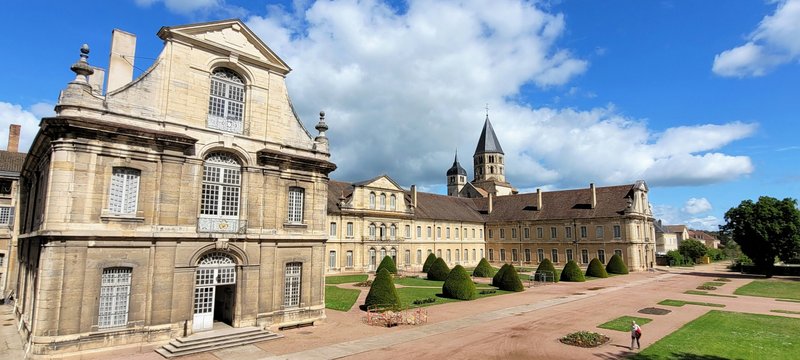
Founded in 910, Cluny Abbey became the center of monastic reform across medieval Europe, with over 1,000 dependent monasteries at its peak. The abbey church, largely demolished after the Revolution, was the largest in the world for nearly 500 years. The surviving south transept, along with the Musée d'Art et d'Archéologie, preserves exceptional Romanesque capitals and gives a sense of the original scale.
Which wines should visitors explore in the Mâconnais?
+
The Mâconnais is Chardonnay country. Pouilly-Fuissé produces the most concentrated whites, often aged in oak, while Saint-Véran and Viré-Clessé offer fresher, more immediate styles. The appellation Mâcon-Villages covers a broad range of village-level wines. Many domaines welcome visitors for tastings, particularly along the Route des Vins between Tournus and the Rock of Solutré.
What local specialties define the cuisine around Cluny?
+
The Charolais cattle raised in surrounding pastures provide beef of exceptional quality, often served simply grilled. Mâconnais goat cheeses appear at every stage of aging, from fresh and creamy to dry and pungent. Escargots de Bourgogne, jambon persillé, and gougères remain bistro staples, while the local Crémant de Bourgogne makes a less expensive alternative to Champagne.
Nearby Destinations
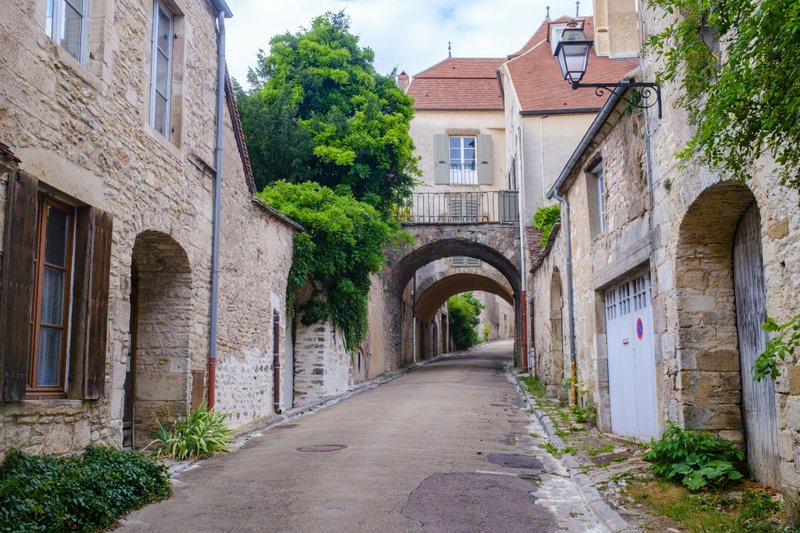
Explore FranceThe medieval town of Cluny still lives in the shadow of its once-mighty abbey, the largest church in Christendom until St. Peter's rose in Rome. Today the remaining transept and flour tower anchor a small town of honey-colored stone, where the Rue Lamartine leads past antiquarian bookshops and the weekly market fills the Place du Commerce with Charolais beef and rounds of Mâconnais goat cheese.
Beyond the town walls, the Mâconnais unfolds in a patchwork of Chardonnay vineyards climbing limestone slopes toward the dramatic outcrop of Solutré. Village producers in Pouilly-Fuissé and Saint-Véran pour wines with mineral precision in cellars carved from the same rock. The accommodation scene here favors converted domaines and family-run addresses where dinner means regional classics — coq au vin jaune, pike quenelles, and tarts of fromage blanc — served on terraces overlooking the vines.