Skip to content

Cancale

Where to Stay

1. Château Richeux - Les Maisons de Bricourt

2 Michelin Keys· Relais & Châteaux

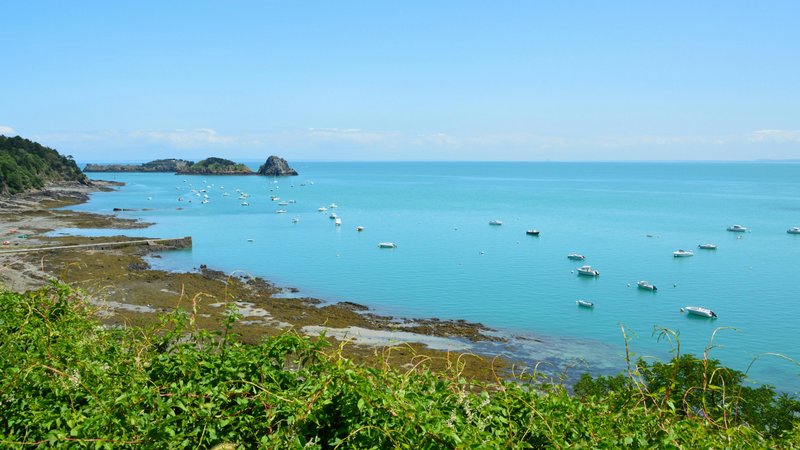
Gazing across the bay toward Mont Saint-Michel, this 1920s château anchors a sprawling Breton estate that includes clifftop rooms at Les Rimains, rustic-chic seaside cabins, and renovated farmhouse cottages. Chef Hugo Roellinger's three-Michelin-starred restaurant Le Coquillage showcases creative maritime cuisine drawn from kitchen gardens and local waters, while the Celtic Baths spa offers swimming pools facing the waves and plant-based reflexology treatments.

Where to Eat

1. Le Coquillage

★★★ Michelin· Green Star ●· Relais & Châteaux

Hugo Roellinger's three-Michelin-starred table occupies a 1920s villa commanding views across the bay of Mont-Saint-Michel. Having abandoned meat entirely, the chef builds his tasting menu—"At the whim of the wind and the moon"—around sustainable seafood and seaweed, his signature ingredient. Lobster arrives two ways with sauces of rare complexity, while low-sugar desserts extend the marine theme. Garden produce meets the Roellinger family's legendary spice craft throughout.

2. La Table Breizh Café

★ Michelin

Above the bustling Breizh Café crêperie, chef Fumio Kudaka—shaped by kitchens under Guérard, Veyrat, and Roellinger—orchestrates a one-starred table where Breton ingredients meet Japanese precision. Roscoff lobster arrives alongside shiitake, Challans duck takes on negi miso, while the dining room frames the bay of Mont Saint Michel. Five minimalist rooms upstairs extend the stay, overlooking La Houle's oyster beds.

3. Côté Mer

Michelin Selected

Overlooking Cancale's working harbor, Côté Mer draws its menu straight from the waters below—scallops, oysters, lobster, and the prized local abalones arrive with the tides. The kitchen pairs this coastal bounty with saltmarsh lamb from nearby pastures, delivering honest Breton cooking without pretense. Surrounded by weathered fishermen's cottages, the bay views and accessible pricing make this a practical choice for seafood enthusiasts.

4. La Gouesnière - Domaine du Limonay

Michelin Selected

A Breton institution dating to 1936, this refined table draws its identity from Saint Malo Bay's pristine seafood and the salt-marsh lamb of the surrounding coastline. The kitchen's modern approach honors regional ingredients through delicate preparations, with particular mastery evident in the chef's signature jus and sauces—rich, layered reductions that anchor each plate with depth and precision.

5. Le Bistrot de Cancale

Michelin Selected

Hugo Roellinger returns to Port-Mer, the beach of his childhood, with a wood-clad dining room designed by Christophe Bachmann and a terrace overlooking bobbing fishing boats and distant Mont-Saint-Michel. The seafood—oysters, langoustines, sole, turbot, coal-fired lobster—arrives impeccably fresh, punctuated by Olivier Roellinger's signature spice blends. A 1930s Louis Garin fresco depicting Saint-Malo fishermen completes the nostalgic maritime atmosphere.

6. Breizh Café Cancale

Bib Gourmand

Bertrand Larcher brought Breton galettes to Tokyo in 1996, then returned to open this Bib Gourmand crêperie on Cancale's port. The Japanese influence persists in signature Breizh rolls—buckwheat galettes wrapped maki-style—and creative touches like Saint Malo wakame seaweed. Organic ingredients arrive from trusted local producers: oysters from Parcs Saint-Kerber, butter from Maison Bordier. The upstairs room frames sweeping views toward Mont-Saint-Michel.

7. Bistrot 1936 - Domaine du Limonay

Michelin Selected

Light pours through bay windows into this contemporary bistro, where exposed beams and pale wood create an airy counterpoint to the Maison Tirel-Guérin legacy. The kitchen, guided by the fine dining chef, builds its menu around prime ingredients—spider crab, foie gras, farm-reared pork. A standout: grilled belly paired with wafer-thin andouille, finished with sweet Roscoff onion jus.

8. L'Ormeau

Michelin Selected

Overlooking the fishing fleet that supplies its kitchen, L'Ormeau celebrates Cancale's legendary shellfish with unfussy precision. The namesake abalone shares the menu with local scallops roasted on the shell alongside vegetable risotto and white butter, while razor clams arrive generously stuffed with parsley, garlic, and butter. A stylish dining room opens onto a terrace where the briny air matches the plates.

What to Do

1. Spa Bains Celtiques

Relais & Châteaux

Raw stone and timber frame this contemplative wellness space within the du Vent farmhouse, where carefully placed openings channel natural light across the treatment rooms. The Bains Celtiques draw on both Ayurvedic traditions and Breton coastal botanicals, with signature reflexology sessions designed to dissolve tension through focused footwork. A heated pool faces the tidal expanse of Mont-Saint-Michel bay, complemented by sauna and hammam facilities.

Frequently Asked Questions

When is the best season to visit Cancale for oysters?

+

Oysters are harvested year-round, though the traditional French rule favors months containing the letter 'R' (September through April) when the waters are coldest and oysters at their firmest. Summer visits offer warmer weather for coastal walks but coincide with oyster spawning season, when some find the texture milkier. The oyster market stalls along Port de la Houle operate daily regardless of season.

How do the Cancale oyster parks work and can visitors see them?

+

The oyster parks stretch across the tidal flats of the Bay of Mont-Saint-Michel, visible from the port at low tide as a grid of wooden posts and metal frames where oysters mature for three to four years. Several local producers offer guided visits during low tide, walking visitors through the parcs à huîtres to explain cultivation methods passed down through generations of Cancale families. The Ferme Marine museum provides a comprehensive overview for those preferring dry feet.

What is the difference between dining at the port stalls versus the restaurants?

+

The wooden stalls along the quay sell freshly shucked oysters by the dozen, eaten standing with lemon and brown bread — an informal, inexpensive experience favored by locals and visitors alike. The restaurants above and behind the port offer fuller menus, wine pairings, and prepared seafood dishes, with prices reflecting the tablecloth service. Both draw from the same morning catch; the distinction is atmosphere and elaboration rather than quality of product.