Skip to content

Bayonne

1. Le Gantxo

Bib Gourmand

Named after a traditional pelota pass, Le Gantxo overlooks the village trinquet where the Basque sport is played—a setting as authentic as the cooking. Chefs Isabelle and Laurent Miremont interpret regional traditions through a contemporary lens, producing generous, flavor-driven plates that earned the restaurant a Bib Gourmand. The atmosphere is relaxed, the portions ample, the prices fair: bistronomic dining with genuine local soul.

2. Basa

Michelin Selected

Chef Fabian Feldmann, known for L'Impertinent in Biarritz, orchestrates a menu that pivots deftly between Basque tradition and Asian verve—black pudding and calf's head share billing with spicy steak bao and kimchi. The setting, a former commercial court, retains its original doors and benches within a sleek contemporary frame. Local sourcing runs deep, matched by a wine list championing organic and natural producers.

3. Germaine

Michelin Selected

Named for the chef's grandmother, Germaine operates as an intimate fifteen-seat counter where Maxime Chentouf works solo, orchestrating a single set menu served simultaneously to all guests. His farm-to-table cooking draws on robatayaki technique, with fermentation, citrus, and seaweed woven through each course. The result is precise, personal, and deeply rooted in Basque terroir.

4. Goxoki

Michelin Selected

The Hourcastagnou family runs this Petit Bayonne address with quiet confidence, building menus around Basque seasonal produce and serious game cookery. Autumn brings wood pigeon—fillet and leg pithiviers—alongside hare à la royale prepared with classical rigor. Wild turbot dressed in beurre blanc speaks to the kitchen's equal command of local seafood. The setting is timelessly elegant, the cooking generous and rooted.

5. La Galupe

Michelin Selected

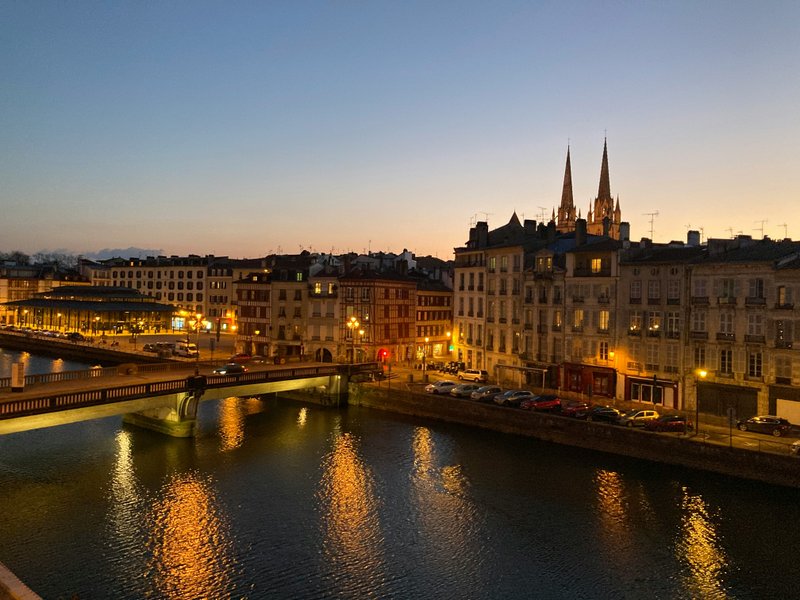
Three centuries of history line the banks of the Adour at this former bargemen's inn, where stone floors, exposed beams, and an original fish counter with drying hooks preserve the building's maritime past. Chef Stéphane Besse, successor to legendary Basque cook Christian Parra, draws exclusively from village producers—local fishermen, duck farmers, even the ceramist who crafts the plates—for cuisine rooted entirely in its terroir.

6. La Grange

Michelin Selected

Stone walls and contemporary lines frame this riverside address on the Quai Galuperie, where the kitchen builds its menu around daily market finds. Bistro classics arrive with unmistakable Basque inflections—think robust regional flavors over careful technique. The Michelin Plate signals reliable cooking, while summer brings the draw of an arcaded terrace overlooking the Nive, ideal for long Basque Country lunches.

7. La Table - Sébastien Gravé

Michelin Selected

Sébastien Gravé, the chef behind Paris's acclaimed Pottoka, has returned to his Basque roots with this creative bistronomy address on Bayonne's quayside. The menu draws deeply from South-West terroir—natural hake landed at Saint-Jean-de-Luz, Ibaïma pork shoulder, charred mackerel with bright marinades. Guests choose between the zinc counter, a convivial table d'hôtes, or an intimate two-seat table inside the kitchen itself.

8. Maison Joanto

Michelin Selected

Traditional Basque architecture frames a dining room where conviviality runs deep and the kitchen delivers with precision. The chef, shaped by distinguished establishments, builds menus around regional intensity—pâté en croûte with impeccable layers, milk-fed Pyrenean lamb of remarkable tenderness, Armagnac baba soaked to perfection. A Michelin Plate holder offering exceptional value, Maison Joanto rewards those willing to venture just beyond Bayonne.

9. Nuance

Michelin Selected

Brice Goeuriot, trained at Choko Ona in Espelette, runs this intimate dining room where Basque artisans have shaped an interior of natural materials. The blind tasting menu showcases lamb in three preparations—leg, chop, shoulder confit—alongside precise botanical accents: oxalis flower, sea fennel sorbet, wild garlic sabayon. Every ingredient traces to small-scale organic producers from the Landes and Basque Country.

10. Relief

Michelin Selected

Chef Thibault Deverre has turned this refurbished Saint Esprit bistro into a magnet for Bayonne's young gastronomes. His cooking pivots on spontaneity and precision—crabmeat paired with asparagus ice cream and grapefruit tempura, red tuna over creamy polenta with smoked aubergine and crisp red cabbage. Desserts follow suit: white chocolate cream with strawberry and gariguette sorbet. Creative, confident, unmistakably personal.

Frequently Asked Questions

What makes Bayonne's ham different from other cured hams?

+

Bayonne ham carries a Protected Geographical Indication and must be cured in the Adour basin's specific microclimate. The salt comes from Salies-de-Béarn, and the aging process of twelve to eighteen months in the Pyrenean foothills creates a delicate, less salty profile than its Spanish neighbors. Local producers in the surrounding villages open their curing cellars to visitors, particularly during the annual ham fair in April.

Which neighborhoods should I explore beyond the tourist center?

+

Saint-Esprit, across the Adour from the old town, holds the former Jewish quarter and the church where pilgrims on the Santiago route once gathered. The quartier's quieter streets reveal Art Deco facades and local bars untouched by tourism. Further out, the Château-Vieux district beneath the citadel offers walks along the rampart gardens with views toward the Pyrenean foothills on clear days.

How does Bayonne connect to the wider Basque Country?

+

The town serves as the gateway to both French and Spanish Basque territories. Biarritz sits fifteen minutes west, while San Sebastián lies an hour south across the border. The Basque language appears on street signs throughout, and the pelota courts — trinquets — host matches most evenings. The cultural boundary here is porous; many locals cross into Spain for Sunday lunch, and Spanish Basque chefs regularly appear in local kitchens.