A Renaissance manor transformed into a twelve-room retreat, 't Fraeyhuis keeps its grand fireplace and exposed beams while adding moody photography and contemporary design. The glass-walled lounge opens onto a garden bar that draws Bruges locals alongside overnight guests. Bordering Minnewater Park and its swan-filled lake, this intimate address suits couples seeking a romantic base within walking distance of the medieval centre.
Explore Bruges
Where to Stay
A fifteenth-century palace commissioned by the Duke of Burgundy for his royal wedding, this former chateau remains Bruges' sole five-star address. Original oil paintings and stained glass coexist with heated marble floors; tapestry-toned rooms open onto sculpted gardens punctuated by contemporary art. The on-site spa includes a sauna, while five family rooms with connecting doors accommodate multigenerational parties with ease.
This Italianate villa once housed the counts and dukes of the Van Cleef dynasty, and its sixteen rooms preserve that aristocratic spirit through Missoni and Hermès fabrics, custom Italian furnishings, and marble bathrooms. Mornings unfold on a canal-facing terrace with à la carte breakfast; evenings retreat to Le Saint Petersbourg, a retro cocktail bar. Families find welcome in suites with sofa-beds and available babysitting.
A 19th-century mansion steps from the Markt houses just 22 rooms dressed in Louis XVI elegance—wainscoting, chandeliers, marble baths—with a sundeck surveying Bruges' medieval rooftops. Fitness equipment occupies a vaulted 12th-century cellar; the Sothys spa offers hammam and sauna rituals. Restaurant Le Mystique, unchanged since 1869, draws from a 14th-century wine cellar below. Family-run and fiercely intimate.
This fifteenth-century patrician mansion on the Den Dijver canal draws a quietly illustrious crowd—David Hockney, Colin Farrell, Belgian royalty among them. Ancient vaults, exposed beams, and worn wooden staircases anchor 45 individually styled rooms, some overlooking the water. Below ground, a glass-roofed pool, sauna, and hammam offer refuge, while Michelin-starred Restaurant Mémoire delivers refined contemporary Belgian cooking with canal views.
A 19th-century notary's mansion on Moerstraat now houses just six to nine suites, each designed by House of Porters with original parquet, antique terracotta tiles, and copper fixtures alongside XXL bathtubs. The private garden—among Bruges' largest—shelters swans, fruit trees, and a natural swimming pool, while spa facilities include sauna, jacuzzi, and hot spring bath. Chef Youssef Zairi's Belgian breakfast and reservations-only Sunday tea complete an intimate retreat.
An adults-only boutique of just sixteen rooms, Le Foulage wraps guests in moody lighting, elegant interiors, and a lingering signature scent from the moment they arrive. Freestanding tubs and plush bedding set a romantic tone, while Bar Bulles—a speakeasy inspired by 1920s clandestine drinking dens—adds après-dark intrigue with champagne and cocktails steps from Bruges's cobbled lanes.
Four rooms occupy this stately canal-side house on the Groenerei, where the rear garden delivers an improbable sense of countryside seclusion within walking distance of the Markt. A swimming pool, hot tub, and onsen-style bathing complement spa-grade bathrooms stocked with Hermès amenities. The intimate scale suits couples seeking refinement without the formality of larger properties.
A medieval and 16th-century townhouse perched above one of Bruges' quiet canals, Bonifacius operates as an intimate maison d'hôte with the polish of a grand hotel. The property caters exclusively to adults, its refined interiors and canal-side setting cultivating an atmosphere suited to romantic escapes. With just a handful of rooms, service reaches a level of attentiveness rare in the city.
A 16th-century mansion just steps from Bruges' medieval center, Maison le Dragon has been refurbished with a collector's eye—antiques and objets d'art fill every corner, giving each room a distinctive personality. The intimate scale and romantic atmosphere draw couples repeatedly, though families seeking privacy can book the entire house for an exclusive stay.
Where to Eat
Filip Claeys, a fisherman's grandson holding two Michelin stars, has turned sustainable seafood into high art at this stepped-gable house on Bruges' edge. Through his NorthSeaChefs collective, he champions overlooked species while tracing each catch to its source boat. The signature North Sea crab arrives with a trio of sauces—roe, walnut cream, seaweed oil—each revealing new dimensions of the shellfish. Sandra Meirlevede's warm service dispels any formality.
Staff in white sneakers and a name meaning 'Without a Tie' signal the relaxed ethos at this Michelin-starred address on Langestraat. Chef Henk Van Oudenhove navigates between French classicism and bolder accents—spit-roasted mullet with nduja, langoustine lifted by an intense shellfish-head bisque, pork cheek paired with octopus. Game season draws regulars for dishes like tender partridge. The adjacent B&B La Suite offers a convenient overnight option.
Geert Van Hecke, the 'Godfather of Belgian gastronomy' who maintained three Michelin stars for two decades at the Karmeliet, now presides over this intimate one-star seafood address. His signature scallops arrive lightly seared beneath a silky béarnaise enriched with carrot and orange jus, alongside an aniseed-laced vegetable millefeuille. Mireille orchestrates the dining room with commanding cheese trolley service, while an impressive art collection transforms dinner into something resembling an evening at the chef's private table.
Chef Bruno Timperman brings a rock 'n roll sensibility to French gastronomy at Bruut, where a historic Bruges building conceals a strikingly austere interior. His single surprise menu channels technical precision into bold compositions—think slow-cooked partridge paired with cèpes, pine buds, and garlic-marinated capers. The philosophy here links food inseparably with wine, creating an experience for adventurous palates seeking intensity over convention.
Asian-inflected creativity drives the kitchen at this farm-to-table address on 't Zand, where steak tartare arrives with Korean spice and ceviche carries bright Peruvian heat. The menu roams from Hong Kong–style turbot to shareable plates designed for grazing at the bar. A Michelin Plate holder with a buzzy, laid-back atmosphere, LESS draws Bruges locals and visitors seeking bold, produce-driven cooking without formality.
The historic farmstead that once housed Hertog Jan now belongs to Gert De Mangeleer's Bar Bulot, a one-Michelin-star brasserie where Franco-Belgian classics arrive stripped to their essence. The kitchen's legendary hanger steak—served blue yet hot, a technical feat—comes flanked by foie gras and crispy frites, while sole meunière showcases Zeebrugge shrimps against buttery mash. Garden views and a verdant terrace complete the refined tableau.
A short drive from Bruges, this one-Michelin-starred table in Damme draws serious food travelers to its romantic, fire-warmed dining room. Chef Patrick's farm-to-table cooking balances precision with playful invention—young pigeon arrives with robust jus and a whisper of ras-el-hanout, Mediterranean warmth against Flemish tradition. His wife Cora commands the wine list with equal authority, making this husband-wife operation essential dining for the region.
Chef Timothy Goffin holds a Michelin star for creative French cooking that pivots between local tradition and Asian inflection. His signature—a thick beefsteak tomato layered with crushed raspberries and vanilla ganache—signals a kitchen unafraid of unexpected pairings. Full-bodied sauces anchor each course while fruity, comforting notes provide counterpoint. Valérie's wine selection tracks the menu's inventive arc, making this a destination for adventurous gastronomes near Bruges.
Chef Diego De Baets runs a romantic bistro on Hoogstraat where art adorns the walls and Franco-Belgian cooking commands the table. His signature crispy sweetbread arrives lacquered in gravy sharpened with sakura vinegar, while wagyu and scallops swim in an intensely savory house consommé. De Baets often emerges from the kitchen to finish plates himself—a personal touch that matches his bold, sauce-driven style.
An 11th-century country inn on the outskirts of Bruges, Auberge de Herborist retains its original romantic fireplace while Chef Hanbuckers tends a flower-filled cottage garden visible from the orangerie and terrace. His classic cuisine places vegetables at center stage, presented with meticulous artistry alongside impeccable seasonal ingredients. The atmosphere suits unhurried lunches and intimate evening celebrations alike.
What to Do
Within Hôtel Heritage's 19th-century walls, steps from the Markt, Spa Le Moment by Sothys delivers personalized facial and body treatments alongside therapeutic massage. The specialist team tailors each session to individual goals—whether deep relaxation, skin renewal, or targeted beauty work. A sauna and hammam complete the facilities, while the hotel's medieval vaulted fitness room, dating to the 12th century, offers atmospheric post-treatment exercise.
Frequently Asked Questions
Which Bruges neighborhoods offer the best hotel locations?
+
The central zone between the Markt and the Minnewater covers most ground worth staying in. For quieter surroundings, look east toward Sint-Anna or south near the Begijnhof. Properties along Dijver and the canals west of the Burg offer water views, though expect some daytime boat traffic. The area around 't Zand station suits those arriving by train but sits outside the historic core.
What regional dishes define Bruges restaurant menus?
+
Waterzooi — a creamy stew of chicken or fish — appears on most serious menus, alongside stoofvlees braised in local ale. North Sea catches arrive daily from Zeebrugge: grey shrimp, Dover sole, and turbot feature prominently. Flemish asparagus dominates spring menus, while winter brings witloof (Belgian endive) and game from the Ardennes. Chocolate shops outnumber most other food retailers, and the praline tradition here predates the more famous Brussels houses.
When is the best time to visit Bruges without crowds?
+
November through early March sees fewer day-trippers, though the Christmas market draws weekend crowds from late November. January offers the emptiest streets and lowest hotel rates, with most restaurants maintaining winter hours. Late September combines mild weather with thinner tourist numbers after the summer peak. Weekday visits year-round avoid the coach parties that fill the Markt by mid-morning on Saturdays and Sundays.
Nearby Destinations
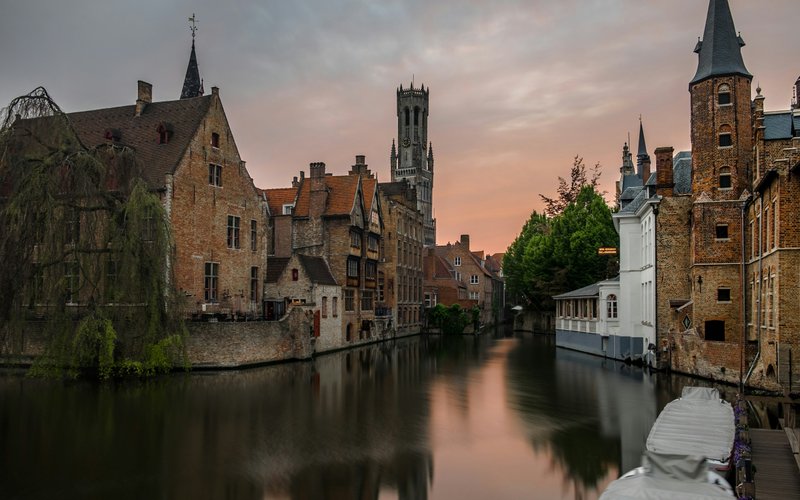
Explore BelgiumBruges rewards the slow traveller. The city's medieval core, threaded by canals and hemmed by stepped-gable facades, unfolds best on foot — from the hush of the Groeninge quarter to the grander sweep around the Markt and Burg squares. Hotels here occupy converted merchant houses, former monasteries, and discreet contemporary builds tucked behind centuries-old brickwork. The better addresses cluster within the oval traced by the old ramparts, where morning light catches the water along Dijver and Rozenhoedkaai.
Dining tilts toward refined Flemish cooking: waterzooi, North Sea sole, and the occasional nod to France. The restaurant scene concentrates around Sint-Anna and the quieter southern streets near the Begijnhof, where chefs work with suppliers from the Westhoek farmland and the Zeebrugge quays. After dinner, the city's brown cafés serve Trappist ales and aged genever in wood-panelled rooms unchanged for generations. Bruges closes early by Belgian standards — by midnight the cobblestones belong to the swans.