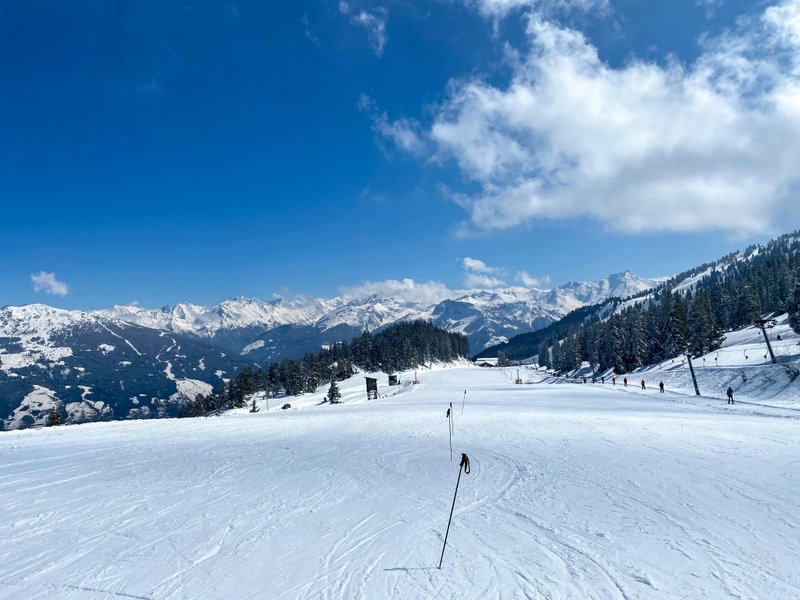
With 250 kilometers of piste accessible directly upslope, this 70-room Tyrolean retreat in Tux delivers an all-inclusive ski experience anchored by warm alpine tradition. Interiors favor natural wood, mountain panoramas, and plush textiles, while the Bergfriedalm tavern draws guests for convivial après-ski gatherings. A spa featuring Turkish bath, jacuzzi, and sauna complements both indoor and outdoor pools—ideal for active travelers seeking genuine Austrian hospitality.
Where to Stay
Directly adjacent to the Zillertal-Uderns championship course, this 33-room property draws golfers and skiers seeking Alpine immersion without the crowds. Interiors layer natural wood against floor-to-ceiling mountain panoramas, while an outdoor pool, Turkish bath, and sauna extend the après-activity ritual. The intimate scale ensures attentive service; the setting guarantees dramatic views at every turn.
Five generations of the same family have shaped this 67-room mountain retreat above Mayrhofen, where a striking dual-level infinity pool frames the Zillergrund peaks. Alpine-inflected rooms feature platform beds and private balconies; a full wellness circuit includes Turkish bath, sauna, and jacuzzi. Both indoor and outdoor pools suit year-round visits, and the pet-friendly policy welcomes four-legged companions.
Sprawling across an alpine estate with views of the Tux peaks, this 60-room chalet-style retreat wraps guests in spruce-paneled warmth, plaid textiles, and pinecone accents. The rooftop pool delivers panoramic mountain theater, while below, an extensive spa circuit moves through hammam, sauna, and jacuzzi. Indoor and outdoor pools, landscaped gardens, and pet-friendly policies suit families and couples seeking Austrian alpine immersion.
With just 21 rooms clad in natural oak and plush textiles, Das Kaltenbach operates as an intimate alpine retreat where privacy takes precedence. The rooftop spa commands attention: a heated infinity pool suspended above the Zillertal valley, flanked by Turkish bath and sauna facilities. Indoor and outdoor pools, panoramic windows in every suite, and proximity to golf courses make this a refined base for active mountain stays.
Balconies on all 36 rooms frame the Zillertal Alps at this family-run boutique property, where natural wood and stone create an authentic mountain lodge atmosphere. Two cable cars depart mere meters from the entrance, delivering skiers straight to the slopes. The Green Spa offers restorative treatments and sauna sessions, while a seasonal outdoor pool and pet-friendly policies suit active families exploring Mayrhofen's village center on foot.
Swiss stone pine frames the interiors of this 29-room alpine retreat in the Schladming-Dachstein region, where rustic ski huts dot the garden grounds and every room opens onto a private balcony facing the massif. Indoor and outdoor pools steam against the mountain backdrop, complemented by sauna facilities and a pet-friendly policy that welcomes four-legged companions to this intimate wellness address.
At the gateway to the Tuxer valley, STOCK resort commands sweeping Alpine views from its 106 rooms, each dressed in warm natural wood and floral touches that echo the surrounding landscape. The spa complex offers jacuzzi, sauna, and steam rooms alongside both indoor and outdoor pools. Families settle in easily with a dedicated kids' club, while the garden and library provide quieter retreats.
Where to Eat
Chef Maximilian Stock earns a Michelin star at this intimate wood-panelled dining room within the Alpenhof, where just a handful of tables creates an atmosphere of quiet refinement. His three- to six-course menus reveal precise technique—sliced cabbage with sauerkraut beurre blanc and pomme soufflée demonstrates the kitchen's inventive approach to Alpine ingredients. Chefs occasionally deliver courses themselves, adding personal warmth to the evening.
Peter Fankhauser tends a thousand-square-metre permaculture garden steps from his dining room, harvesting the vegetables and fruits that anchor each vegetarian tasting menu—nine courses midweek, thirteen on weekends. The kitchen holds both a Michelin Star and a Green Star, recognition of dishes built on intensity and layered flavor. Service begins simultaneously for all tables, each course accompanied by explanations of the farm-to-fork philosophy.
Perched at high tables with unobstructed views into the kitchen, diners at Bergfried's Chef's Table witness Sebastian Stock orchestrate a nine-course surprise menu built on local Tyrolean ingredients. Each dish arrives with explanation and musical accompaniment, the intensity of flavors matched by the theatrical presentation. Franz Stock's wine pairings sharpen the experience, while the family-run service maintains warmth throughout an evening that rewards the curious palate.
Dating to the 15th century, this intimate dining room seats just sixteen guests amid original wood panelling and an antique ceramic stove. The seasonal set menu draws exclusively on regional Austrian produce, each course matched with selections from an extensive cellar. Located within Der Böglerhof wellness hotel, the Fuggerstube delivers a rare confluence of alpine heritage and precise contemporary gastronomy.
A steep climb above Zellberg rewards diners with sweeping valley panoramas and aromatic, flavor-driven cooking that bridges Alpine tradition with classical technique. The kitchen showcases regional ingredients—local char, Tauern lamb prepared two ways—alongside refined touches like Tristan rock lobster, while a textbook Wiener schnitzel anchors the menu. Friendly, experienced service and a cosy mountain atmosphere complete the experience.
Adjacent to Hochfügen's cable car station, Lamark Stube occupies a series of intimate Alpine dining rooms where rustic wood paneling and warm lighting set the tone. Chef Alexander Fankhauser's kitchen moves confidently between regional classics—veal lights braised in Riesling, impeccably rendered Tafelspitz—and more inventive preparations like confit char with greaves dumplings. The panoramic terrace rewards diners year-round with sweeping valley views.
Frequently Asked Questions
Which village is best for skiing access in Zillertal?
+
Mayrhofen offers the most direct access to major ski areas including Penken, Ahorn, and connections to the Ski Zillertal 3000 network. The Hintertux Glacier, located at the valley's end, provides the only year-round skiing in the region and connects to Mayrhofen's lift system in winter.
What is the traditional food of the Zillertal valley?
+
Tyrolean mountain cuisine dominates — expect Kaspressknödel (cheese-filled bread dumplings), Gröstl (pan-fried potatoes with beef and onion), and Zillertaler Krapfen, a local specialty of buckwheat pasta filled with potato and fresh curd cheese. Game dishes featuring venison and chamois appear on autumn menus.
When is the best time to visit Zillertal for hiking?
+
Late June through September offers optimal conditions, with alpine meadows in bloom through July and stable weather typically lasting into early October. The Berliner Höhenweg and other high-altitude routes above 2,500 meters remain snow-free from mid-July onward. Mountain huts operate from June through late September.
Nearby Destinations
Explore AustriaThe Zillertal valley cuts thirty kilometers into the Tyrolean Alps, its four tributary valleys — Tuxertal, Zemmgrund, Stillupgrund, and Zillergrund — each offering distinct character. Mayrhofen anchors the valley's southern end with its Penken cable car and concentrated après-ski scene, while Fügen and Zell am Ziller serve as quieter bases in the lower valley. The Hintertux Glacier provides year-round skiing at altitudes reaching 3,250 meters, a rarity in the Eastern Alps. Summer brings hiking across 1,400 kilometers of marked trails, with the Berliner Höhenweg drawing serious trekkers to its high-altitude hut-to-hut route.
Local dining follows Tyrolean tradition with modern interpretation — Kaspressknödel, Gröstl, and game from the surrounding forests appear alongside contemporary Alpine cuisine in hotel restaurants and village Stuben. The valley's dairy farms produce Heumilch cheese and butter that supply both local kitchens and morning breakfast buffets. Evening options range from wood-paneled Gasthöfe serving Wiener Schnitzel to refined dining rooms where young Austrian chefs work with foraged herbs and local beef. The Zillertalbahn, a narrow-gauge steam railway dating to 1902, still connects the valley floor, its wooden carriages carrying day-trippers between villages.