Dark, moody interiors set the stage for Artis's one-starred cuisine, where surprise menus of four to eight courses showcase exceptional international sourcing. Hand-dived Norwegian scallops arrive with wasabi, daikon, and horseradish—a study in precision. The chef's table positions diners directly before the open kitchen, offering front-row seats to modern, ingredient-driven cooking that rewards the curious palate.
Explore Graz
Perched dramatically on the Schlossberg's steep slopes, this 1820 winegrower's house offers sweeping panoramas over Graz that reward the climb—whether by funicular, mountain lift, or footpath. Chef Milivoj Novak and his wife Manuela run an intimate operation where a single surprise menu unfolds nightly at seven. Arrive early for drinks on the small terrace as the city lights begin to glimmer below.
Within the Parkhotel—an inn since 1574—Zur goldenen Birn resurrects Habsburg-era recipes through a contemporary lens. The kitchen offers a single set menu of four or eight courses, each dish rooted in classical technique yet animated by seasonal imagination: think truffle with potato and egg yolk, or duck paired with blueberry and red cabbage. Chefs present their creations tableside, while the dining room balances period architecture against modern refinement.
Four tables, an open kitchen, and chef-patron Mike Johann orchestrating every detail — this intimate dining room in Bruck an der Mur rewards those willing to venture beyond Graz. The evening opens with 'Johanns Abendmahl', a procession of small bites, before guests compose their own tasting menu from a daily-changing selection. Johann himself recommends pairings from a cellar of over 900 wines.
A fifteen-minute drive from Graz's centre delivers diners to this hillside retreat, where a sprawling terrace surveys meadows rolling toward the city below. The kitchen honours regional sourcing through seasonal menus, offering both à la carte selections and six- or seven-course surprise compositions. Traditional Wirtshausklassiker—Frittatensuppe and slow-braised Tafelspitz—anchor the repertoire, served with unhurried, genuine hospitality.
Beneath soaring vaulted ceilings near the Graz Museum, Schmidhofer im Palais delivers both Austrian tradition and international flair. The Wiener schnitzel arrives impeccably prepared, paired with salad from locally grown Graz butterhead lettuce, while tuna sashimi rolls with tartare speak to broader culinary ambitions. Window tables offer prime people-watching along Sackstraße; summer brings the courtyard terrace into play for al fresco dining.
Housed within a section of Graz's former defensive wall, Stammtisch am Paulustor pairs historic vaulted ceilings with sharp contemporary design. The kitchen celebrates Styrian produce—carpaccio of local Alpine ox, crisp veal schnitzel, charcoal-grilled steaks—while monthly guest winemaker evenings add depth to an already accomplished program. Wednesday summer barbecues draw a loyal local crowd to the courtyard terrace.
Dry-aged beef from Austrian and Nebraska herds arrives at the table as tenderloin, bone-in rib-eye, T-bone, or porterhouse—each cut executed with precision. The dining room occupies a light-filled atrium beneath graceful arched ceilings, lending an elegant backdrop to the carnivorous focus. House-made steak fries deserve particular attention. Situated within the Boutique Dom Hotel, it draws serious steak enthusiasts to central Graz.
Inside forumKLOSTER, a seminar centre in Gleisdorf, chef Jan Aigner runs a strikingly contemporary dining room where artistic décor rivals anything in Graz proper. His cooking draws on international techniques while anchoring itself in regional, seasonal ingredients—available à la carte or through a surprise tasting format. A terrace and bar extend the experience, and service maintains a polished yet welcoming pace throughout.
Frequently Asked Questions
Which neighborhoods in Graz offer the best accommodation options?
+
The Altstadt provides immediate access to historic sites and pedestrianized shopping streets. Properties near Hauptplatz sit within walking distance of major attractions. The Lend quarter across the Mur appeals to those seeking a contemporary atmosphere amid converted industrial buildings and emerging creative spaces.
What regional Styrian dishes should visitors try in Graz?
+
Styrian cuisine centers on Kürbiskernöl, pumpkin seed oil pressed locally and used as a finishing element rather than cooking fat. Backhendl — crispy fried chicken — originated here before spreading across Austria. Sterz, a buckwheat or corn porridge, accompanies hearty stews. For lighter fare, Verhackert is a spreadable smoked pork preparation served on dark bread.
How accessible is Graz from other Austrian and European cities?
+
Direct rail connections reach Vienna in under three hours. The Graz airport handles flights from major European hubs including Frankfurt, Munich, and Düsseldorf. Ljubljana lies ninety minutes south by car, making Graz a practical base for exploring both Austrian wine country and Slovenia's alpine north.
Nearby Destinations
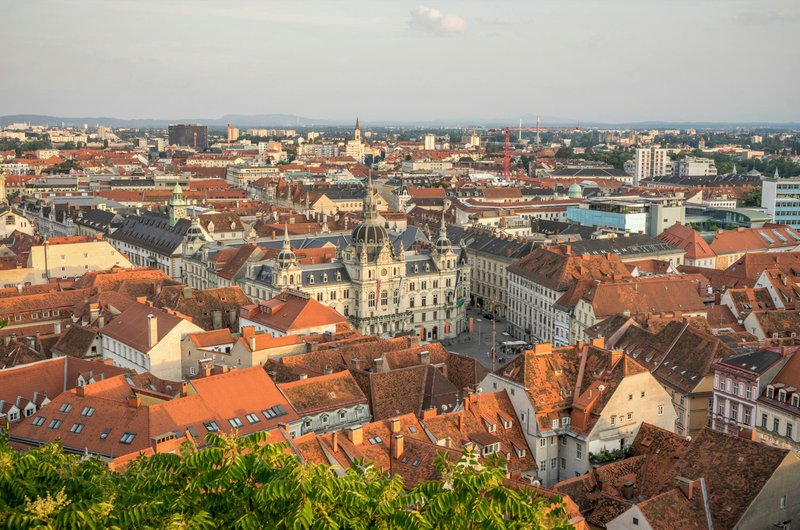
Explore AustriaAustria's second city unfolds along the Mur River, its Renaissance courtyards and Baroque facades earning UNESCO recognition for the Altstadt. The Schlossberg rises above terracotta rooftops, accessible by funicular or the tunneled Schlossbergstiege carved through rock. Herrengasse and Sporgasse form the commercial spine, their ground-floor arcades sheltering independent shops beneath centuries-old residential quarters. Beyond the historic center, the Lend district has emerged as the creative quarter, its converted warehouses hosting galleries and design studios.
The dining scene reflects Styria's agricultural identity. Local menus feature Kürbiskernöl — the region's dark pumpkin seed oil — drizzled over salads and soups. Wine bars pour Schilcher rosé from western Styrian slopes and Sauvignon Blanc from the southern hills. The Kunsthaus, Graz's biomorphic blue museum, anchors the Mur's left bank, while farmers' markets at Kaiser-Josef-Platz offer Styrian apples, aged cheeses, and cured Verhackert spread each morning. Evening drinks migrate to rooftop terraces overlooking the illuminated clocktower.