


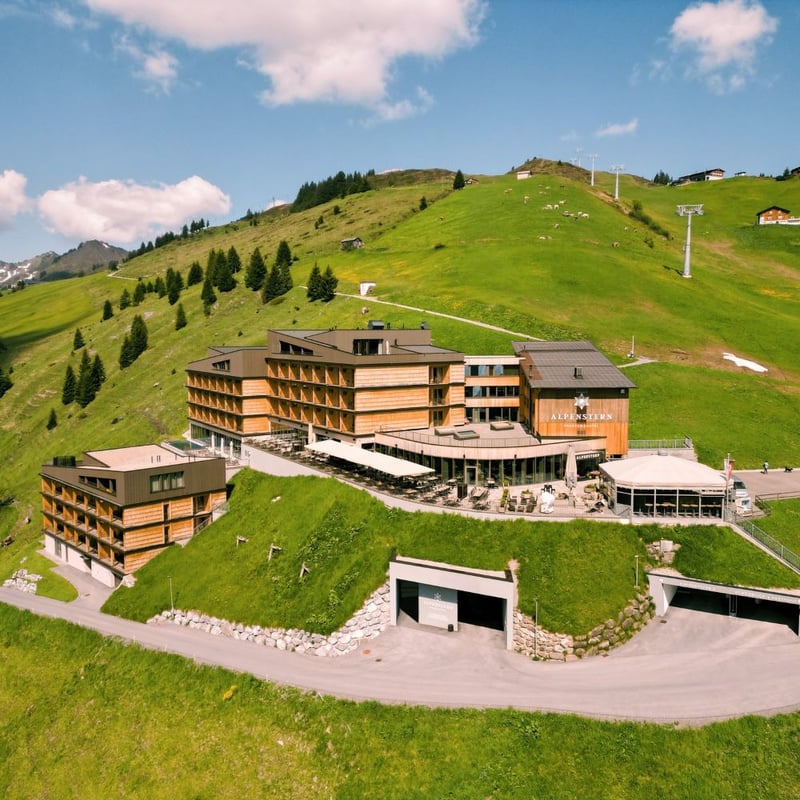
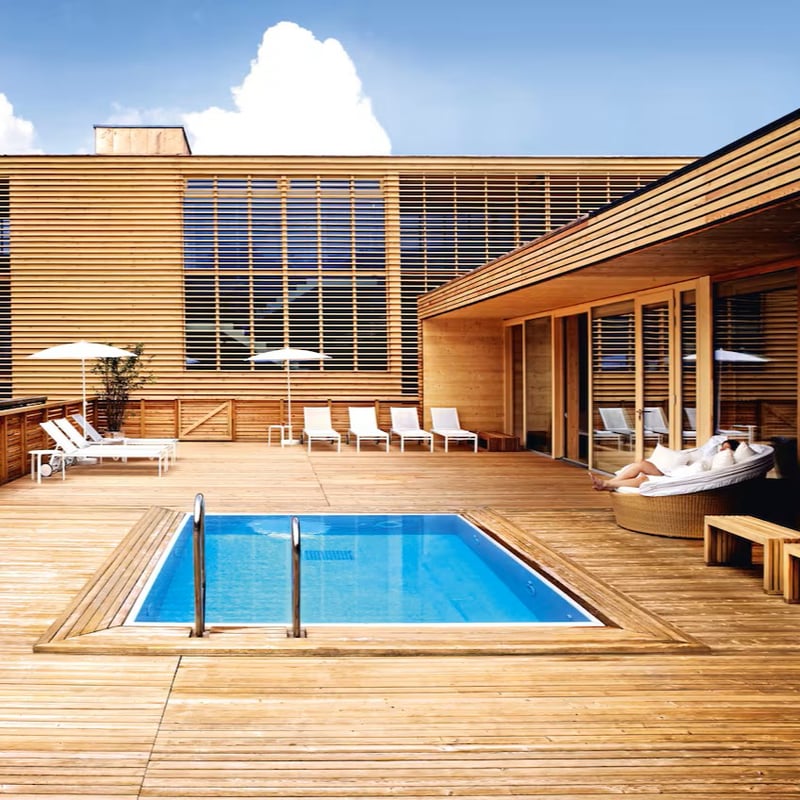
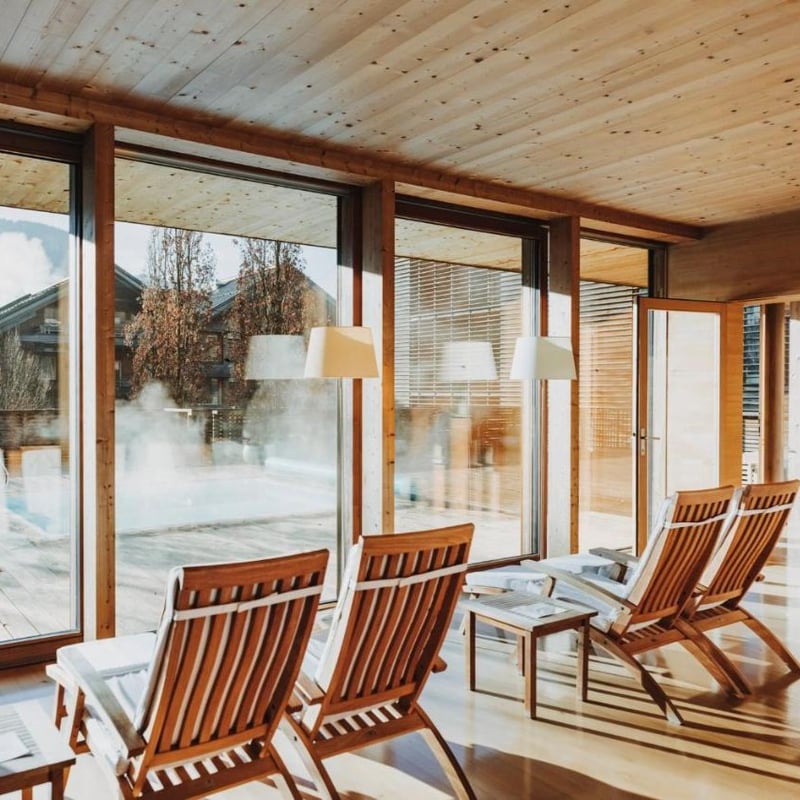
Perched above Damüls with ski-in/ski-out access, this 58-room retreat pairs clean alpine design—natural wood, floor-to-ceiling windows—with serious wellness credentials: Turkish bath, sauna, and both indoor and outdoor pools. The restaurant channels Bregenzerwald's larder into ingredient-driven menus, making Alpenstern as compelling for gourmets as for skiers seeking a restorative mountain base.
Bregenzerwald Travel Guide: Best Hotels, Restaurants & Experiences 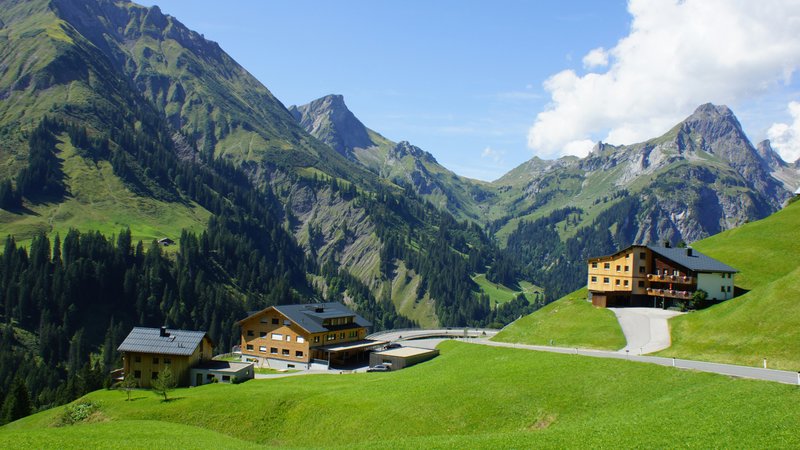
Explore Bregenzerwald
Hotels (2)
Restaurants (5)
Spa (1)
Where to Stay

Blonde wood, natural stone, and floor-to-ceiling windows frame the Bregenz Forest peaks at this wellness-focused retreat where Susanne Kaufmann's locally crafted cosmetics line supplies every treatment. The spa draws on traditional Chinese medicine—yoga, forest walks, acupuncture, vegetarian cuisine—while herbal baths and lymphatic drainage sessions complement indoor and outdoor pools, hammam, and jacuzzi. A restorative address for guests seeking holistic renewal.
Where to Eat

Michelin Selected· Green Star ●
Jeremias Riezler runs this certified organic dining room with singular dedication, rearing his own pigs and sourcing predominantly organic alpine produce for his multi-course "Culinary Mountain Adventure" menu. The chef presents each dish tableside, explaining its origins, while certain courses arrive with hand-carved wooden cutlery he crafts himself. Fried Walser veal sweetbreads with cranberry aioli exemplify the assured, sustainable French cooking recognized with a Michelin Green Star.

Michelin Selected
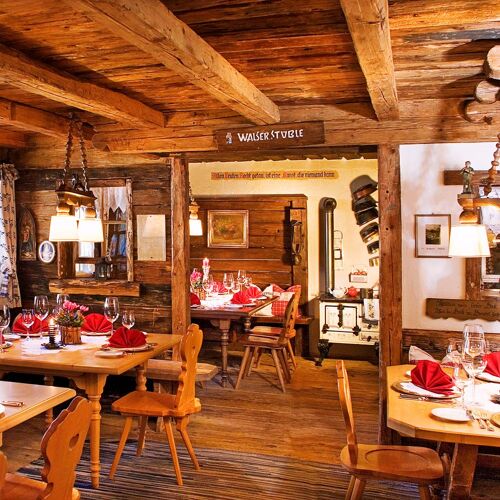
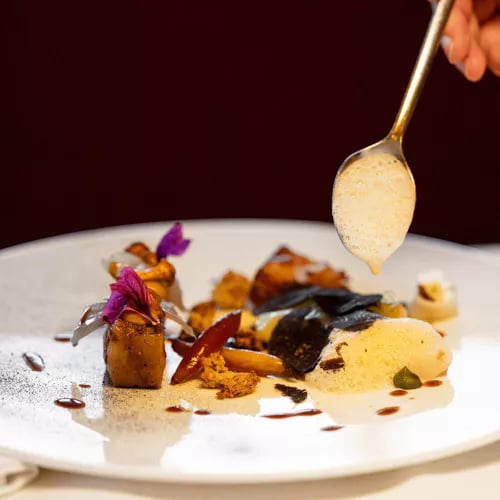
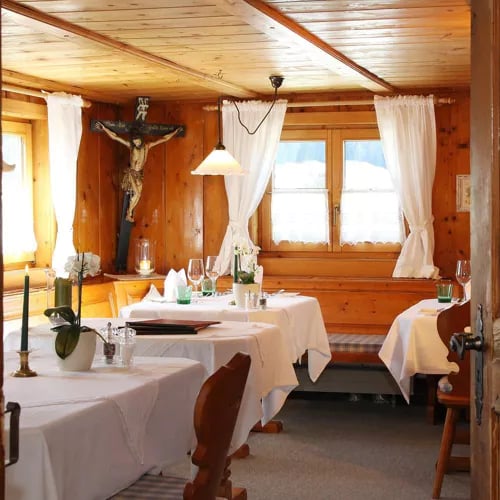
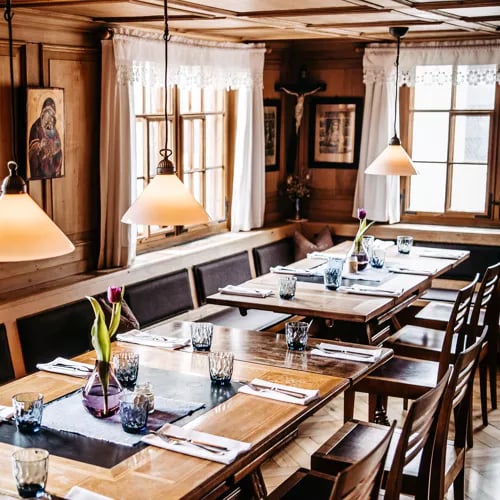
Named for the year its host hotel was established, Wälder Stube 1840 wraps diners in wood-paneled intimacy—cosy nooks lit by period lamps, tables dressed in Alpine tradition. Chef Bernd Reimer builds his set menus around regional produce while threading in international accents, as in his black cod with miso, salicornia, chanterelles, and wild garlic gnocchi. The wine list draws heavily from tri-border vineyards spanning Austria, Germany, and Switzerland.

Michelin Selected
Father-and-son duo Martin and Florian Jäger helm this intimate dining room within a 380-year-old alpine farmhouse, where wood-paneled walls and a traditional tiled stove set the scene for French-influenced cooking rooted in market produce. The signature roasted sirloin of local mountain lamb arrives with aromatics, fresh spinach, and potato-Parmesan gnocchi. An all-Austrian wine list complements the family-run warmth.

Michelin Selected
A former village schoolhouse now serves as the setting for Gabi and Herbert Strahammer's seasonal kitchen, where regional Austrian flavors take center stage. The menu draws from local traditions—ravioli filled with Langenegger smoked cheese, pike sourced from Lake Constance paired with ricotta gnocchi and roasted vegetables. Herbert's wine selections complement each dish with precision, creating an unhurried yet refined Bregenzerwald dining experience.

Michelin Selected· Green Star ●
Chef Jonathan Burger's kitchen at this 1755 Schwarzenberg inn earned a Michelin Green Star for its radical commitment to regional sourcing and nose-to-tail cooking. Grilled chicken hearts arrive alongside pumpkin and hand-rolled Schupfnudeln; winter menus showcase fermented Vetterhof radish with gochugaru and miso. The panelled dining rooms, steeped in centuries of artistic patronage, suit travelers seeking substance over spectacle.

Bib Gourmand· Green Star ●
Chef Felix Groß applies rigorous seasonal sourcing at this Bib Gourmand address, drawing nearly every ingredient from within a 100km radius—a commitment recognized with a Michelin Green Star. The contemporary Alpine cooking yields dishes like ibex ragout with pumpkin espuma and tarragon, served in a space where an open kitchen faces shelves stocked with local products for purchase. A second table within hotel Das Schiff, alongside Wälder Stube 1840.

Bib Gourmand
Brothers Felix and Florian Messner run this Bib Gourmand address from a 1756 timber building on Schwarzenberg's village square, its interior wrapped in warm wood panelling restored to historical specifications. The kitchen strips regional Austrian cooking to its essence—breaded fried chicken arrives golden and crackled, accompanied by potato salad glossed with pumpkin seed oil. Vorarlberg terroir, served without pretense.

Bib Gourmand· Green Star ●
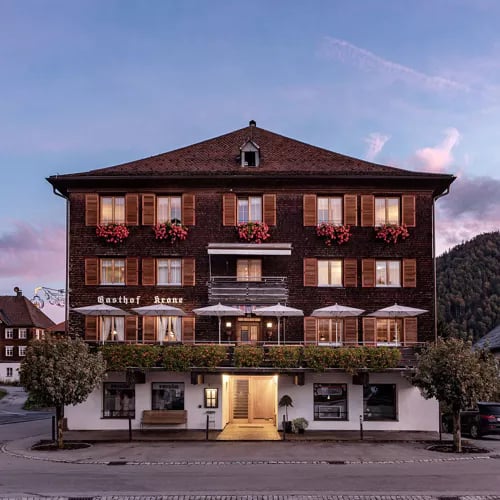
Housed in an 1838 hotel, this first-floor dining room showcases the Bregenz Forest's craft heritage through furniture handmade by local carpenters. The kitchen holds both a Bib Gourmand and Green Star, turning regional ingredients into precise plates—char fillet with coriander lentils and ginger-lemon foam among them. Attentive service and warm wood finishes create an atmosphere suited to unhurried, sustainability-minded dining.

Bib Gourmand· Green Star ●
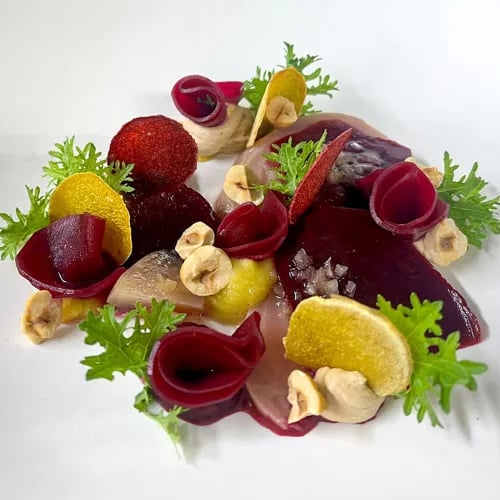
Schwanen earns both a Michelin Green Star and Bib Gourmand for its unwavering commitment to organic, locally rooted cooking. The kitchen draws heavily from its own garden, incorporating fermented and pickled preparations into dishes like medium-rare Schönenbach venison flank steak with creamy sweet potato. Plant-based options—handmade gnocchi with colewort and Vetterhof beetroot among them—prove equally compelling, complemented by an impressive organic wine selection.

Michelin Selected
Seven generations of the same family have tended this 1852 timber inn, now gracefully extended with contemporary lines that honor its Alpine heritage. The kitchen draws from an on-site garden for vegetables and herbs, their own farm for meat, and the surrounding nature park for game—regional cooking rooted in genuine self-sufficiency. Guests dine in wood-paneled parlors or beneath the chestnut trees of the Kastaniengarten.
What to Do

Seven consecutive years as Austria's Best Wellness Retreat tells only part of the story at this Bregenzerwald medispa. Across three floors, guests move between indoor pool, outdoor brine pool, and triple saunas, while TCM physicians offer acupuncture alongside Kobido-inspired lifting massage and LED therapy. Mornings begin with yoga facing Alpine peaks; afternoons drift through Qi Gong sessions at the forest's edge.
Frequently Asked Questions
What is the Werkraum and why does it matter for visitors to Bregenzerwald?
+
The Werkraum Bregenzerwald is a collective of local craftspeople, architects, and designers based in Andelsbuch. Founded in 1999, it operates from a striking glass pavilion designed by Peter Zumthor and hosts exhibitions showcasing the region's furniture-making, textile, and woodworking traditions. Visitors can arrange studio visits with member craftspeople throughout the valley.
How does the Käse-Strasse work and which villages should cheese enthusiasts visit?
+
The Bregenzerwald Käse-Strasse connects dairy farms, alpine huts, and cheese cellars across the region. Key stops include the cheese cellar in Lingenau, the Alpsennerei in Schoppernau, and various Sennereien in Egg and Bezau. Many producers offer tastings, and local restaurants serve dedicated cheese courses featuring aged Bergkäse and fresh alpine varieties.
What distinguishes Schwarzenberg as a destination within the Bregenzerwald?
+
Schwarzenberg centers on a remarkably preserved village square lined with traditional wooden houses, several dating to the 17th century. The Angelika Kauffmann Museum honors the Neoclassical painter born here in 1741, and the village church contains her work. The annual Schubertiade chamber music festival brings international performers to this intimate setting each summer.
Nearby Destinations
Explore Austria



Bregenzerwald
The Bregenzerwald presents a landscape of rolling alpine meadows punctuated by villages where contemporary Austrian architecture sits alongside centuries-old wooden farmhouses. This corner of Vorarlberg, stretching from the Rhine Valley toward the Arlberg passes, developed its own distinct building tradition — the region's carpenters and craftsmen have shaped local aesthetics for generations, a heritage now celebrated through the Werkraum collective in Andelsbuch. Villages like Bezau, Schwarzenberg, and Egg maintain their agricultural rhythms while welcoming visitors to family-run guesthouses that have evolved into refined mountain retreats.
The culinary landscape draws from alpine dairy traditions perfected over centuries. Local Käse-Strasse producers craft the region's celebrated mountain cheeses, from aged Bergkäse to fresh Zieger, served in restaurants that pair traditional Vorarlberg dishes with wines from the nearby Bodensee region. Summer brings foraging season — wild herbs, berries, and mushrooms appear on menus throughout the valley — while winter transforms the scattered villages into quiet bases for cross-country skiing and snowshoeing. The absence of major resort development has preserved something increasingly rare: an alpine landscape where farming communities continue their seasonal patterns largely undisturbed.