Marlon Brando famously acquired Tetiaroa's lease with cash and a homemade apple pie; today his legacy unfolds across 35 villas, each with a private pool and stretch of white sand. The Platinum LEED-certified resort runs on seawater cooling and solar power, revealed during backstage Green Tours. Families gravitate toward Lagoon School's snorkelling excursions, while sunset-seekers claim Turtle Beach for its Pacific panoramas.
Where to Stay
Local surfers cross paths with cruise passengers in the lobby of this eco-conscious address, setting an unpretentious tone that carries through to the rooftop restaurant above. Interiors pair minimalist lines with Polynesian touches—woven textures, warm woods, organic palettes. Practical rather than palatial, Kon Tiki suits travelers seeking a stylish urban base before or after exploring the outer islands.
Sunsets over the South Pacific take on theatrical intensity at this beachfront property in Tamanu, where evenings unfold with rum cocktails and golden light. The sand-bottomed central pool—the largest in the Pacific—offers a distinctive cooling retreat, its soft floor particularly appealing to families. Two on-site restaurants serve both adults and children, making this an accessible choice for travelers with younger guests seeking tropical immersion.
Moorea Beach Lodge occupies a prime westward position on Haapiti's shore, where the lagoon turns amber each evening. Guests settle into comfortable seating just steps from the sand or slip into the warm water for a sunset swim—a ritual that defines the property's unhurried appeal. The intimate scale suits couples and families alike, with children welcomed at reduced breakfast rates.
Nine bungalows scattered across a 23-acre private motu, Vahine Island offers adults-only seclusion with direct Bora Bora sightlines across the lagoon. Overwater accommodations feature glass-floor aquarium tables for observing reef fish, while beachfront units come with deck hammocks shaded by coconut palms. Evenings center on candlelit French-Polynesian dinners; days unfold between snorkeling, kayaking, and traditional pirogue excursions.
Moorea's longest white-sand beach sets the stage for this 113-room resort where overwater bungalows hover above a shallow lagoon, their glass floor panels revealing tropical fish below. Volcanic peaks frame the property in dramatic green, while Pure restaurant weaves French technique through Polynesian ingredients, accompanied by live traditional entertainment. Le Jardin Spa and the secluded two-bedroom Luxury Villa complete an escape built for extended stays.
What to Do
A converted cellar houses Ikonika SPA's wellness sanctuary, where a heated indoor pool and jacuzzi sit beneath vaulted stone. The signature experience shower guides visitors through shifting water jets, chromatic light, and aromatic mists—a sensory passage from tropical warmth to Nordic cool that stimulates circulation. A Himalayan salt room offers respiratory benefits, while frangipani wraps and targeted massages complete the treatment menu.
Frequently Asked Questions
What is the best area to stay in Tahiti for beach access?
+
The west coast stretch from Punaauia to Faa'a offers the island's best beach access and lagoon swimming, with most resort properties concentrated along this corridor facing Moorea across the channel.
How far is Moorea from Tahiti and how do you get there?
+
Moorea sits just 17 kilometers across the Sea of the Moon from Tahiti. High-speed ferries from Papeete's waterfront terminal make the crossing in 30 minutes, departing multiple times daily. Small aircraft also connect Faa'a airport to Moorea's Temae airstrip in about 10 minutes.
When is the dry season in French Polynesia?
+
The dry season runs from May through October, bringing lower humidity, cooler temperatures around 24-28°C, and reduced rainfall. This period coincides with peak travel season and the Heiva i Tahiti cultural festival in July, celebrating traditional Polynesian dance and sport.
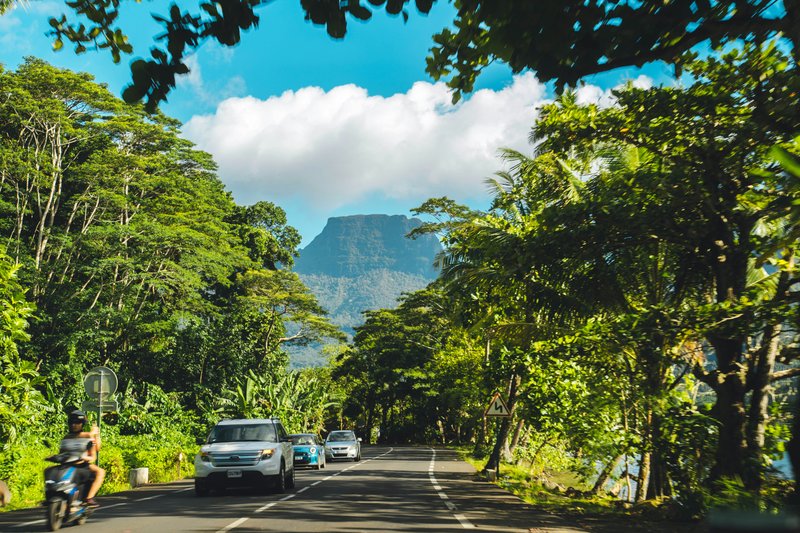
Tahiti's capital Papeete anchors the territory's accommodation scene along its waterfront Vaima district, where French-Polynesian culture plays out in the roulotte food trucks of Place Vaiete and the covered stalls of Marché de Papeete. The west coast ribbon from Punaauia to Faa'a holds the island's concentration of resort properties, positioned to face Moorea's volcanic silhouette across the Sea of the Moon. On Moorea itself, Cook's Bay and Opunohu Bay carve dramatic indentations into the volcanic flanks, their shores lined with properties ranging from intimate pensions to sprawling resort compounds with overwater villas extending across the lagoon.
The hotel landscape here invented the overwater bungalow in 1967 — a Polynesian architectural innovation now copied worldwide. Properties tend toward the expansive, with lagoon-facing orientation considered essential. Dining draws from both French technique and Polynesian tradition: poisson cru marinated in lime and coconut milk, mahi-mahi preparations, and breadfruit accompaniments appear alongside metropolitan French cuisine. The rhythm follows the islands' unhurried pace, where check-in times bend to ferry schedules and sunset cocktails are timed to Moorea's profile darkening against the western sky.