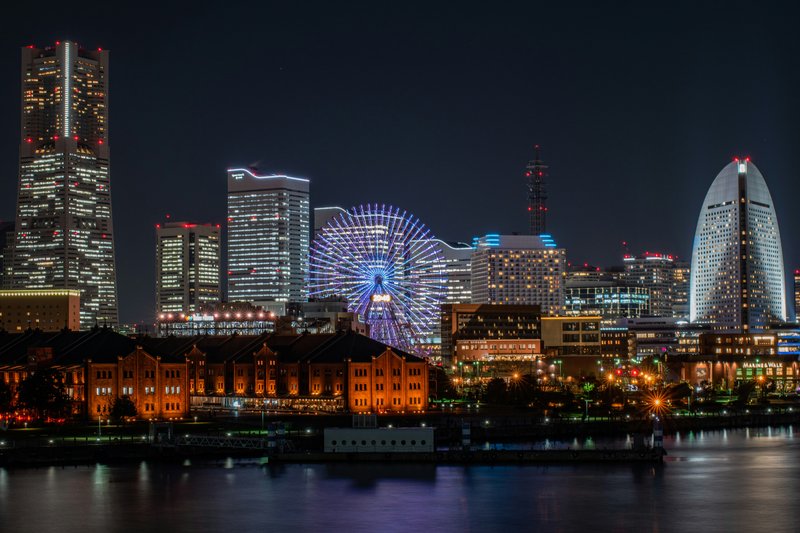
Anchored on Pier 8's waterfront development, this 173-room property draws its visual language from the surrounding harbor—blonde wood, driftwood textures, and aquamarine accents throughout. Floor-to-ceiling windows frame the bay bridge, Ferris wheel, and passing ships. A spa and landscaped garden provide retreat, while the adjacent Hammerhead Shopping Mall delivers everything from craft ramen to New American cuisine steps from the lobby.
Hawaii's legendary Kahala resort finds its Japanese counterpart in this curved blue glass tower overlooking Minato Mirai. The 'crystal modern' aesthetic—geometric patterns, statement chandeliers, a striking silver lobby sculpture—creates dramatic contrast with the traditional water garden visible from the heated infinity pool. All 146 rooms feature floor-to-ceiling harbor views, while the spa pairs Japanese onsen with Hawaiian lomi lomi treatments.
Rising within Minato Mirai—Yokohama's ambitious 1980s urban development—this 364-room property channels minimalist design while delivering genuine comfort. The rooftop draws both business travelers unwinding after meetings and vacationers seeking relaxation, offering indoor and outdoor pools alongside twin jacuzzis with skyline views. A polished base for exploring the district's modern attractions without sacrificing resort-style amenities.
A contemporary boutique address in Minato Mirai, Hotel Edit Yokohama occupies prime position within walking distance of Landmark Tower and the Red Brick Warehouse. The 129 rooms favor clean, modern lines and practical comfort. Edit Dining anchors the ground floor, serving international plates built around regional produce. A dedicated reading room offers quiet retreat—a thoughtful touch for business travelers seeking respite between meetings.
Positioned directly on Yokohama's historic waterfront, this 315-room property captures the port city's blend of cosmopolitan energy and maritime heritage. Many rooms frame sweeping harbor views, while the flagship restaurant pursues an inventive fusion—Italian flavors filtered through French technique with Japanese precision. Yamashita Park and Yokohama Stadium sit within easy walking distance, anchoring stays for both business travelers and weekend explorers.
Frequently Asked Questions
What neighborhoods should I explore in Yokohama?
+
Minato Mirai offers contemporary architecture and waterfront promenades, while Motomachi-Chukagai combines upscale boutiques with Asia's largest Chinatown. The Yamate bluffs reward walkers with preserved Western mansions and harbor views, and Noge delivers old-school izakayas and jazz bars in narrow lanes untouched by redevelopment.
How does Yokohama differ from Tokyo for visitors?
+
Yokohama moves at a slower tempo despite its size. The waterfront is more accessible, crowds thinner, and the city's treaty-port history gives neighborhoods like Kannai and Yamate a distinctly international character you won't find in Tokyo. It's thirty minutes from Shibuya by train but feels like a different Japan.
What local dishes originated in Yokohama?
+
Sanma-men — a soy-based ramen topped with stir-fried vegetables — was created here in the 1940s and remains a local staple. The city also claims Japan's first ice cream and beer production, legacies of its early foreign settlements. Chinatown's Cantonese roast meats and xiaolongbao draw weekend crowds from across the Kanto region.
Nearby Destinations
Explore JapanJapan's second-largest city sprawls along Tokyo Bay with a swagger all its own. The Minato Mirai district stacks contemporary towers against a working port, while the Yamate bluffs preserve Western-style residences from the treaty port era. Yokohama opened to foreign trade in 1859, and that cosmopolitan DNA still pulses through its streets — from the red-brick warehouses of Akarenga to the lantern-lit alleys of Japan's largest Chinatown.
The hotel scene splits between glassy waterfront properties with unobstructed bay panoramas and quieter addresses in Motomachi, where the café culture runs deep. Dining draws on the port's heritage: Cantonese dim sum in Chinatown, sanma-men ramen invented here in the postwar years, and kaiseki that rivals Kyoto's without the crowds. Evening drinks mean rooftop bars overlooking the Yokohama Bay Bridge or jazz lounges in Noge, the old entertainment quarter where vinyl collectors and bartenders have held court since the 1950s.