Rosewood's first Japanese address occupies a crescent of white sand on Miyako-jima's remote northwest coast, where 55 villas open onto private pools and coral-blue waters. Interiors draw on Ryukyu heritage through pale woods, bronze accents, and traditional stone baths. A spa rooted in local rituals complements fresh-caught seafood dining, while sea turtle encounters and an Explorer's Club keep younger travelers engaged.
Seven all-suite villas perch along Irabu Island's southern coast, each commanding panoramic views across waters that feel closer to Taiwan than Tokyo. Heated private pools extend from every suite—breakfast arrives on floating platters for those inclined toward theatrical mornings. Some villas add private saunas and barbecue setups, amplifying an already intimate scale. The tropical remoteness suits couples and families seeking genuine seclusion.
On Irabu Island, between Okinawa and Taiwan, this 58-room retreat embraces the near-tropical seascape through floor-to-ceiling windows in most accommodations. The minimalist interiors favor clean lines and plush textures, while the spa draws on Okinawan botanicals for its treatments. French restaurant Tin'in weaves local ingredients into refined dishes, and an outdoor pool frames the endless blue horizon—ideal for families seeking polished seclusion.
Spread across a thousand acres of Miyakojima's southern shore, this 59-room resort draws its design language from the island's turquoise waters and verdant hills. Hilltop villas come with private pools; bayside suites frame the seven-mile coastline through floor-to-ceiling glass. Geothermic jungle pools and natural hot springs punctuate the grounds, while three restaurants showcase seasonal produce from local farms. A contemplative retreat for those seeking both space and tropical immersion.
Eighty-six suites spread across palm-shaded grounds on Miyako's southern coast, each with private pool, daybed, and gazebo opening toward waters where sea turtles drift past. Amber-hued natural hot springs offer an alternative to the ocean, while seven restaurants range from inventive Japanese to Italian and breezy seaside brunches. After dark, the designated dark-sky location draws stargazers to the Allamanda lounge terrace.
Pink-painted villas step directly onto a private bay where coral reefs shimmer beneath crystalline waters ideal for snorkelling. This intimate nine-room retreat pairs minimalist interiors with outdoor terraces designed for stargazing, while butlers deliver breakfast to guests still lingering by their private pools. Seven restaurants span teppanyaki to Italian, and open-air hot springs complete the Japanese island escape.
White-walled villas climb toward private rooftop terraces where pools and jacuzzis overlook the crystalline waters locals call Miyako Blue. Upper-floor suites frame the Irabu Bridge through floor-to-ceiling glass, while ground-level accommodations open onto gardens. The Aegean Sea restaurant sources Miyako wagyu and local catches—Irabucha fish, Gurukun—pairing them with that same hypnotic seascape. A secluded 79-square-meter premium villa rewards those seeking absolute privacy.
Five villas scattered near the southeastern tip of Miyako Island, each a private shrine of stonework and tile with its own infinity pool gazing unbroken toward the Philippine Sea. The remoteness is the point—beyond Okinawa, beyond distraction. Cool-toned interiors and bursts of tropical greenery frame days of absolute stillness, while nights deliver some of Japan's most spectacular stargazing, unmarred by light pollution.
Frequently Asked Questions
When is the best season to visit the Miyako Islands?
+
The prime window runs from late April through June, before the summer typhoon season and when temperatures hover around 27°C. Early July offers the dramatic coral spawning phenomenon. Autumn, particularly October and November, brings calm seas ideal for diving and fewer crowds than the summer peak.
How do visitors reach the Miyako Islands from mainland Japan?
+
Direct flights connect Miyakojima to Tokyo's Haneda Airport (approximately 3 hours) and Osaka's Kansai Airport. More frequent connections route through Naha, Okinawa's capital, with multiple daily flights taking 45 minutes. No ferry service operates from the mainland; inter-island transport within the archipelago relies on the bridge network and small boats.
What distinguishes Miyako's beaches from other Okinawan islands?
+
The archipelago's coral limestone geology creates exceptionally white sand and remarkably clear water — Yonaha Maehama stretches seven kilometers along the southwestern coast, while Sunayama Beach on the north shore features a natural rock arch framing the sunset. Unlike the main Okinawa island, Miyako has no habu snakes, making beach exploration less concerning.
Nearby Destinations
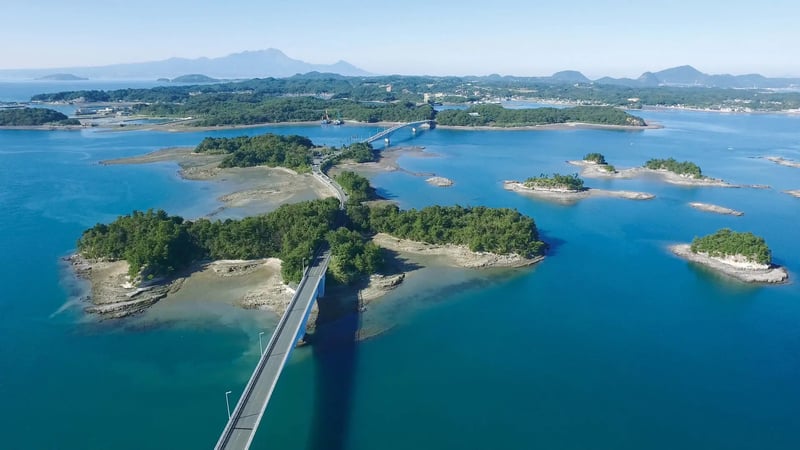
Explore JapanThe Miyako archipelago lies 300 kilometers southwest of Okinawa's main island, a scattering of eight flat coral islands where sugarcane fields run to the edge of beaches consistently ranked among Japan's finest. Miyakojima, the largest island, connects to Irabu and Ikema by dramatic bridges that have become destinations in themselves — the 3.5-kilometer Irabu Bridge offers views of water shifting from emerald to deep ultramarine. The absence of rivers means no sediment clouds these shores; the visibility underwater regularly exceeds 30 meters.
Hirara, the main town, retains the unhurried feel of old Ryukyu, with coral-stone walls lining quiet lanes and family-run izakayas serving Miyako beef and mozuku seaweed. The accommodation scene has evolved dramatically since the early 2010s — where once only modest inns existed, now a handful of design-conscious properties dot the coastline, many incorporating traditional red-tile roofs and open-air architecture suited to the subtropical climate. Dining remains refreshingly local: poolside restaurants feature island-grown mangoes in summer, and the October orion-beer-and-bonito season draws visitors specifically for the fishing.