Skip to content

Shangri La

1. Honor Resort Yun Shu Dali

Small Luxury Hotels

Against the dramatic backdrop of Cangshan Mountain, this 23-room boutique property reimagines traditional Chinese courtyard architecture through a contemporary lens. The cantilevered pool with its transparent base creates the illusion of swimming through air, while floor-to-ceiling windows frame mountain panoramas from private terraces. The Tea House offers ceremonial traditions, and Yun Restaurant serves authentic regional cuisine minutes from Dali Ancient Town's temples.

2. The Moon Mansion

Small Luxury Hotels

Volcanic rock sculpted into sweeping curves defines this 33-room boutique perched above Tengchong's hot springs landscape. The crescent-shaped infinity pool—Asia's largest—clings to the clifftop, while many suites feature private naturally carbonated soaking pools. At Yue restaurant, local and fusion cuisine arrives with panoramic views spanning lake, city, and mountains, best appreciated from the glass observation deck at golden hour.

3. Hotel Indigo Diqing Moonlight City

High above Dukezong Ancient Town, this 99-room property channels the legacy of the Tea Horse Road through carved wooden headboards and traditional Tibetan architectural details. An integrated oxygen system addresses the altitude, while floor-to-ceiling windows frame the mountain panorama. Bonfire restaurant serves regional dishes against that same dramatic backdrop—a practical choice for travelers seeking cultural immersion with modern comfort.

4. Deqin Meri Poodom

Perched at 3,600 meters on a Meili Snow Mountain viewing platform, this 35-room retreat by architect Wu Bin treats elevation as artistic medium. Angular stone walls echo the Himalayan ridges beyond, while glass expanses and sculptural staircases blur the threshold between shelter and summit. Rooms frame dawn over snow peaks through oversized windows; the restaurant honors mountain provisions with unfussy regional cooking. For travelers seeking altitude as meditation.

5. Sunyata Hotel Meili

Perched at 11,000 feet in Yunnan's rugged highlands, this 19-room boutique property occupies a converted Tibetan residence where wabi-sabi philosophy shapes every surface. Rough-hewn textures and deliberate imperfections create interiors that feel luxurious yet unpretentious, while a library, lounge, and garden offer contemplative retreats. The journey to reach Sunyata is considerable; for architecture-minded travelers seeking altitude and authenticity, the reward matches the effort.

Frequently Asked Questions

What is the best time of year to visit Shangri-La?

+

Late spring through early autumn — May to October — offers the most temperate weather, with wildflower blooms across the grasslands in June and July. Winters are cold but atmospheric, with fewer visitors and snow-dusted monastery rooftops. The rainy season peaks in July and August but rarely disrupts travel.

How do travelers reach Shangri-La from other parts of China?

+

Diqing Shangri-La Airport connects to Kunming, Chengdu, and Lhasa with daily flights. The overland route from Lijiang — about four hours by car — winds through dramatic gorge scenery and Tibetan villages. Some travelers incorporate Shangri-La into a longer Yunnan circuit including Dali and Tiger Leaping Gorge.

What cultural experiences should visitors prioritize in Shangri-La?

+

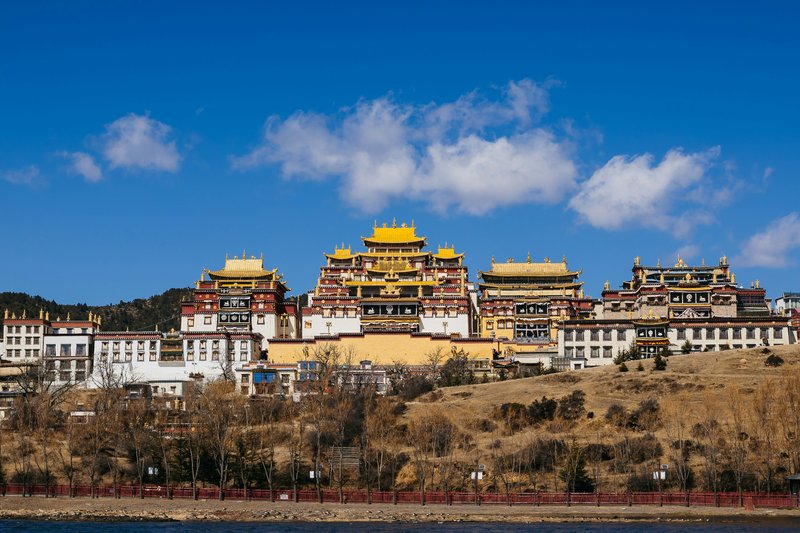
Songzanlin Monastery deserves a half-day visit to explore its temples, thangka collections, and resident monks' quarters. The morning ritual at Guishan Temple's prayer wheel offers an authentic glimpse of local spiritual life. For something more immersive, some hotels arrange visits to nearby Tibetan farming villages where families still practice traditional weaving and yak herding.



