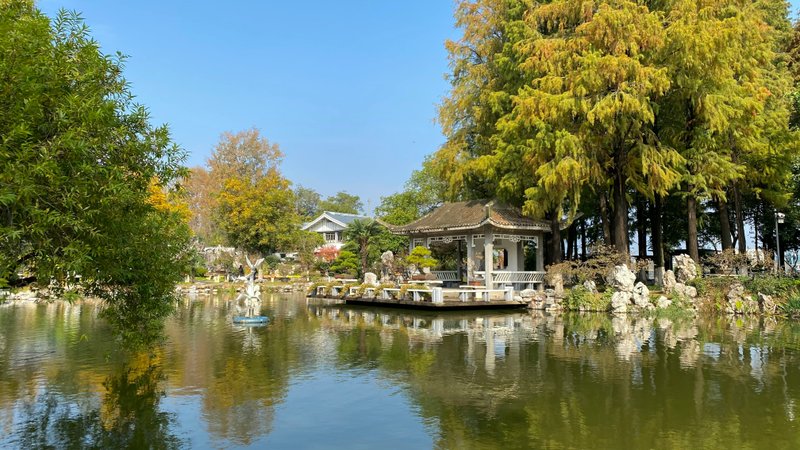
Perched atop Deji Plaza in the Xinjiekou business district, this 295-room tower commands sweeping views of Xuanwu Lake and Purple Mountain through floor-to-ceiling windows. Interiors marry ancient aesthetics with contemporary lines—bamboo-inspired wall coverings, lantern-style lighting—while the 58th-floor Club Lounge operates around the clock. At sunset, the Lotus Lantern Ritual honors the Qinhuai River's literary heritage; the spa deploys Yangtze-polished Yuhua stones in signature treatments.
Where to Stay
Republican-era villas once housing China's political elite now shelter 46 rooms beneath Yihe Road's maples, their courtyards and carved details impeccably preserved. Each villa operates independently with its own restaurant, spa, and museum, while gardens dissolve boundaries between architecture and landscape. Private cinema screenings, chef-led cooking classes, and oenology courses reward extended stays for travelers seeking history made habitable.
Romanesque columns rise through a palatial marble lobby where dark wood accents set the tone for this 138-room boutique hotel's European grandeur. Guests dine at one of China's most acclaimed restaurants specializing in Nanjing cuisine, or watch chefs prepare international dishes live at their table. A rooftop terrace offers intimate evenings under the stars, ideal for travelers seeking refined theatricality in a historic capital.
Where to Eat
Perched on the 42nd floor of the Shangri-La, Jiangnan Wok · Yun holds a Michelin star for Chef Hou's contemporary Huaiyang cooking. His meticulous knife skills transform seasonal local ingredients into refined compositions—most notably the braised eight-treasure pigeon with abalone, a sumptuous reimagining of a regional classic. Private dining rooms open onto balconies with sweeping city panoramas.
Fifty floors above Nanjing, blue fabric sculptures drift beneath white ceilings while the city's skyline unfolds through panoramic windows. The kitchen, helmed by a Nanjing native with Parisian roots, delivers refined French cuisine through a six-course tasting menu or à la carte selections including a signature T-bone set. The millefeuille layered with caramel and raspberry jam makes a compelling finale.
Three decades of culinary expertise, including formative years in Macau's finest kitchens, inform Chef Liang's distinctive approach at this Michelin-starred dining room. His Cantonese cuisine draws on Shunde traditions—salted kohlrabi accenting sautéed baby lobster with radish cake, Chinese olive kernels punctuating sweet and sour pork. The barbecue selection impresses, though the crispy-skin chicken sells out quickly; reserving ahead proves essential.
A heritage building on the grounds of a luxury boutique hotel houses this refined dining room, where Huaiyang traditions meet contemporary European technique. The kitchen sources premium ingredients globally—Australian Wagyu arrives with house-created sauces—while fluffy dinner rolls signal the care applied throughout. Advance order confirmation ensures each plate receives meticulous attention, rewarded with a Michelin Plate distinction.
Perched within Qinglong Mountain's villa grounds, Longyin Shanfang dissolves the divide between landscape and table. Floor-to-ceiling views sweep across forested hillsides from every dining space, while seasonal set menus showcase delicate preparations like peony-shaped tofu floating in crystalline consommé. The experience extends beyond plates: tea ceremonies and incense rituals punctuate meals, weaving contemplative pauses into an afternoon of refined Jiangsu cuisine.
Baroque furniture and Chinese architectural details share space in these majestic dining rooms, where a garden adds calm to the expansive setting. The kitchen specializes in Anhui cuisine, sourcing ingredients directly from the province. The signature fermented mandarin fish—served in aromatic brown sauce or fiery chilli—demands a bowl of steamed rice. Roast duck and certain soups require advance ordering.
Fifty floors above Nanjing, Pin Wei Jiang Nan surveys the city through floor-to-ceiling glass while its interior channels the poetic stillness of Jiangnan water towns—whitewashed lattice screens, lacquered accents, contemporary restraint. The kitchen mines Huaiyang traditions with technical precision: lobster slow-braised in rich chicken stock arrives alongside silken shredded tofu, while regional influences surface in dishes like crisp deep-fried veal. A Michelin Plate address for elevated Jiangsu cooking.
Inside the Jinling Hotel, this venerable Huaiyang dining room has upheld Jiangzhe culinary traditions for four decades. The kitchen's brine-poached duck, steeped in aged marinade before being expertly deboned and sliced, remains the benchmark order. Rarer still is the labor-intensive fried eel braised with pork belly and pigeon eggs—a dish seldom attempted elsewhere. Knowledgeable staff guide newcomers through the extensive menu with genuine authority.
A century-old mansion within Nanjing's 1913 Art District houses this Sichuan kitchen, its wainscoting and coffered ceilings paired with mid-century chairs creating an unexpectedly refined setting. Native Sichuan cooks bring authentic technique with contemporary touches—their mapo tofu arrives with tender cubes of marbled beef rather than the typical mince. Handmade ice jelly provides a refreshing finale to the bold, peppercorn-driven flavors.
Within the Ten Dynasties Cultural Park, Yuan Space & Feast occupies a stately pavilion where a Jiangsu-born chef applies classical Huaiyang technique to refined contemporary effect. His braised meatball—a delicate reworking of lion's head pork balls calibrated for ideal lean-to-fat ratio—arrives tender and deeply savory. The braised dried abalone demonstrates equal precision. A serious table for those seeking regional mastery in ceremonial surroundings.
Frequently Asked Questions
Which neighborhoods are best for experiencing traditional Nanjing architecture?
+
Laomendong and the Fuzimiao district preserve or reconstruct traditional streetscapes. Laomendong features Qing-era residential architecture now occupied by artisan workshops and local eateries, while Fuzimiao centers on the historic Confucius Temple complex along the Qinhuai River, with restored Ming-period buildings housing teahouses and craft shops.
What is Huaiyang cuisine and where does Nanjing fit within it?
+
Huaiyang cuisine originates from the Jiangsu region surrounding the Huai River and lower Yangtze. It emphasizes precise knife work, gentle braising, and seasonal freshwater ingredients. Nanjing contributes signature preparations including salted duck, duck blood soup with vermicelli, and various river fish dishes that appear on menus throughout the Fuzimiao and Xinjiekou areas.
How does Nanjing's location on the Yangtze River influence the city experience?
+
The Yangtze frames the city's northern edge, with several hotels offering river-view rooms and the historic Yangtze River Bridge serving as an architectural landmark. The smaller Qinhuai River winds through the old city center, creating the scenic waterways that define the Fuzimiao entertainment district's atmosphere of lantern-lit evening strolls and riverside dining.
Nearby Destinations
Explore ChinaSix dynasties ruled from this city on the Yangtze, and that imperial legacy permeates its neighborhoods. Xinjiekou hums with contemporary energy, its towers housing business hotels with rooftop bars overlooking the Zijin Mountains. The quieter lanes near Fuzimiao — the Confucius Temple district — retain Ming-era streetscapes where guesthouses occupy restored courtyard buildings. Along the Qinhuai River, willow-draped promenades connect teahouses to restaurants specializing in Huaiyang cuisine, the refined cooking tradition that favors gentle techniques and seasonal produce.
The Zijin Mountain forest park provides a green backdrop to the eastern districts, where several hotels position themselves as retreats within the city. Sun Yat-sen's mausoleum and the Ming Xiaoling Tomb draw visitors to these wooded slopes. Back downtown, Laomendong offers reconstructed Qing-dynasty architecture housing craft studios and Nanjing's signature salted duck vendors. The dining scene emphasizes local river fish, slow-braised meats, and the delicate soup dumplings that distinguish Jiangsu province's culinary identity.