Aman's Bhutanese venture comprises five lodges scattered across the kingdom's valleys—Paro, Thimphu, Punakha, Gangtey, and Bumthang—each built in traditional rammed-earth style with spare, contemporary interiors. Suites come equipped with wood-burning stoves, terrazzo baths, and views of pristine mountain landscapes. Steam rooms, spa treatments, and yoga sessions prepare guests for guided treks into remote terrain, making this a circuit for adventurous souls seeking both rigor and refinement.
Explore Paro
Twelve Farmhouse Suites overlook Phobjikha Valley from this intimate mountain retreat, each fitted with log fires, exposed beams, and roll-top tubs framing panoramic Himalayan views. Slate underfloor heating warms the spaces while traditional hot stone baths anchor the spa program. Gangtey Monastery sits just uphill, offering meditation sessions and occasional blessings from the resident Tulku—ideal for travelers seeking spiritual depth alongside refined comfort.
Five lodges scattered across Bhutan's valleys and peaks, each with its own character: Paro echoes nearby monasteries through reconstructed ancient stonework, Thimphu perches as a glass-walled palace above the capital, Punakha floats amid terraced rice paddies. Every property houses an elaborate spa offering traditional hot stone baths, while daily programming — archery lessons, monastery lunches with monks, whisky tastings — roots guests in Bhutanese culture.
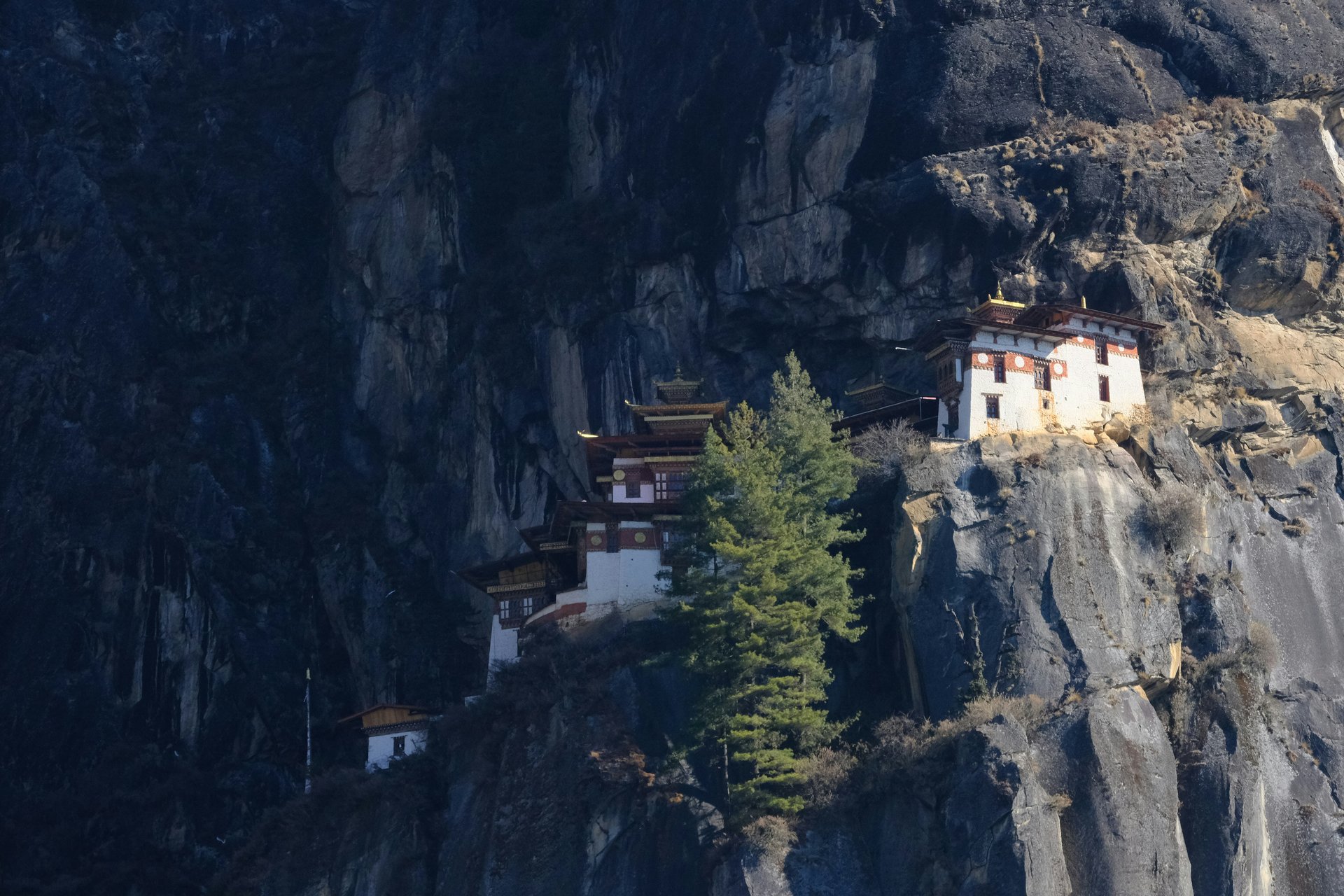
Scattered across the Paro Valley floor, Zhiwaling Heritage's 45 cottage-style suites showcase traditional Bhutanese craftsmanship through intricate hand-painted murals and ornate woodwork. The property maintains an on-site temple, tea house, and archery range for cultural immersion, while a spa with sauna and steam rooms complements the indoor pool. Proximity to Tiger's Nest Temple makes this a compelling base for pilgrimage-minded travelers.
High in Neyphu Valley, this 24-room retreat channels traditional dzong fortress architecture into a meditative sanctuary of minimalist elegance. Private balconies survey pine forests and rugged cliffs, while the restaurant's floor-to-ceiling windows frame the valley below. The spa draws on over 100 native herbs for its treatments, complemented by an infinity pool and yoga sessions—ideal for travelers seeking altitude-adjusted wellness immersion.
Perched above Thimphu with sweeping valley panoramas, this twenty-room boutique property ranks among Bhutan's rare high-end accommodations. Light-filled rooms showcase locally crafted textiles and furnishings, while a compact spa offers sauna, jacuzzi, and yoga sessions for post-trek recovery. The rooftop terrace bar and restaurant emphasize regional ingredients, making it a refined base for travelers exploring the kingdom's cultural heartland.
Frequently Asked Questions
What is the best valley for a first visit to Western Bhutan?
+
Paro Valley serves as the entry point for international flights and offers immediate access to Tiger's Nest monastery, the region's most iconic landmark. Most itineraries begin here before continuing to Thimphu and Punakha.
How does the daily tourist tariff affect accommodation choices?
+
Bhutan's Sustainable Development Fee of $200 per night applies to all visitors and is separate from hotel costs. This policy limits visitor numbers and means that even mid-range properties maintain high service standards due to lower guest volumes.
When is the clearest weather for mountain views?
+
October through December offers the most reliable visibility, with crisp skies revealing the Himalayan peaks. Spring months bring rhododendron blooms but occasional haze. The monsoon season from June to August obscures mountain panoramas but intensifies the valley's greenery.
The Paro Valley sets the stage for most arrivals, its single runway flanked by rice terraces and traditional farmhouses converted into intimate guesthouses. From here, the road climbs toward Thimphu, the capital without traffic lights, where a handful of contemporary hotels occupy hillside perches above the Chuu river. The architectural code is strict: whitewashed walls, timber frames, painted window surrounds. Even new builds must conform, lending the region's accommodation a visual coherence rare in mountain destinations.
Beyond these two centers, the Punakha Valley offers a warmer microclimate and a quieter pace. Properties here tend toward riverside locations, often within walking distance of the dzong fortress at the confluence of the Mo and Pho Chuu. Dining remains hotel-centric; ema datshi and red rice appear on most menus alongside international options calibrated for altitude-weary palates. The bar scene is minimal by design — this is a Buddhist kingdom where Gross National Happiness outranks nightlife.



