Skip to content

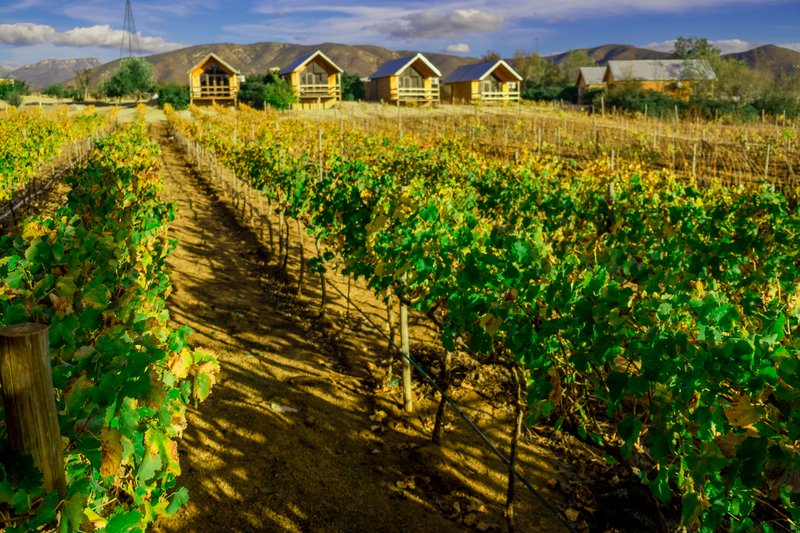
Valle De Guadalupe

1. Animalón

★ Michelin

Beneath a centuries-old oak tree in Valle de Guadalupe, Javier Plascencia orchestrates one-starred contemporary Mexican cooking that pulls from the country's deepest traditions. The kitchen's theatrical bent shows in beer-braised barbacoa steamed inside a pig's bladder and carved tableside, while a poured tomato broth laced with chocolate clams delivers gentle heat and coastal sweetness in a single bowl.

2. Damiana

★ Michelin

Chef Esteban Lluis holds a Michelin star at this vine-country table on the Viñedos de la Reina estate, where tree-shaded patios frame views across Valle de Guadalupe. His contemporary Mexican tasting menu draws heavily on regional produce—crispy duck paired with pickled cabbage and duck confit wrapped in Swiss chard demonstrates the kitchen's precision. Desserts like pumpkin crème brûlée on mandarin dacquoise close meals with inventive flourish.

3. Deckman's En El Mogor

Michelin Selected· Green Star ●

Drew Deckman built his flagship on the Cavas del Mogor property, where an open-air platform shaded by trees frames a central live-fire kitchen. His contemporary Mexican cooking surprises—tempura soft shell crab arrives on arugula with avocado purée and Pilsner foam—while heartier plates like braised short rib satisfy. A Michelin Green Star recognizes the kitchen's sustainability focus, and just uphill, Baja Omakase extends the vision with local fish and Mexican sake.

4. Primitivo

Michelin Selected

A three-hundred-year-old oak tree shelters this fire-driven restaurant at the end of a dusty road, where chef Carolina Jiménez commands a kitchen built around an open flame. Cast-iron cookery and whole-animal philosophy define the multi-course format—oysters first, then a chosen protein prepared nose-to-tail. The flourless chocolate cake, crowned with candied orange and smoked lavender ice cream, closes the meal decisively.

5. Conchas de Piedra

★ Michelin· Green Star ●

Born from the partnership between Deckman's and Casa de Piedra winery, this one-Michelin-starred table celebrates Valle de Guadalupe's coastal bounty alongside local sparkling wines. A compact menu delivers pristine aguachiles, seared abalone, and a signature crispy oyster taco, while clam ceviche arrives theatrically balanced on smooth pebbles. Communal tables under café lights foster a convivial, rustic-chic atmosphere, and a Michelin Green Star confirms the kitchen's sustainable ethos.

6. Restaurante Amores

Michelin Selected

Chefs Marcelo Hisaki and Reyna Venegas orchestrate a prix-fixe experience built on deliberate mystery—dishes remain unnamed until they arrive, each composition shaped by the day's regional harvest. Pacific Dover sole from Ensenada might appear with herb-caper pipián and asparagus, while lamb barbacoa takes the form of a sope layered over black bean puree. The finale often delivers warm lemon curd cake with berry-rippled ice cream.

7. Kous Kous

Michelin Selected

Moroccan lamps and flowing curtains transform this Valle de Guadalupe terrace into an unexpected North African escape. The family-style format centers on tagine—guests select their protein, from olive-braised chicken to honey-glazed lamb—while house-made flatbread and cucumber salad set the stage. The signature couscous, studded with caramelized onions, chickpeas, and golden raisins, rivals the main event.

8. Taqueria La Principal

Michelin Selected

Plastic chairs and warehouse aesthetics belie the precision at this Michelin-recognized roadside taqueria. Diners watch as beef asada, spice-rubbed adobada, or tender tripa hit the grill, emerging charred and aromatic to be tucked into fresh tortillas with punchy, well-balanced salsas. Late-night hours make it the wine region's ideal final stop after a day navigating Valle de Guadalupe's bodegas.

Frequently Asked Questions

When is the best season to visit Valle de Guadalupe?

+

The valley's peak season runs from April through October, when warm days and cool nights create ideal conditions for both winemaking and outdoor dining. The Fiestas de la Vendimia harvest celebrations in August draw the largest crowds. Winter months are quieter, with occasional rain greening the hillsides, though some restaurants reduce their hours or close entirely.

How do I get around the wine region without a car?

+

Most visitors rent vehicles in Tijuana or San Diego, as distances between wineries can span several kilometers along unpaved roads. Private drivers and guided tours operate from Ensenada, typically covering four to six stops in a day. A handful of boutique hotels offer shuttle services to partner vineyards, though flexibility remains limited compared to self-driving.

What distinguishes Valle de Guadalupe wines from those of California?

+

The valley's Mediterranean climate and granite-rich soils produce wines with notable acidity and mineral character, often compared to southern Rhône or Priorat bottlings. Mexican winemakers frequently experiment with unconventional blends — Nebbiolo with native grape varieties, or Tempranillo aged in French and American oak combinations. Production quantities remain small, meaning many labels never leave the region.