Six 16th-century colonial mansions compose this 37-room Belmond property, each suite preserving original floor plans with timbered ceilings and working fireplaces—the Deluxe One Bedroom category adds private plunge pools. Personal butlers attend every guest, while the Laja spa occupies intimate cottage-style rooms warmed by hearths. A Mexican cooking school rounds out the offering for those seeking cultural immersion alongside colonial grandeur.
Where to Stay
A 300-year-old Spanish Colonial house channeling Moroccan riad sensibilities, Casa Blanca 7 offers just ten suites with surprisingly contemporary interiors by Fisher Weisman Collection. The central courtyard evokes intimate North African hospitality, while chef Mike Garcia's cooking draws on his Mexican roots filtered through stints in France, Spain, and Morocco. Adults-only, with a rooftop terrace bar for evening drinks.
Ten rooms crown the top floor of Casa Cohen, an architecturally striking building within San Miguel de Allende's UNESCO-protected centro. The hotel functions as one element of Dôce18 Concept House, sharing its walls with galleries, boutiques, and restaurants. A rooftop orchard supplies breakfast ingredients; the owner's suite grants private access to this garden along with a courtyard outdoor bathtub. The grand room operates as both art gallery and bar.
A sleek white Cubist façade conceals 32 art-filled rooms, most opening onto private terraces with Bajío mountain views. The intimate spa features a hammam and an apothecary where guests blend custom skincare products. Restaurant Moxi delivers locally sourced Mexican cuisine poolside, while the Monkey Bar glows beneath Claudio Limon's vibrant mural. A Diego Rivera portrait of the owner's mother watches over the Library Lounge.
Fashion photographer Deborah Turbeville spent two decades shaping this six-room eighteenth-century bishop's residence into an art collector's sanctuary. Each suite carries its own character—fireplaces, balconies, and in the Naia suite, a floor window peering into an abandoned colonial tunnel. The rooftop terrace offers a hot tub, tented spa, and intimate bar, while mornings begin with breakfast in the courtyard garden. Adults only.
A sixteenth-century Spanish colonial residence turned eleven-room boutique hotel, Hacienda El Santuario preserves its original courtyard complete with miniature fountains and wrought-iron details against pure white walls. The property supports emerging local artists through an on-site gallery, while practical touches—pet-friendly policies, spa treatments, EV charging—suit modern travelers. Two blocks separate guests from the iconic pink granite parish church.
Perched on a hillside above San Miguel de Allende's colonial streetscape, this 29-room retreat trades traditional Mexican aesthetics for a boho-chic Mediterranean vocabulary—arched poolside columns nodding to local heritage while basket chandeliers and earth-toned interiors chart a modern course. Edible gardens and flower beds soften the terrain; a rooftop restaurant and bars provide sunset views over the artistic enclave below.
Behind thick terracotta walls in San Miguel de Allende's UNESCO-listed centro, this colonial hacienda unfolds around a tranquil courtyard where fireplaces warm rooms dressed in Rivolta Carmignani linens. The Luna rooftop bar commands the city's finest panorama, while below, a tequilier guides tastings through 120-plus labels at 1826. Spa treatments draw on native ingredients—mole spice, cocoa, locally grown lavender—and La Cava's Frida Kahlo-dedicated cellar stores 600 wines for private dinners.
Alhambra-inspired details define this fourteen-room colonial retreat on Calle Hidalgo: vaulted ceilings, stone parquet floors, loom-woven rugs, and antique wooden headboards create an atmosphere of Andalusian romance. The celebrated restaurant draws locals and visitors alike, yet a hushed intimacy prevails throughout. Evening drinks on the rooftop terrace, with sunset light spilling over the town's church spires, reward couples seeking refined seclusion.
A Spanish colonial mansion transformed into a sixteen-room adults-only retreat, Casa Hoyos channels the spirit of its 1938 owner through vivid tilework and an Andalusian patio watched over by a hand-painted Virgin Mary mural. Mexican artisans furnished each room with bespoke pieces honoring regional craft traditions. Upstairs, rooftop bar Tonana pours botanical cocktails while restaurant COMITÉ delivers modern Mexican cuisine with international inflections.
What to Do
Descending black stone steps into the atmospheric hydrotherapy pool, visitors enter warm waist-deep waters beneath cascading wall fountains—the centerpiece of this sleek marble sanctuary. The Mäkandähi Experience honors Chichimecas-Otomíes heritage through healing massage and herbal baths, while an oxygen room infused with lavender and citrus precedes Natura Bissé facials. Couples claim private suites with dedicated sauna, steam bath, and plunge pool.
Indigenous Otomi healing traditions anchor the treatment philosophy at this Rosewood sanctuary, where therapists work with locally harvested lavender, arnica, and cacao. The 90-minute Cures From Metzli massage draws on lunar cycles and regional herbal remedies, while day packages extend to sunrise yoga and nearby thermal pools. Spanish mission architecture—exposed wood beams, arched windows, cathedral-scale furnishings—echoes the colonial streetscape beyond.
Descending into Terma Spa feels like entering an ancient Roman bathhouse—stone walls, cavernous textures, and columns framing a central pool create an atmosphere of timeless retreat. The subterranean sanctuary offers Swiss showers, steam rooms, and saunas at varying temperatures, while a mountain-facing outdoor Jacuzzi extends the experience skyward. Lymphatic drainage massages target recovery from Guanajuato's steep colonial streets, preceded by locally sourced teas and a chef's wellness menu.
Frequently Asked Questions
What neighborhoods should I explore beyond the main square in San Miguel de Allende?
+
The Colonia Guadalupe district northeast of the centro offers quieter streets lined with bougainvillea and local workshops. San Antonio and Balcones see fewer tourists and hold some of the town's more contemporary galleries and design studios. Walking uphill toward the mirador provides views across the terra-cotta rooftops and surrounding valle.
When is the best time of year to visit San Miguel de Allende?
+
The dry season from November through April brings warm days, cool nights, and minimal rainfall. January temperatures can dip near freezing after dark, so pack layers. The rainy season from June through September sees afternoon thunderstorms that clear quickly, leaving the hillsides green. Major festivals — including Día de los Muertos and the San Miguel Arcángel feast in late September — draw larger crowds.
How accessible is San Miguel de Allende from major airports?
+
Querétaro International Airport lies roughly an hour southeast by car and receives domestic flights plus limited international service. León-Guanajuato Airport, about ninety minutes northwest, handles more international routes including direct connections to several U.S. cities. Private transfers can be arranged through most hotels, and shared shuttle services operate on fixed schedules throughout the day.
Nearby Destinations
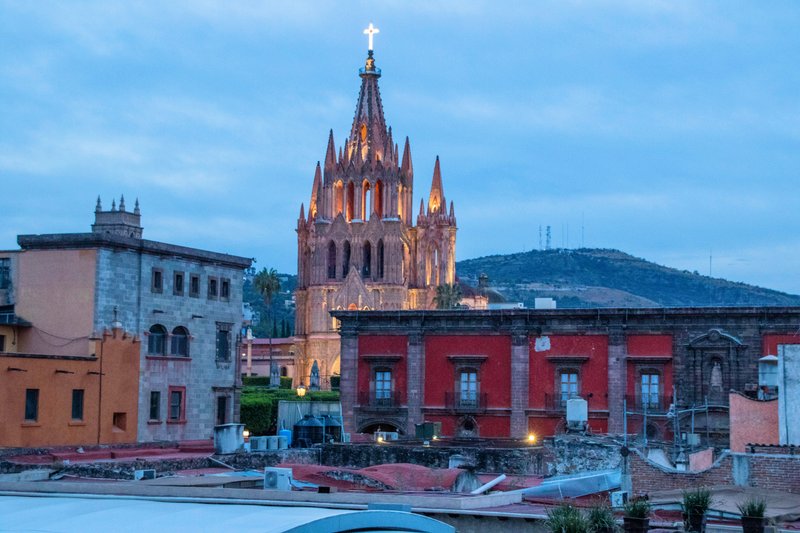
Explore MexicoThis highland town in Guanajuato state rose to prominence as a silver-mining settlement in the sixteenth century, and its cobblestone streets and baroque churches survived intact because the city saw little development during Mexico's industrial era. The centro histórico fans out from the Parroquia de San Miguel Arcángel, its pink neo-Gothic spires visible from nearly every rooftop terrace. Hotels occupy converted mansions along Calle Canal and Calle Aldama, their thick adobe walls keeping interiors cool through the dry season.
The restaurant scene draws on the region's ranchero traditions — cabrito, carnitas, enchiladas mineras — alongside contemporary Mexican cooking from chefs who trained in Mexico City and abroad. Mornings start at cafés around Jardín Principal, where locals linger over pan dulce and café de olla. Mezcalerías and cocktail bars open onto internal courtyards once evening settles in, and the town's sizable expatriate community has fostered an unusually cosmopolitan food culture for a city of its size.