Eight suites named for Oaxacan regions occupy this adults-only compound in the Sierra Madre foothills, each with private balconies offering valley views toward the city below. Timbered ceilings and stone walls frame interiors where colonial, indigenous, and contemporary aesthetics converge. The garden and swimming pool reinforce the sense of seclusion, while Entre Sombras restaurant applies Mediterranean techniques to local ingredients—a deliberate counterpoint to the traditional cuisine found throughout town.
Where to Stay
Colorful murals wrap around the central courtyard of this 20-suite boutique property in Oaxaca City's historic center, setting a tone of confident tranquility. Rooms layer high-design furniture against weathered architectural details, their handmade textures adding tactile depth to spaces equipped with smart TVs and coffee stations. Part of the Pug Seal collection, the hotel suits travelers who prefer residential calm over full-service formality.
Dating to 1529, this nine-room boutique property occupies one of Oaxaca City's oldest colonial buildings. Weathered stone walls frame rooms furnished with contemporary pieces and local artisanal crafts, while a rooftop terrace provides elevated views over the historic center. An adults-only policy ensures tranquility, though pets are welcome. Continental breakfast is served in-house; dinner means exploring Mexico's most celebrated culinary city.
Architect João Boto Caeiro drew on Zapotec ruins and modernist restraint to shape this 16-room retreat on Calle Macedonio Alcalá. Below ground, a subterranean spa centers on a circular pool lit through an open porthole like a private cenote; above, a rooftop plunge pool frames the bell towers of Santo Domingo. Chef Saúl Carranza's restaurant delivers a personal reading of Oaxacan classics.
An 18th-century landmark residence on Oaxaca City's west side, Grana B&B delivers intimate luxury across fifteen rooms where traditional craft meets contemporary design. The protected colonial architecture frames a tranquil central courtyard, while a rooftop terrace opens to mountain panoramas. Morning rituals unfold at a communal table—a convivial format suited to travelers seeking authentic connection alongside refined comfort.
A hanging alebrije sculpture greets arrivals at this 144-room property where contemporary Mexican architecture incorporates local wood, stone, and clay pottery throughout. The central courtyard echoes the nearby Jardín Etnobotánico with endemic Oaxacan species, while the pool draws inspiration from Hierve el Agua's petrified waterfalls. Chef Gerardo Rivera's La Distral delivers regional cuisine, and Nabane Spa applies ancient therapeutic traditions.
Brutalist concrete rises from Oaxaca's mountainside at Flavia Hotel, a former private residence whose monumental architecture conceals surprisingly intimate interiors. The eleven rooms each chart their own aesthetic course, while contemporary art punctuates communal spaces. A rooftop bar frames the city below; the restaurant pairs Chilean technique with local ingredients. For travelers seeking design-forward sanctuary beyond the colonial center.
Architect Hector Esrawe transformed this crumbling colonial structure into a 21-room gallery of contemporary Mexican design, with suites conceived by artists including Francisco Toledo and the collective Fríjol Parado. Shadowed walkways wind past cactus gardens to hidden patios, while the rooftop terrace bar and screening room provide evening retreats. The restaurant showcases regional cuisine—shrimp in yellow mole among the Oaxacan specialties.
A 17th-century colonial house stripped to its sculptural bones by artist Elliott Coon and architect João Boto Caeiro, this adults-only retreat trades ornament for atmosphere. Large-scale monochrome photographs by Alberto Ibañez punctuate whitewashed corridors, while a rooftop pool surveys the city below. The on-site restaurant reimagines Oaxacan classics through a vegan lens, paired with the owners' own Gem&Bolt mezcal.
A restored 1950s Art Deco mansion—a rare architectural find in colonial Oaxaca—houses this fourteen-room adults-only retreat. Light-filled interiors showcase bespoke furnishings alongside artisan textiles and collected objects from Asia and Africa. Complimentary craft cocktails greet arrivals, while a speakeasy bar pours local mezcal and an elevated restaurant serves regional cuisine beneath a canopy of trees. Central location ensures effortless exploration.
Where to Eat
Chefs Enrique Olvera and Luis Arellano orchestrate a tasting menu rooted in traditional Oaxacan recipes within a UNESCO-heritage guest house. The entirely open-air dining room unfolds beneath a canopy of trees strung with Edison bulbs, candlelit tables casting shadows on smooth concrete. Their quesabirria—shrimp, pickled cabbage, guacamole—exemplifies the kitchen's precision with local ingredients, while a flourless chocolate finale lingers long after the incense fades.
Chef Ricardo Arellano runs an intimate counter where Japanese omakase technique meets Oaxacan ingredients with striking originality. Kampachi arrives with nixtamalized papaya; tuna gets the binchotan treatment atop charred onion puree in chicory leaves. The eel handroll, dressed in smoky-sweet agave pulp, captures the kitchen's inventive spirit. Portions trend lighter, but each course delivers genuine culinary imagination without pretense.
A few steps from Mercado de La Merced, chef Toño García runs this intimate dining room with quiet confidence. The no-menu format yields a tasting sequence rooted in Mixteca traditions—avocado croquettes topped with nopales, fish and plantain wrapped in hoja santa with aguachile. García's cooking shows remarkable polish for his years, bringing refined technique to indigenous ingredients. Cash only; confirm reservations in advance.
A quarter-century of refined Oaxacan cooking unfolds in a luminous open-air courtyard where the kitchen's mole sampler delivers a masterclass in traditional sauce work. Vegetables arrive from the restaurant's own organic garden north of the city, while house-distilled mezcal anchors a sharp cocktail program. The Green Star-awarded, one-Michelin-starred dining room draws both locals and travelers seeking depth over spectacle.
Chef Thalía Barrios Garcia earned her Michelin star by channeling the recipes of San Mateo Yucutindoo, her hometown in the Oaxacan highlands. Her tamales—learned at her grandmother's side—arrive enriched with ricotta beneath a duo of moles, while grilled squash meets pipián blanco and spearmint. The shaded courtyard encourages long meals, punctuated by ancestral beverages that anchor every course in regional tradition.
The scent of open flame drifts through a colorful side street, signaling arrival at this grill-focused Mexican table. The kitchen bridges regional tradition with European technique across a sprawling menu, though beef commands attention—short ribs emerge impossibly tender beneath a beer and piloncillo glaze. Earlier, tostones rellenos deliver plantain dumplings swimming in profound mole negro, while dessert brings an airy chocolate mousse brightened by mint ice cream.
Church bells from the Templo de Santo Domingo punctuate evenings on the rooftop patio, where Chef Alejandro Ruiz has spent over two decades refining Oaxacan cuisine with international inflections. Servers prepare salsa tableside while the kitchen sends out plates of striking beauty—local ingredients transformed with precision. The platano Colorado, layered with banana cream and mezcal caramel, captures the restaurant's polished yet spirited approach.
Ambitious seafood takes center stage at this two-story address, where an open kitchen delivers a tasting menu built on creative risk. Wild-caught tuna tataki arrives rolled in vegetable ash; a buffalo taco gets brushed with rich demi-glace. Oaxacan staples like chintextle and hoja santa appear in unexpected preparations. Downstairs, a chic lounge sets the tone with potent cocktails before the meal unfolds above.
A half-hour drive south of Oaxaca city, down unmarked dirt roads, Chef Jorge León and his mother Doña Elvia receive guests by reservation only in their tree-shaded backyard. This Bib Gourmand address serves a relaxed tasting menu of regional comfort—tamal stuffed with spiced green beans, grilled local fish draped in fruit-laden molé estofado, tortillas pressed and charred moments before they reach the table.
Chef Pilar Cabrera has spent over two decades championing traditional Oaxacan cooking at this unassuming Reforma address, earning a Bib Gourmand for her efforts. The maiz sampler—squash blossom quesadillas, crispy plantain tacos glazed with spiced coloradito—offers an ideal introduction, while the mole negro gains unexpected depth from plantain and sweet potato purees. A generous vegetarian selection rounds out an accessible menu rooted in regional authenticity.
Frequently Asked Questions
Which neighborhoods in Oaxaca are best for walking and dining?
+
The centro histórico offers the highest concentration of restaurants and bars, particularly around the Zócalo and along Macedonio Alcalá. Jalatlaco, a few blocks northeast, has a village atmosphere with smaller cafés and mezcalerías on quieter streets. Xochimilco to the west is more residential but rewards exploration with traditional fondas and bakeries.
When is the best time to visit Oaxaca?
+
October through May brings dry weather and comfortable temperatures in the mid-20s Celsius. Late October and early November see the Día de los Muertos celebrations, when cemeteries fill with marigolds and families gather for all-night vigils. The Guelaguetza festival in July draws crowds for indigenous dance performances, though afternoon rains are common during the summer months.
What makes Oaxacan cuisine distinct from other Mexican regional cooking?
+
Oaxaca claims seven traditional moles, each with distinct chile combinations — negro, rojo, coloradito, amarillo, verde, chichilo, and manchamanteles. The region also produces mezcal from dozens of agave varieties, artisanal chocolate prepared with cinnamon and almonds, and ingredients like hierba santa, chicatanas (flying ants), and various wild greens that don't appear elsewhere in Mexican cooking.
Nearby Destinations
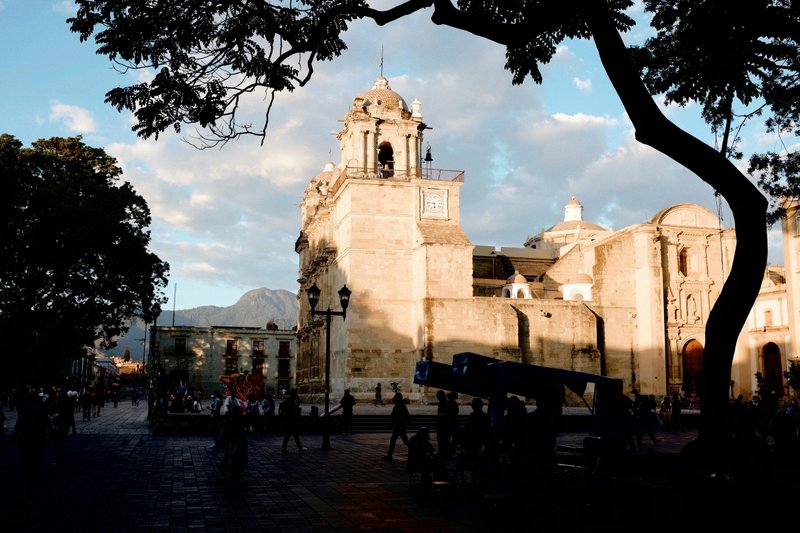
Explore MexicoOaxaca de Juárez sits in a high valley of the Sierra Madre del Sur, where pre-Hispanic ruins at Monte Albán overlook a city built from pale green cantera stone. The centro histórico unfolds around the Zócalo and Santo Domingo plaza — colonial arcades sheltering mezcalerías and restaurants serving tlayudas, mole negro, and chapulines. Jalatlaco, once a separate village, now draws visitors to its cobblestone calles and painted facades, while Xochimilco retains a quieter residential character with neighborhood comedores and corner tiendas.
The hotel scene ranges from converted convents and casas particulares to architect-designed properties that incorporate local textiles and barro negro pottery. Dining leans heavily on Oaxaca's seven moles and the surrounding valleys' ingredients — quesillo from Etla, mezcal from Santiago Matatlán, chocolate ground at mills along Calle Mina. Markets matter here: Benito Juárez for produce, 20 de Noviembre for carne asada stalls, and the sprawling Saturday tianguis at Central de Abastos. The altitude keeps evenings cool, and rooftop bars with mountain views have become part of the city's social fabric.