A 1930s Art Deco landmark on UNESCO-listed Castro Alves Square, this former newspaper headquarters now houses 70 rooms where architect Isay Weinfeld's sleek modernism meets restored period grandeur. The rooftop pool surveys the Bay of All Saints, while the spa offers jacuzzi and sauna retreats. Downstairs, the restaurant merges refined Italian cooking with Bahian traditions—a combination as striking as the building itself.
Brazil's first eco-designed resort occupies a pristine stretch of Alagoas coastline, where 23 suites and villas face an almost empty white sand beach. Indigenous wood and stone exteriors give way to minimalist interiors featuring Japanese cedar soaking tubs and private plunge pools carved from Balinese stone. Chef César Santos helms restaurant Kaamo, interpreting regional cuisine with Portuguese accents while guests explore coral reefs and paddle through nearby lagoons.
Salvador's 1934 Art Deco landmark once welcomed Carmen Miranda, Pablo Neruda, and Orson Welles through its doors. The 81-room property preserves its original architectural grandeur in soaring public spaces while guest rooms feature mid-century modernist furniture and photographic portraits of Bahian street life. A rooftop pool overlooks Todos os Santos Bay, and the double-height lobby restaurant channels the glamour of a bygone era.
A secluded cove on Bahia's coast, ringed by Atlantic Forest, provides the setting for this 24-suite retreat where Bahian architecture meets Swedish design sensibility. Floor-to-ceiling windows in each suite open onto forest canopy or ocean panoramas, while an infinity pool extends toward the sea. The property arranges surfing lessons, mangrove kayaking, and forest expeditions—ideal for travelers seeking both adventure and genuine environmental commitment.
A 19th-century residence in Salvador's historic Pelourinho district, Aram Yami operates as an intimate five-room boutique where colonial architecture meets Asian-inflected décor and solar-powered sustainability. The rooftop pool commands unobstructed views across Todos os Santos Bay, while the ground-floor master suite offers a private pool and terrace for families or traveling companions. Organic Amazonian amenities and a 24-hour lobby bar complete the picture.
Reaching this ten-bungalow retreat near Morro de São Paulo requires a boat or small plane—a fitting prelude to its secluded beachfront setting. Split-level accommodations pair rustic exteriors with polished Brazilian hardwoods, whirlpool baths, and contemporary fixtures inside. The kitchen draws from waters just yards away, applying Mediterranean techniques to Bahian ingredients. Fishing, sailing, and jungle walks complete the near-tropical escape.
Frequently Asked Questions
What is the best neighborhood to stay in Salvador?
+
Pelourinho offers colonial atmosphere and walkable access to historic sites, though its steep streets demand stamina. Barra provides beach proximity with urban conveniences, while Rio Vermelho attracts those seeking the city's most concentrated nightlife and restaurant scene. The southern beaches toward Itapuã suit travelers prioritizing sand and surf over heritage sightseeing.
When is the best time to visit Salvador?
+
December through March brings peak summer heat and the buildup to Carnaval, which typically falls in February or early March. The winter months of June through August offer milder temperatures and lower humidity, coinciding with Festas Juninas celebrations. September through November sees fewer crowds and comfortable weather for exploring the historic center on foot.
How do you get around Salvador?
+
The Lacerda Elevator connects the lower port area to Pelourinho in seconds — a necessary shortcut given the city's dramatic topography. Taxis and ride apps serve most visitors well, though the metro line running from the airport through central neighborhoods has improved public transit options. The beaches south of Barra follow a linear coastal road easily navigated by car.
Nearby Destinations
Explore BrazilBrazil's first capital wears its African heritage openly. The Pelourinho district, a UNESCO site of pastel-painted colonial buildings, drops steeply toward the Bay of All Saints, where Candomblé terreiros still practice alongside baroque churches. The hotel scene splits between the clifftop historic center — where converted mansions look out over the Lacerda Elevator — and the beach neighborhoods stretching south toward Itapuã, the fishing village immortalized by Vinícius de Moraes.
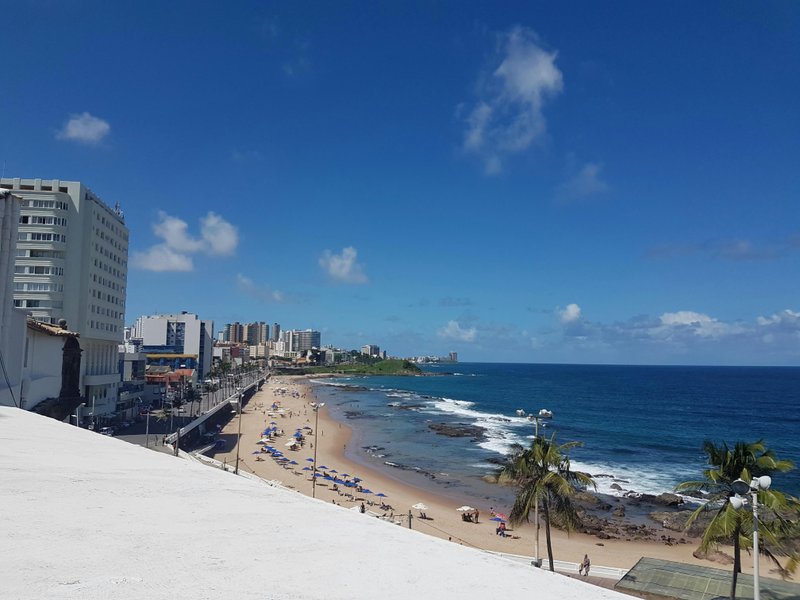
Barra lighthouse marks the transition from bay to open Atlantic, its 17th-century fort now surrounded by properties catering to visitors drawn by the city's musical pulse. Tuesday nights in Pelourinho bring blocos and drum corps to the streets; the rest of the week, the soundtrack shifts between pagode in Rio Vermelho bars and the electronic-meets-axé scene that made Carnaval here a rival to Rio's. The kitchen runs on dendê oil, coconut milk, and dried shrimp — acarajé vendors work every corner, while refined Bahian cuisine has earned the city serious culinary attention.