Sultan Moulay Slimane's 18th-century summer palace now houses 200 rooms where handmade Berber carpets meet custom Zellige tilework and brass lanterns cast warm light against carved wooden screens. The clifftop Atlantic setting delivers floor-to-ceiling ocean views, an oceanfront pool, and a hammam steeped in argan oil rituals. Lantern-lit dining rooms serve refined Moroccan feasts and Mediterranean seafood against crashing waves.
Explore Rabat
A 440-acre forested former royal estate provides the setting for this palatial retreat, where zellij mosaics, carved cedarwood ceilings, and muqarnas detailing evoke Morocco's Andalusian heritage. Le Spa draws on hammam traditions with rose-scented steam and argan oil rituals. Golfers access the championship Royal Golf Dar Es Salam directly from the grounds, while the art deco Blind Tiger bar pours vintage-inspired cocktails after dark.
Conrad's Moroccan debut commands a clifftop above the Atlantic, its stark white façade and open-air walkways channeling ocean breezes through marble-clad interiors where traditional craft meets contemporary design. The 120 rooms all feature private balconies—ocean-view categories add outdoor daybeds for wave-lulled afternoons. L'Oursin serves seafood poolside, while the spa's Salty Hammam Escape draws on local tradition in treatment suites facing the sea.
Mashrabiya screens and carved headboards bring North African craft into this 229-room property near Rabat's Royal Palace and Mausoleum. The grounds unfold through an Andalusian garden fragrant with orange trees, leading to twin outdoor pools. A full spa offers hammam, jacuzzi, and sauna, while two late-night bars extend the evening. Family amenities and a driving range broaden the appeal for longer stays.
Perched within a marina complex on the Bouregreg River, this 186-room Fairmont property channels Moorish aesthetics through artisan glass lanterns, geometric tilework, and keyhole archways set against sleek contemporary bones. The marble spa houses ten treatment cabins and a private hammam for ancestral rituals, while three restaurants and a rooftop pool—open late for panoramic sunsets—anchor the social scene. Ideal for travelers seeking polish with cultural texture.
Frequently Asked Questions
What neighborhoods should I consider when choosing a hotel in Rabat?
+
The medina and Kasbah des Oudayas offer restored riads with traditional architecture and proximity to historic sites. Agdal and Souissi are upscale residential districts with larger resort-style properties and gardens. The Ville Nouvelle provides Art Deco charm and walkable access to restaurants, while coastal areas toward Témara suit those wanting beach proximity and Atlantic views.
When is the best season to visit Rabat?
+
Spring (March to May) and autumn (September to November) bring mild temperatures ideal for exploring the medina and coastal walks. Summer can be humid but ocean breezes moderate the heat. Winter remains pleasant compared to European destinations, with occasional rain but temperatures rarely dropping below 10°C.
How does Rabat differ from Marrakech for travelers?
+
Rabat operates as Morocco's administrative capital, resulting in a calmer atmosphere with less tourist pressure. The medina is smaller and easier to navigate, haggling is less aggressive, and you'll encounter more Moroccan professionals than tour groups. The Atlantic coast adds a different dimension — surfing, seafood restaurants, and sunset walks along the corniche replace the desert aesthetic.
Nearby Destinations
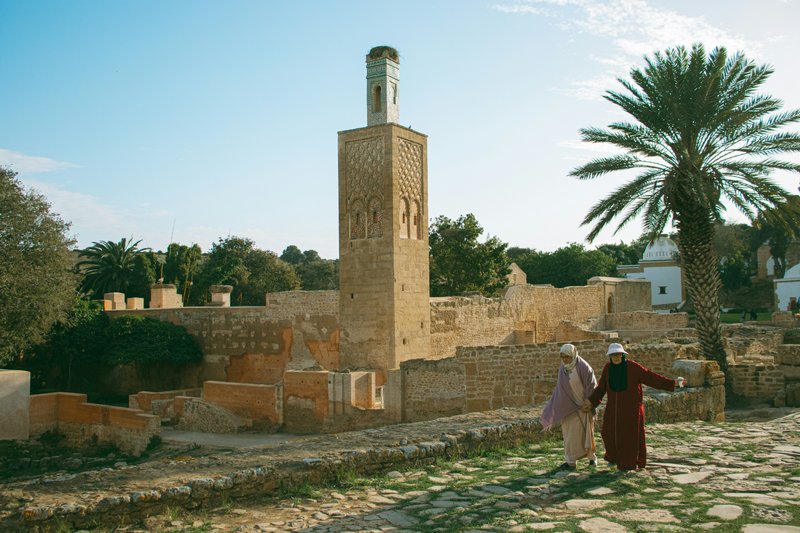
Explore MoroccoMorocco's capital unfolds along the Atlantic coast where the Bou Regreg river meets the sea, its medina walls rising above fishing boats and surfers. The Kasbah des Oudayas — a 12th-century fortress painted in Mediterranean blues and whites — anchors the old city, while the Hassan Tower stands unfinished since 1199, its minaret a monument to Almohad ambition. Unlike Marrakech's intensity, Rabat moves at a measured pace: government ministries occupy Art Deco buildings in the Ville Nouvelle, diplomats lunch in Agdal, and families stroll the corniche at sunset.
The dining scene draws from both palace traditions and contemporary Moroccan cooking. Expect slow-cooked tagines with preserved lemons and olives, pastilla layered with pigeon and cinnamon, and fresh catch grilled at beachside restaurants in Témara. Evening drinks happen on rooftop terraces overlooking the medina or in the garden bars of Souissi's residential villas. Accommodation ranges from restored riads within the UNESCO-listed medina walls to resort properties along the Rabat-Salé coastline, many featuring hammams and Atlantic views.