Sprawling across 130 acres at the New Forest's edge—land once roamed by Norman hunters and later by smugglers—this family-owned estate pairs old-school English hospitality with genuine imagination. Treehouses hidden in woodland valleys offer an alternative to the main house, while James Martin's on-site cookery school draws ingredients straight from the kitchen garden. The award-winning spa centers on an ozone-treated indoor pool, and children retreat to the Beehive, a timber-built club perched in the treetops.
Where to Stay
This buttercream-coloured manor within the New Forest National Park pairs historic bones with crisp contemporary interiors, achieving a casual elegance that sidesteps country-house stuffiness. Angela Hartnett and Luke Holder's restaurant champions local produce, while the spa offers an indoor pool, jacuzzi, and steam rooms. Pet-friendly policies and children's amenities—dedicated swim times, bikes—make it equally suited to couples and families.
This late Victorian Tudor-Gothic mansion commands 40 acres of landscaped grounds complete with a hornbeam maze. Inside, intricate wood panelling and enormous fireplaces set a dramatic tone, while the bejewelled grotto offers intimate dining alongside the more formal Armada Restaurant. Both indoor and outdoor pools complement spa facilities, and dog-friendly rooms make it equally welcoming for families travelling with pets.
Deer grazing on the lawns outside bedroom windows set the tone at this established Brockenhurst property, where the New Forest arrives at the doorstep each morning. Both indoor and outdoor pools allow year-round swimming, while the Espa spa provides a polished retreat. Two AA rosette dining, dog-friendly policies, and cleverly configured family suites sleeping five make it particularly suited to multi-generational groups.
A New Forest manor house expanded across generations, Careys Manor centers its appeal on SenSpa—a hydrotherapy-equipped wellness facility with advanced treatment protocols that draws Londoners seeking countryside respite. Three restaurants serve the property, from the child-friendly Blaireau to the refined Zen Garden. The adults-only pool maintains a tranquil atmosphere, while interconnecting garden rooms accommodate families with older children.
A handsome Georgian townhouse on Lymington's gently sloping high street, Stanwell House Hotel draws both locals and visitors to its convivial ground-floor dining rooms and bar. The property's recent transformation has sharpened its appeal considerably, with comfortable bedrooms upstairs and an easy-going atmosphere throughout. Families find a genuine welcome here, with cots and children's menus readily available on request.
Beaulieu village provides the backdrop for this refined country hotel, where the kitchen outshines all other departments with exceptional cooking served across both formal and casual dining rooms. Bedrooms strike a careful balance between traditional comfort and contemporary appeal, making them equally suitable for couples and multigenerational parties. Families benefit from thoughtful provisions including cots, sofa beds, and dedicated children's menus.
The original property that launched an entire hospitality collection, The Pig in Hampshire channels rustic refinement through cosy lounges and characterful interiors. Its greenhouse restaurant showcases the estate's own kitchen garden, where a vivid spectrum of vegetables travels mere steps from soil to plate. The atmosphere skews adult despite family-friendly grounds—couples and food-focused travelers find their stride here.
Deer graze the ancient woodland surrounding this Luxury Family Hotels property, their silhouettes echoed in design motifs throughout the interiors. The Ofsted-registered Four Bears Den keeps children occupied with seasonal crafts and rabbit feeding, while a cinema screens family films daily alongside a games room stocked with retro arcade machines. At the Vinery restaurant, toys scattered among tables signal a rare understanding: families need not choose between quality and chaos.
Where to Eat
A cobbled lane in Georgian Lymington leads to this Grade II listed quayside address, where the chef's confident sourcing translates into multi-course tasting menus built around the day's catch and prime seasonal produce. Plates arrive with evident care for presentation. For those preferring conviviality over coursework, a sharing menu features Chateaubriand and trout en croûte portioned for two.
Angela Hartnett and Luke Holder bring their combined Italian expertise to this light-filled dining room within Lime Wood, a handsome stone mansion deep in the New Forest. The cooking follows an ingredient-led philosophy rooted in rustic Italian tradition, while the glass-roofed bar offers an extensive cocktail list for leisurely aperitifs. Garden views through tall windows complete a polished yet relaxed country setting.
What to Do
Spa Chewton Glen draws its character from the convergence of ancient woodland and coastal air, a setting that infuses every treatment with New Forest tranquility. The hydrotherapy pool, fitted with twelve high-tech massage stations, anchors the wellness offering, while an ozone-treated indoor pool provides gentler restoration. Staff deliver holistic programmes tailored to individual needs, maintaining the intimate scale of a private retreat.
Frequently Asked Questions
What are the main villages to stay in within the New Forest?
+
Brockenhurst serves as the forest's informal capital, with a railway station on the main London-Weymouth line and the highest concentration of hotels and restaurants. Lyndhurst hosts the New Forest Centre and verderers' court where commoning rights are administered. Beaulieu anchors the southeastern corner with its abbey ruins and motor museum, while Burley attracts day visitors to its craft shops. For waterfront access, Lymington offers cobbled streets, a Saturday market, and ferry connections to the Isle of Wight.
When is the best time to visit the New Forest?
+
Late August through September brings heather in bloom across the open heath, transforming the landscape into sweeps of purple. Spring sees newborn foals alongside the ponies, and bluebells carpet the ancient woodland floors in May. Autumn delivers exceptional color from the beech and oak, with fewer visitors than summer months. Winter offers stark beauty and easier wildlife spotting, though some smaller establishments close seasonally.
What outdoor activities are available in the New Forest?
+
The forest contains over 140 miles of waymarked walking trails and designated cycling routes, with bike hire available in Brockenhurst and Burley. Horse riding remains central to the area's identity, with several stables offering accompanied hacks through Crown Land. The Beaulieu River and Lymington marshes attract birdwatchers, while the Solent coastline provides sailing, paddleboarding, and sea kayaking. Several estates maintain private fishing rights on forest streams.
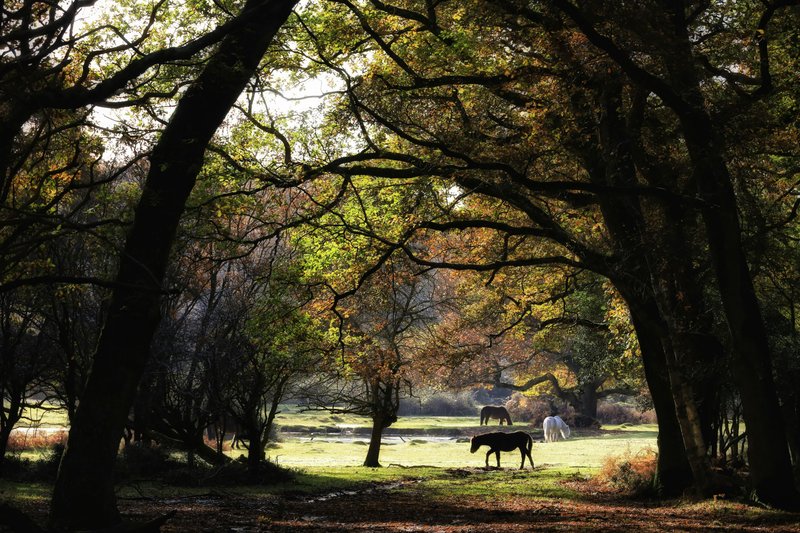
William the Conqueror established this ancient woodland as a royal hunting ground in 1079, and its 219 square miles of heathland, bog, and deciduous forest remain largely unchanged. Free-roaming New Forest ponies, donkeys, and cattle graze alongside village greens in Brockenhurst, Lyndhurst, and Beaulieu — settlements where thatched cottages and Norman churches sit beside independently owned tea rooms and gastropubs. The landscape shifts from dense oak and beech canopy to open heath purple with heather in late summer.
Accommodation here favors converted country estates and purpose-built woodland retreats, many with extensive grounds bordering Crown Land where guests can walk directly into the forest. Dining leans toward estate-reared venison, foraged mushrooms, and produce from kitchen gardens — a locavore sensibility predating the term. The southern edge meets the Solent, where Lymington's Georgian high street and working yacht harbor provide a maritime counterpoint to the forest interior.



