Positioned directly on the 17th hole of golf's original course, this landmark property offers grandstand views across the links to West Sands Beach and St Andrews' medieval spires. The Kohler Waters Spa features hydrotherapy pools and signature treatments, while seven restaurants include the character-rich Jigger Inn. Families find a pool with mini-waterfall and organised activities; dogs receive beds, bowls and treats. Golfers secure guaranteed tee-times at the hotel's Duke's Course.
Where to Stay
Presiding over the 18th fairway of the Old Course since the late nineteenth century, Rusacks commands views stretching to West Sands beach. Marine & Lawn's renovation preserves the grande dame character while sharpening the hospitality: 123 rooms blend period atmosphere with contemporary comforts. Dining splits between the clubby 18 and brasserie-style The Bridge. Dog-friendly policies and proximity to links make it essential for golf devotees traveling with four-legged companions.
Deep in Fife's countryside, this intimate eight-suite retreat pairs a celebrated Michelin-starred restaurant with split-level accommodations featuring tweed sofas, deep soaking baths, and garden views. The kitchen commands attention—expect exceptional cooking that rewards the journey here. With golf courses nearby and an inviting garden behind the main house, it suits gourmands seeking a peaceful rural escape over city bustle.
Two championship golf courses wrap around this contemporary resort perched on clifftops outside St Andrews, with panoramic sea views stretching toward the horizon. Beyond the fairways, a full-service spa and generous indoor pool cater to non-golfers, while families find dedicated facilities including a cinema room, children's activities, and even mini manicures. Dogs receive their own beds and bowls—a Fairmont signature touch.
From its windows, a cascade of orange-tiled rooftops tumbles down toward the Firth of Forth—the view unchanged since the 17th century. This intimate guesthouse in the preserved village of Culross offers just two bright bedrooms where period-sensitive décor honors the building's heritage. Families can book an attached self-catering cottage with breakfast delivered each morning, making it ideal for those seeking Scottish history without sacrificing comfort.
Perched above Elie's sandy crescent in the East Neuk, this six-room coastal retreat pairs stylishly pared-back interiors with an unpretentious village-pub spirit. The owner captains the local cricket team, whose summer matches unfold on the beach below—a scene best observed from the lively beer garden. Families and four-legged companions find genuine welcome here, with dedicated menus for children and dogs alike in the ground-floor 'Seadog' rooms.
Forty-two rooms line the seafront at Seaton House, where oak-panelled interiors and tartan accents frame views stretching to the Old Course's first tee. Golfers wake steps from the legendary links; others retreat to Bow Butts Bar's whisky collection or Ondine Oyster & Grill's marble counter for Scottish shellfish. The hotel arranges whisky masterclasses, guided wild swimming, and private St Andrews tours—a base for those seeking both the green and the glen.
Where to Eat
An eighteenth-century whitewashed inn turned Michelin-starred destination, The Peat Inn reflects chef Geoffrey Smeddle's deep commitment to seasonal Scottish produce. His network of trusted suppliers—delivering East Neuk crab, Black Isle lamb, Easter Grangemuir Farm strawberries—shapes menus of vivid, direct flavours. Split-level bedrooms offer overnight guests a leisurely continuation, with breakfast brought to the room each morning.
A striking glass cube cantilevered over St Andrews Bay, this Michelin-recognized address delivers locally landed seafood with an understated Italian accent. The kitchen demonstrates admirable restraint—day boat halibut arrives prepared to showcase its inherent sweetness rather than obscure it. Floor-to-ceiling windows frame the Scottish coastline, making every table a front-row seat to the North Sea's moody theatre.
Chef-owner Stephen Collinson runs a kitchen built on classical precision and generosity, earning Michelin recognition for dishes that reward repeat visits. Signature plates—smoked haddock rarebit brightened with leek, roasted venison in port and cassis—anchor a menu where technique serves flavor rather than spectacle. The dining room's floor-to-ceiling windows announce the address boldly, though the quiet Broughty Ferry street keeps the atmosphere unhurried and intimate.
A converted harbourside pub along Fife's celebrated East Neuk, Craig Millar @ 16 West End delivers refined seafood cookery with views across St Monans' working harbour. The kitchen showcases premium local ingredients in polished, flavour-driven plates—a fixed-price lunch offering flexibility, while dinner follows a tasting format with dual main-course options. Summer months open a compact terrace for waterside dining.
A 17th-century village pub turned modern dining room, Kinneuchar Inn operates on a simple principle: the menu follows the catch and the harvest. Menus shift twice daily to reflect East Neuk's coastal bounty, with fresh fish earning particular attention. Guests choose between an intimate bar and a vaulted stone dining room—both settings stripped back, letting the produce speak. Michelin Plate.
After years as an Edinburgh institution, Ondine now occupies the restored Seaton House hotel, its dining room overlooking West Sands beach. The kitchen draws crab and lobster from the East Neuk's fishing villages, presenting them through time-honoured preparations—fish and shellfish soup, sole meunière—that let the coastline's exceptional produce speak plainly. A seafood destination shaped by its Scottish surroundings.
Beneath the iron grandeur of the Forth Rail Bridge, this intimate dining room pairs grey brick walls with vivid contemporary art. The kitchen channels Scottish terroir through precisely composed plates—plump Shetland mussels arrive gilded with bacon, basil, and parmesan, a signature preparation that captures the restaurant's ethos of enhancing prime ingredients without overwhelming them. A Michelin Plate holder suited to unhurried evening meals.
Named for the sea fog that drifts across the Scottish coast, Haar delivers a seafood-focused experience shaped by chef Dean Banks's Nordic sensibility and global influences. The signature smoked lobster anchors both the fixed-price lunch and evening tasting menus, while Arbroath smokies appear throughout preparations that champion local waters. Comfortable rooms upstairs allow guests to extend the evening without compromise.
A century-old inn overlooking Crail's harbour has been thoughtfully restored into a chic bistro with stone-walled bar, retaining its character as both neighbourhood local and destination dining room. The kitchen sends out precisely executed plates—asparagus panna cotta, Scrabster cod lifted by curried bisque—while monthly folk sessions animate the bar. Four rooms upstairs make lingering in this East Neuk fishing village effortless.
Facing Pittenweem's working harbour, this intimate dining room doubles as a gallery where aquatic artwork lines the walls—pieces available for purchase between courses. The blackboard announces the day's catch: plump langoustines, hake dressed in seaweed butter, all sourced from East Neuk waters. A Michelin Plate address where the fishing village atmosphere proves as genuine as the seafood on the plate.
Frequently Asked Questions
Which areas of Fife offer the best coastal scenery?
+
The East Neuk villages — Anstruther, Pittenweem, Crail, and Elie — line a stretch of coast designated as outstanding natural beauty. The Fife Coastal Path connects them, passing secluded coves, ruined castles, and working harbors where fishing boats land the morning catch.
What makes St Andrews significant beyond golf?
+
Founded in the twelfth century, St Andrews housed Scotland's ecclesiastical capital and its oldest university, established in 1413. The cathedral ruins, castle remains, and medieval street layout survive intact, while the academic calendar still shapes the town's rhythm and social scene.
When is the best season to visit Fife?
+
Late spring through early autumn offers the most reliable weather, with May and June bringing long daylight hours and coastal wildflowers. September sees fewer visitors while restaurants feature game season and the soft fruit harvest reaches its peak.
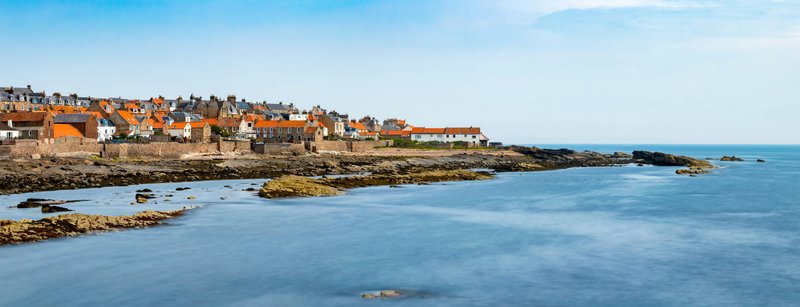
Scotland's ancient kingdom occupies a peninsula between the Firth of Forth and the Firth of Tay, its coastline punctuated by fishing villages that time largely forgot. St Andrews draws visitors for reasons beyond its famous links — the medieval street plan remains intact, university spires rise above North Street, and the harbor still shelters working boats. Along the East Neuk, a string of settlements from Elie to Crail preserves crow-stepped gables and pantiled roofs, each village maintaining its own character and morning fish markets.
The interior tells a different story: Dunfermline served as Scotland's capital before Edinburgh, its abbey holding the remains of Robert the Bruce. Country estates dot the landscape between former mining towns now reinvented, while Falkland's Renaissance palace stands improbably in a village of barely a thousand souls. The dining scene draws heavily on the Fife larder — East Neuk crab and lobster, Pittenweem prawns, soft fruit from the Carse of Gowrie's edge. From refined tasting menus in converted steadings to unfussy harbor-side fish suppers, the emphasis stays local and seasonal.