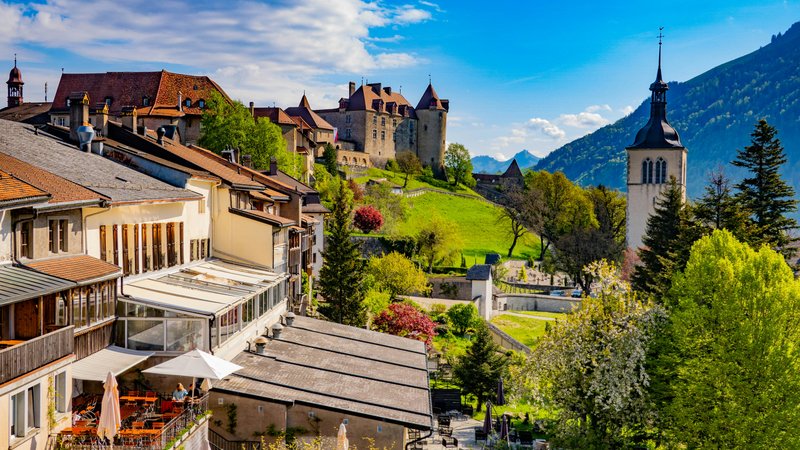
Le Sommet, the gastronomic table of Les Montagnards hotel, holds a Michelin star for its regional cuisine served against a dramatic panorama of the Moléson peak and Gruyères castle. The dining room's refined minimalist design focuses attention on the landscape and the plate alike. Attentive staff offer sharp wine pairings, while guest rooms upstairs make this a natural base for exploring the surrounding Alpine trails.
The elegant pale wood dining room at 4 Saisons frames the Swiss countryside through generous picture windows, a fitting backdrop for cuisine that follows the rhythm of local harvests. Lake fish, regional meats, and vegetables from nearby farms anchor the seasonal menu—try the morel stuffed with Agria potatoes and Vully asparagus tips. The wine list favors Swiss producers, completing an understated alpine table.
A tastefully renovated traditional building houses this dual-personality address: relaxed bistro by day, refined gourmet destination by evening. The vaulted dining room sets the stage for regional cuisine with creative flourishes—crisp sweetbread paired with crayfish and glazed miniature vegetables among the signatures. Knowledgeable staff guide diners through thoughtful wine pairings, making this a compelling detour from the Gruyères circuit.
The brasserie counterpart to Le Sommet delivers its own compelling case for a visit, serving creative regional cooking in a warmly contemporary room of polished wood and clean lines. Stuffed morels in cream sauce anchor the seasonal repertoire, while pike-perch pulled from nearby lakes speaks to the kitchen's locavore instincts. Window tables frame Gruyères Castle—an alpine tableau that elevates the meal.
A wooden-clad village inn with serious sustainability credentials, Auberge des Montagnards sources game from hunters working the surrounding forests—venison and wild boar prepared with rustic finesse. Lake Geneva whitefish arrives as delicate carpaccio, paired with tangy cream and crisp vegetables. The intimate terrace out front catches afternoon light, ideal for leisurely meals rooted in local tradition.
Frequently Asked Questions
When is the best time to visit Gruyères for fewer crowds?
+
Early morning or late afternoon offers the most pleasant experience, as coach tours typically arrive between 10am and 4pm. Visiting on weekdays outside of July and August also reduces congestion significantly. The village takes on a particularly atmospheric quality in autumn when mist settles in the valley below the ramparts.
What is the connection between HR Giger and Gruyères?
+
The Swiss artist who designed the creature for Ridley Scott's Alien purchased the Château St. Germain in 1998 and established a museum displaying his biomechanical artwork. The adjacent Giger Bar, designed entirely by the artist, offers a striking contrast to the medieval village architecture.
How does the local cheese production influence dining in Gruyères?
+
The village sits at the center of the protected AOC zone where Gruyère cheese must be produced. Most restaurants source their cheese from the demonstration dairy at the base of the hill, where visitors can observe the traditional copper-vat production method. This proximity means fondue and raclette dishes feature cheese aged precisely to local preference — typically between five and eight months for optimal melting texture.
Nearby Destinations
Explore SwitzerlandThe walled village rises from the Pre-Alpine foothills of the Canton of Fribourg, its cobblestone main street climbing toward the thirteenth-century castle that dominates the valley below. Beyond the ramparts, the landscape unfolds in emerald pastures where brown cows graze — the same breed whose milk has produced the region's celebrated cheese since the twelfth century. The HR Giger Museum, housed in the Château St. Germain, adds an unexpected counterpoint of dark surrealism to this pastoral setting.
Dining here revolves around fondue, raclette, and double cream served in copper pots at timbered restaurants clustered along the Rue du Bourg. The village empties of day-trippers by early evening, leaving behind a quieter atmosphere where the creak of wooden signs and the bells of returning cattle mark the hours. From spring through autumn, the terrace tables fill with visitors who've made the short journey from Montreux or Lausanne to eat cheese in the shadow of the Alps.