An 18th-century tower of honey-coloured stone rises from Aragón's remote Matarraña hills, its 18 rooms dressed in warm neutrals and bare timber. The spa draws on a natural spring, with views stretching across olive groves to distant peaks—the same panorama framed by floor-to-ceiling glass at Atalaya del Tastavins, where zero-kilometre cooking showcases produce from surrounding farms. Between meals: truffle hunts, stargazing, deep rural silence.
Where to Stay
A 15th-century castle restored by former Madrid publishers, La Torre del Visco rises alone in the countryside near Valderrobres, one of Spain's most beautiful medieval villages. The adults-only retreat holds just twelve rooms with exposed brick and mountain views, while rose gardens, a grand piano, and fireplaces set a romantic tone. Evenings bring farm-to-table dining and stargazing under remarkably dark Aragonese skies.
Twelve wooden cubes perch at the edge of a bluff in Aragón's remote Matarraña province, each with a glass wall opening onto sweeping valley views and a private terrace. Built from an ancient hermitage, Consolación pairs historic bones with sharp contemporary design—sunken slate baths, sleek furnishings, and an open kitchen where guests watch chefs at work or graze freely between meals. Architecture lovers and solitude seekers will find refuge here.
4. Mas de la Costa
A two-century-old Aragonese farmhouse reborn as a fifteen-room retreat, Mas de la Costa sits amid olive and almond groves with the Els Ports de Beceite peaks on the horizon. Suites retain original stone walls, timbered ceilings, and working fireplaces, while bathrooms feature hand-crafted Granada tiles. The Slow Food restaurant champions regional produce; afterward, guests browse the wine cellar's honesty bar stocked with Spanish, French, Italian, and Argentine bottles.
Where to Eat
A 1449 tower house along the Tastavins river shelters this Michelin Green Star restaurant, where the kitchen practices zero-'metres' cooking from its 200-acre organic estate. Two seasonal menus showcase the approach: the vegetarian Vía Verde features daily-foraged wild plants, while the traditional option draws on Matarraña meats and l'Ampolla auction fish. Deer graze outside; stars emerge on the terrace after dark.
Método occupies a pedestrian street in Teruel's old quarter, where chef-driven menus pursue a singular focus: exceptional beef and tuna sourced from rigorously vetted suppliers. The modern dining room provides a clean stage for plates arranged with geometric precision, each course demonstrating how traditional Spanish cuisine gains new clarity through restrained, exacting presentation. A destination for ingredient purists.
A culinary champion of Spain's depopulated rural heartland, Existe operates from the Mas de Cebrián hotel along the road to Puertomingalvo. Chef Alberto crafts a single tasting menu rooted in Teruel's terroir—local game, wild mushrooms, and regional traditions—while María oversees the wine service. The rustic-contemporary dining room and Bib Gourmand recognition make this an essential detour for gastronomes exploring Aragón's quieter corners.
On Ráfales' Plaza Mayor, chef Clara Lapuente earns a Bib Gourmand for her refined take on Aragonese tradition, built entirely around local produce. Her background in pastry shows in the precision of every plate—and particularly in desserts that rival the savoury courses. A surprise tasting menu rewards the curious, while hotel guests enjoy a dedicated fixed-price dinner. Reservations essential.
The Gúdar-Javalambre hills supply Spain's finest black truffles, and this riverside address puts them to excellent use. A Bib Gourmand holder, El Rinconcico pairs Aragonese tradition with Peruvian inflections from its chef—think Ternasco D.O. lamb alongside the legendary potaje de garbanzos de Miguel, a chickpea stew honouring the founder. Upstairs dining room; ground-floor gastro-bar for something quicker.
Cod receives singular devotion at this contemporary Teruel address, where the menu explores the fish through preparations ranging from a gratin perfumed with local Jiloca saffron, tomatoes, and orange confit to a luxurious pairing with sea urchin cream and seafood spaghetti. Half-portions encourage sampling across the carte, while two tasting menus—Esencia and Epicure—reward those who book ahead with a deeper exploration.
Frequently Asked Questions
Why is Teruel known for Mudéjar architecture?
+
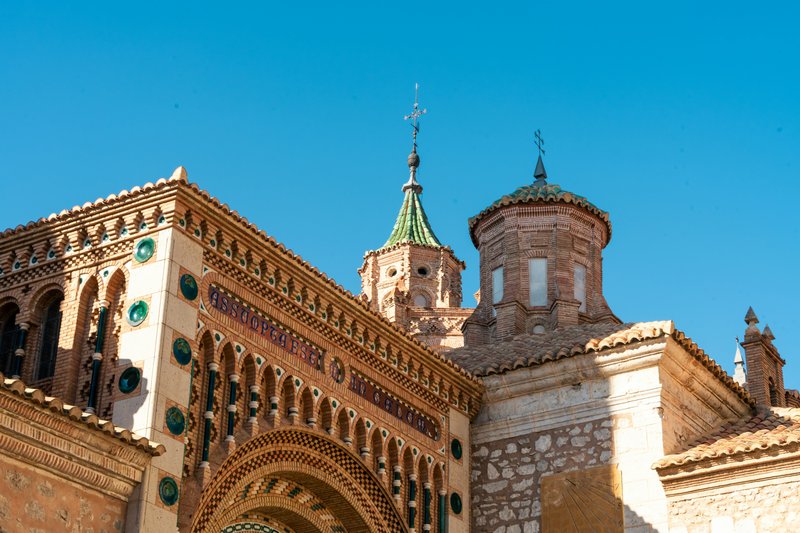
Between the 12th and 17th centuries, Christian rulers employed Muslim craftsmen to build churches, towers, and civic buildings using techniques from Al-Andalus. Four of these structures — including the towers of San Salvador, San Martín, and the cathedral — form a UNESCO World Heritage ensemble, representing the finest surviving examples of this uniquely Iberian architectural fusion.
What is the best area to stay in Teruel's old town?
+
The streets surrounding Plaza del Torico offer the most convenient base, placing you within steps of the cathedral, the iconic towers, and the main concentration of restaurants and tapas bars. Properties along Calle Nueva and near the Escalinata stairway provide atmospheric settings in restored historic buildings.
What local dishes should visitors try in Teruel?
+
Jamón de Teruel, cured at altitude for at least fourteen months, anchors most menus. Ternasco de Aragón — young lamb roasted simply with garlic — remains the signature main course. Look also for migas del pastor (fried breadcrumbs with pork), sopas de ajo, and local peaches preserved in wine syrup from the Bajo Aragón orchards.
Nearby Destinations
Explore SpainThis remote Aragonese capital rises from the high plateau of southern Aragon, its medieval skyline punctuated by towers of intricate brickwork that earned UNESCO recognition. The old town clusters around Plaza del Torico, where locals gather beneath a small bronze bull that has watched over daily life since 1858. Beyond the main square, narrow streets wind past Renaissance palaces and Gothic churches, their façades revealing layers of Mudéjar craftsmanship — geometric patterns in glazed ceramics, carved stucco, and elaborate belfries that reflect centuries of Christian-Islamic artistic exchange.
The culinary identity here draws from harsh winters and pastoral traditions: jamón de Teruel carries its own denominación de origen, while local restaurants serve hearty migas, ternasco lamb, and conservas from nearby orchards. The compact centro histórico makes evening exploration effortless — tapas bars occupy medieval ground floors, and the elevated Paseo del Óvalo provides sweeping views across the Turia valley as the sun sets behind the Sierra de Albarracín.