Skip to content

Tarragona

Where to Stay

1. Terra Dominicata - Hotel & Winery

3 Michelin Keys

A 12th-century Carthusian monastery reborn as an adults-only retreat, Terra Dominicata occupies a privileged position in the foothills of Montsant Natural Park. The 26 rooms preserve original stone walls, beamed ceilings, and hardwood floors beneath a refined contemporary aesthetic. A working winery supplies the on-site restaurant, while the outdoor pool frames sweeping mountain views—a contemplative escape for couples seeking seclusion.

2. Gran Hotel Mas D'en Bruno

Relais & Châteaux

An 18th-century estate converted into a 24-suite retreat, this Priorat property channels its winemaking heritage through a spa carved into the original cellar — complete with hammam, sauna, and heated pool beneath ancient stone vaults. Two restaurants showcase creative Mediterranean cooking alongside regional vintages, while suites frame the surrounding vineyard slopes through generous windows. Oenophiles find particular reward in the cellar tours, tasting courses, and vineyard picnics.

3. Le Meridien Ra Beach Hotel & Spa

Sprawling along El Vendrell's coastline an hour from Barcelona, this 143-room retreat balances spaciousness with intimacy—minimalist rooms in soft seaside tones, the best with private terraces facing the Mediterranean. The 72,000-square-foot Ra Wellness Thalasso Spa draws on high-iodine seawater for its treatments, while a rooftop pool, beachside restaurant, and children's workshops in everything from DJing to collage make it equally suited to couples and families.

4. ORA Hotel Priorat

An 18th-century abbey converted into a 13-room boutique retreat, ORA Hotel Priorat sits among the winding lanes of a Catalan hillside village. Baroque bones meet contemporary minimalism throughout, while the on-site wine cellar anchors the experience in Priorat's celebrated terroir. The intimate scale and village setting suit travelers seeking immersion in Spanish wine country without pretense.

5. Villa Retiro

A late-19th-century Catalonian palace crowned with fanciful spires and parapets, Villa Retiro preserves its ornate heritage while offering a contemporary wing where ten suites showcase clean lines and local timber. The converted carriage house holds a Michelin-starred restaurant under fourth-generation chef Fran López, who also runs an on-site culinary school. A wellness center with hammam, jacuzzi, and hydrotherapy completes this 21-room retreat.

Where to Eat

1. Can Bosch

★ Michelin

A Michelin star held continuously since 1985 speaks to the unwavering standards at this Cambrils institution, where father-and-son duo Joan and Arnau Bosch work the line together. Fish arrives daily from the local auction; Carnaroli rice from the Ebro delta anchors their celebrated rice preparations. The dedicated lobster section rewards those who plan ahead, while tradition and modern technique share equal footing on every plate.

2. Deliranto

★ Michelin

Chef Josep Moreno orchestrates dining as theatre at this one-Michelin-starred Salou address, where tasting menus draw inspiration from operas and tales like Alice in Wonderland. The evening unfolds across multiple stages—aperitifs in the Cook & Travel gastro-bar, canapés in the kitchen, then the intimate dining room where each course arrives with dramatic flourish. Themes rotate several times yearly, ensuring return visits reveal entirely new narratives.

3. Villa Retiro

★ Michelin

Chef Fran López holds a Michelin star at this singular table in Xerta, where converted stables house a 200-year-old ficus whose roots have grown into the very walls. His menus draw deeply from Ebro delta terroir—local rice, poultry, shellfish, and wild seaweed—arriving on sculptural objects that frame each course. The signature dish, La fiesta de la siega, celebrates the annual rice harvest with theatrical reverence.

4. Citrus del Tancat

★ Michelin

Chef Aitor López draws from the Ràpita fish auction and Ebro delta to craft one-starred Mediterranean cuisine at this estate restaurant surrounded by two thousand orange trees. His roasted onion with langoustine and delicate fish suquet reflect the kitchen's position straddling Catalonia and Valencia, while three tasting menus—Lo Canar, Montsià, Sol de Riu—showcase produce from the property's organic gardens.

5. L'Antic Molí

★ Michelin· Green Star ●

A restored flour mill between sea and mountains, L'Antic Molí earned its Michelin star and Green Star through chef Vicent Guimerà's Slow Food philosophy. His 7,000 m² regenerative garden supplies the NU and Tast del Xef tasting menus—expect crispy corn with eel, squid paired with vegetable sobrasada. February and March bring a dedicated mantis shrimp menu, a seasonal celebration of Mediterranean coastal tradition.

6. Les Moles

★ Michelin· Green Star ●

Chef Jeroni Castell's one-Michelin-starred table occupies a converted farmhouse named for the millstones once hewn from Ulldecona's quarries. The Green Star-awarded kitchen champions Terres de l'Ebre's dual terroir—coast and mountain—through signature preparations like the 'armónica' of grilled Balfegó red tuna with cured egg yolk and butter purée. Tasting menus emerge from a dedicated R&D space, balancing regional provenance with inventive technique.

7. Quatre Molins

★ Michelin

Rafel Muria carries forward a family beekeeping tradition stretching back to 1810, applying honey with surgical precision across his one-Michelin-star tasting menus. The Espectáculo and Gran Espectáculo progressions reveal creative dishes where sweetness provides subtle counterpoint rather than dominance—witness the tuna roe royale with pear compote. A focused wine list championing Montsant and Priorat completes this Catalan culinary destination.

8. Rincón de Diego

★ Michelin

Father and son Diego and Rubén Campos orchestrate a compelling dialogue between Catalan tradition and Asian technique at this one-Michelin-starred address near Regueral beach. The elder Campos anchors the kitchen in Cambrils seafood—monkfish suquet, rice laden with Mediterranean red lobster—while Rubén's travels through Thailand and Japan surface in dishes like red tuna tartare with dashi and wasabi ice-cream. Three tasting menus map the full range.

9. Celler Joan Pàmies

Michelin Selected

An 18th-century house in Riudoms provides the setting for chef Joan Pàmies's traditional Catalan cooking, where local ingredients anchor menus that draw on regional heritage while embracing modern sensibilities. The chef himself circulates through the fireplace-warmed dining room, taking orders and presenting dishes from tasting menus shaped by the day's market and fish auction. Fresh vegetables displayed nearby signal the kitchen's priorities.

10. El Terrat

Michelin Selected

Chef Moha Quach draws on his Moroccan heritage—a fisherman father, shepherding grandparents—to craft a Mediterranean cuisine rooted in the terroir between Camp de Tarragona and the Ebro delta. The open kitchen sets the tone for dishes like romesco of red Tarragona prawns and a silky cremoso of teardrop peas with slow-cooked egg and truffle. Set menus Olivus and Mare Nostrum reward unhurried exploration.

What to Do

1. Mas d'en Bruno Spa & Wellness

Relais & Châteaux

Archaeological remains of eighteenth-century wine cellars now house this Priorat wellness sanctuary, where vinotherapy treatments draw on the region's grape heritage. Polyphenol-rich red wine baths and grape seed oil massages anchor the signature offerings, while a full thermal circuit—heated pool, jacuzzi, hammam, sauna, ice fountain, and sensory showers—unfolds beneath historic stone vaults. The surrounding vineyard landscape completes the restorative immersion.

Frequently Asked Questions

What is the best area to stay in Tarragona for exploring Roman ruins?

+

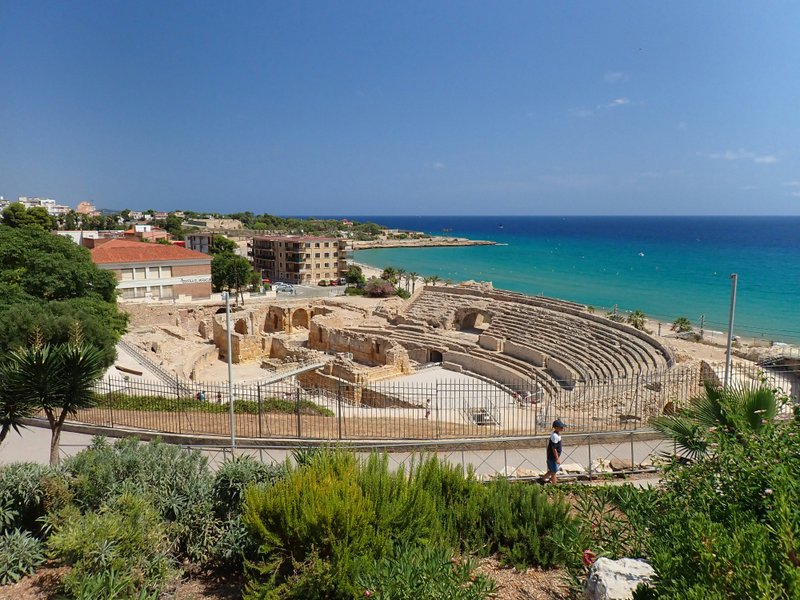
The Part Alta, the elevated old quarter, places you steps from the amphitheatre, Roman circus, and provincial forum. Hotels here occupy restored historic buildings, and the cathedral and archaeological promenade are immediately accessible on foot.

When is the ideal time to visit Tarragona?

+

Late spring and early autumn offer warm Mediterranean weather without summer crowds. September brings the Santa Tecla festival, when human tower builders and fire-runners fill the streets in Catalonia's most spectacular local celebration.

How does Tarragona's dining scene compare to Barcelona?

+

Tarragona's smaller scale means closer relationships between chefs and local producers, particularly the Serrallo fishermen. Romesco sauce was born here, and the emphasis remains on Catalan coastal traditions rather than international fusion — expect exceptional seafood rice dishes, salt-baked fish, and calçot onions in season.