Fourteen freestanding timber-and-glass cubes—called galpones—dot a forested hillside in Galicia's coastal countryside, each with floor-to-ceiling windows framing the surrounding woodland. The real draw remains chef Pepe Vieira's two-Michelin-starred restaurant, where the open dining room brings the landscape to the table. A wine cellar and proximity to Rías Baixas vineyards complete the picture for gastronomy-focused travelers.
Where to Stay
Three generations of the same family shaped this Swiss-designed villa in Gaxate before its conversion into an adults-only retreat. Eight rooms draw their names from architectural details and ancestral stories, while the spa program ventures beyond conventional offerings with Tibetan Sword Yoga and Tog Chöd alongside sound healing treatments. The restaurant channels Galician traditions through a seafood-focused menu, closing with regional classics like filloas and torrijas.
Where to Eat
On the O Grove peninsula, where cornfields slope toward the Arousa estuary's mussel beds, chef Javier Olleros has built a two-Michelin-starred restaurant around radical localism. His three tasting menus—Ronsel, Marexada, Descuberta—draw from an on-site vegetable garden and the surrounding Atlantic, yielding dishes like tempura Vilanova de Arousa onion with salted fish stock. A Green Star confirms the environmental conviction behind every plate.
Chef Xosé T. Cannas pursues what he calls 'la última cociña do mundo' — a radical return to Galician roots — at this two-Michelin-starred restaurant surrounded by woodland and gardens. The ritual begins with aperitifs outdoors before guests move through various spaces to a dining room framed by vast picture windows. Three tasting menus showcase exceptional local seafood, while the wine list traces the Camino de Santiago. Fourteen minimalist cube rooms allow overnight immersion.
A second-generation Michelin star burns bright at Solla, where Pepe Solla channels his father's 1980 legacy into fiercely contemporary Galician cooking. The tasting menus—Trasmallo and Piobardeira, named for fishing techniques—progress through poetically titled chapters: Fósiles, Mar, Huerta. Signature preparations like 'spider crab, spider crab' and 'sea urchin, codium' reveal an obsessive pursuit of pure, concentrated flavor from the Rías Baixas waters.
Bare stone walls frame an intimate dining room in Pontevedra's old quarter, where chef Iñaki Bretal builds his one-starred cuisine from fish hauled daily at the Ribeira auction. His technique filters Galician seafood through flavors gathered in Mexico, Japan, and Canada—unexpected fusions grounded in impeccable sourcing. The Currican and Palangre tasting menus shift with the catch, while sommelier Raquel Fernández assembles pairings that challenge and reward.
Inside an 18th-century stone building that once served as a royal hospital, chef Yayo Daporta channels the Rías Baixas through dishes built on mussels, cockles, barnacles, and razor clams. His roasted sea bass arrives with marine spaghetti and free-range chicken broth, while ingredients from nearby coastal waters and his own kitchen gardens ensure impeccable provenance. The meal closes with desserts honoring Albariño wine—a fitting tribute to Cambados terroir.
Named after a Luis Eduardo Aute song, Albanta Cocina de Leña occupies an architecturally awarded stone-and-wood building that frames its fire-focused cooking. The kitchen treats exceptional seafood and premium meat cuts—sold by weight—with deliberate restraint, letting subtle grill work amplify natural flavors rather than mask them. A daily menu and tasting option complement the à la carte.
A stone's throw from Praia da Lanzada, this family-run brasería centers on an open grill where Galician beef and fish fresh from the local auction meet flame and smoke. The couple who own the place live upstairs, lending an intimacy rare in restaurants of this caliber. Off-menu daily specials, driven by whatever arrives at market, reward those who ask.
The Rías Baixas estuary delivers its finest specimens to D'Berto, where an impressive shellfish selection anchors every meal. Pan-fried lobster and spider crab arrive as house classics, while seasonal cockles demand attention when available. The kitchen favors perfectly executed grills and robust stews over elaborate technique—an honest approach that lets exceptional raw materials speak. Attentive service matches the straightforward excellence on the plate.
From its terrace overlooking the Arousa estuary, diners watch the wooden poles marking Carril's legendary clam beds—the very shellfish that will arrive on their plates. This revived traditional seafood house pairs rustic-contemporary décor with an uncompromising focus on local catch, offered through a concise carte or the more expansive Arousa tasting menu. A kitchen table provides front-row seats to the honest, product-driven cooking.
Waves crash against the rocks just meters from the dining room at this Galician coastal address, where floor-to-ceiling windows frame the Atlantic in perpetual motion. The kitchen works with fish and shellfish pulled from these very waters—quality impossible to replicate elsewhere. A classically appointed interior gives way to an expansive terrace, the prime seat for experiencing the region's marine bounty at its freshest.
Frequently Asked Questions
What makes the Rías Baixas estuaries different from other Spanish coastal regions?
+
The rías are flooded river valleys that create unusually calm, deep inlets along an otherwise rugged Atlantic coast. This geography produces ideal conditions for shellfish cultivation — the region supplies most of Spain's mussels — and shelters beaches from heavy swells. The microclimate is distinctly Galician: greener and cooler than Mediterranean Spain, with frequent mists that locals call orballo.
Which towns serve as the best bases for exploring the Rías Baixas?
+
Pontevedra offers the most refined urban experience, with its car-free historic centre and strong restaurant scene. Cambados appeals to wine enthusiasts, positioned among Albariño vineyards with direct access to the Ría de Arousa. For beach proximity, Sanxenxo draws summer crowds to its waterfront, while Baiona — where Columbus's Pinta first landed with news of the Americas — combines historic significance with a working fishing port.
When is the best season to visit the Rías Baixas for seafood and wine?
+
Late spring through early autumn offers the warmest weather and calmest seas for island excursions. However, autumn coincides with the Albariño harvest and the Festa do Marisco seafood festival in O Grove, typically held in October. Winter remains mild by northern European standards and brings the prized percebes season, when barnacle harvesters brave rough waters along the exposed rocks.
Nearby Destinations
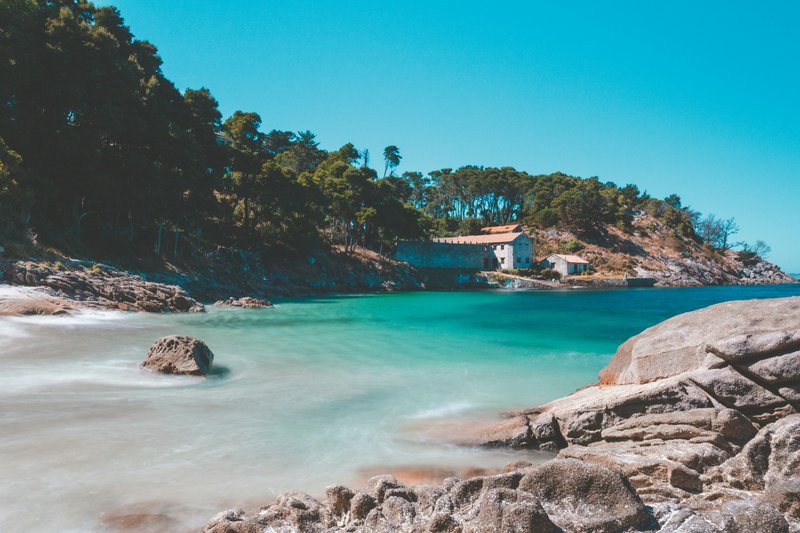
Explore SpainThe Rías Baixas stretch along Galicia's southwestern coast, where four dramatic estuaries — Muros, Arousa, Pontevedra, and Vigo — carve deep into the landscape. This is Spain's wettest corner, perpetually green, where granite hórreos stand guard over villages and bateas (mussel rafts) dot the calm waters. The town of Cambados serves as the spiritual capital of Albariño wine, its Fefiñanes square lined with noble stone buildings. Nearby, the island of A Toxa offers Belle Époque grandeur with its pine forests and historic chapel covered entirely in scallop shells.
Fishing remains central to daily life here. Ports like O Grove, Sanxenxo, and Baiona bring in percebes (gooseneck barnacles), navajas (razor clams), and the region's famous pulpo. The dining culture favors simplicity: seafood cooked a la plancha, empanadas filled with cockles, and ribeiro wine poured from white ceramic bowls. Pontevedra's pedestrianised old town provides an elegant base, while the Cíes Islands — accessible only by ferry — offer some of the Atlantic's most pristine beaches. The climate stays mild year-round, though autumn brings the vendimia harvest and a particular energy to the wine towns.