A converted La Mancha farmhouse spreading across a sporting estate complete with golf course, hunting grounds, and tennis courts—plus a private airstrip for those arriving by jet. The spa draws on the region's olive oil heritage for its signature treatments, while both indoor and outdoor pools, Turkish bath, and hot spring facilities ensure thorough relaxation. An on-site winery deepens the connection to this storied wine country.
Where to Stay
Where to Eat
Chef Fran Martínez anchors his two-Michelin-star cooking in Manchego tradition—gachamiga, ajopringue, mojete—while drawing Mediterranean light through daily fish deliveries from La Vila Joiosa, including lesser-known catches rarely seen inland. The elegant room centers on a glass-walled wine cellar where sommelier Cristina Díaz orchestrates pairings with scholarly precision. House-baked bread closes each course with quiet authority.
Chefs Javier Sanz and Juan Sahuquillo have built their one-star table around the terroir of La Manchuela, sourcing Manchega Machorra sheep, Celtibérico goat, and river-valley vegetables from small local producers. Fermentation drives much of the menu's depth, while three tasting formats—each with tableside finishes—allow diners to calibrate their immersion. Wine and natural-drink pairings complete a meal rooted firmly in place.
Chef Juan Monteagudo brings French technical precision to the traditional flavors of La Mancha at this one-Michelin-starred table in Albacete. His father, the artist Philippe André Georges Monteagudo, instilled a meticulous approach visible in every plate—from the celebrated cauliflower with Iberian pork fat to seasonal game menus. The contemporary open-kitchen setting suits diners seeking regional authenticity refined through classical technique.
Game defines the kitchen at this one-Michelin-star table southeast of Torre de Juan Abad, where chef José Antonio Medina honours Campo de Montiel traditions through partridge, wild boar, venison, and rabbit. The ritual unfolds deliberately: appetisers by an open fire, then at the bar under the chef's own hand, before guests settle into a sun-filled dining room overlooking La Mancha's plains for tasting menus rooted in the surrounding terroir.
Chef Miguel Ángel Expósito mines the culinary heritage of La Mancha at this one-Michelin-starred table within the exclusive La Caminera country estate. Wild rabbit à la royale, partridge raised on the property, and wild boar shank anchor three tasting menus—Tradición, Finca La Caminera, and Retama—that filter ancestral recipes through contemporary technique. Nordic-inspired interiors frame sweeping views of the Central Meseta's broom-studded plains.
Head chef Rubén Sánchez-Camacho pursues what he calls 'new La Mancha cooking' through creative mini dishes that honor regional traditions while pushing boundaries. His Historias del Guadiana menu traces the river's path from Castilla-La Mancha through Andalucía into Portugal's Alentejo and Algarve, yielding plates like garlic soup fritters alongside inventive mussel royale. Brother Ramón oversees sommelier duties, guiding diners through thoughtful pairings. One Michelin star.
Two local chefs helm this Michelin-recognized address in Casas-Ibáñez, offering guests a choice between two distinct culinary paths. The 'De Barra' menu delivers inventive contemporary tapas, while 'De Producto' takes a deeper approach, channeling La Mancha's terroir through modern technique. The creative format suits those seeking an authentic yet refined taste of the region's gastronomic identity.
Chef Pedro Rodríguez returned to his La Mancha roots after years in Madrid, bringing worldly technique to deeply regional cooking. The Michelin-recognized kitchen showcases local seasonality through dishes like migas with egg, almond-scented gachas, wild boar cheek, and venison tenderloin. Housed within Hotel Rural La Vida de Antes, the restaurant makes an ideal refueling stop after exploring Consuegra's iconic windmills.
Chef Teresa Gutiérrez, a recognized ambassador for La Mancha saffron, leads an all-female kitchen at this Bib Gourmand address in Villarrobledo. Her contemporary approach honors regional traditions through artisanal breads, local Manchego cheeses, and seasonal game, while two tasting menus—including an extended version—allow deeper exploration. The housemade desserts alone warrant the detour through Castilian wine country.
Half a century under the same family's care has made Granero a culinary landmark of La Mancha. Siblings run this Bib Gourmand address where traditional cooking meets contemporary fusion, served in a handsome dining room or on the patio-terrace. Sommelier Adán Israel champions regional wines with infectious enthusiasm, guiding guests through a tasting menu that showcases the area's gastronomic heritage.
Frequently Asked Questions
When is the best time to visit La Mancha?
+
Spring (April–May) and autumn (September–October) offer mild temperatures ideal for exploring. The saffron harvest in late October transforms the La Mancha plains into fields of purple crocus, while Toledo's Corpus Christi celebrations in June feature elaborate processions through the old quarter.
What is the easiest way to travel around La Mancha?
+
A rental car provides the greatest flexibility for reaching windmill villages and wine estates scattered across the plateau. High-speed AVE trains connect Madrid to Toledo in 30 minutes and to Cuenca in under an hour, making both cities accessible for day trips or longer stays.
Which towns should I prioritize beyond Toledo?
+
Cuenca's hanging houses and abstract art museum warrant at least one night. Almagro, with its 17th-century corral de comedias theater still staging Golden Age plays, offers a glimpse of Hapsburg Spain. Consuegra's twelve windmills and ruined castle make for a striking afternoon detour.
Nearby Destinations
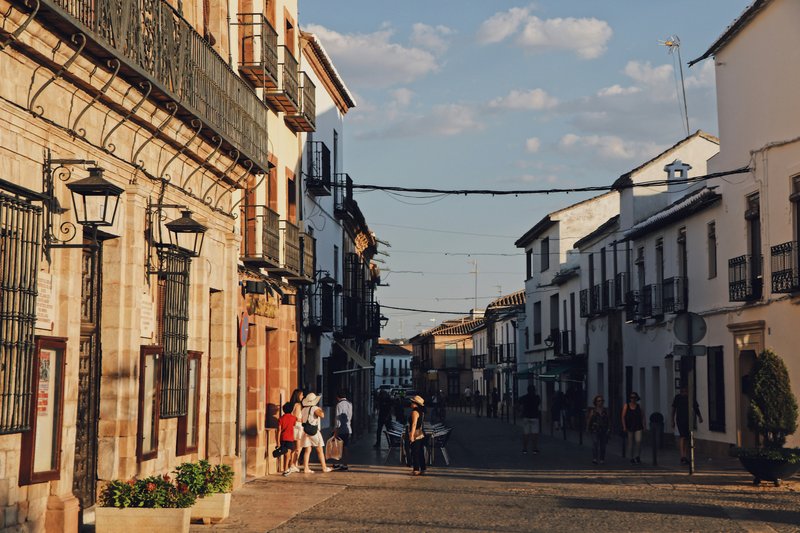
Explore SpainThe vast plateau of Castilla-La Mancha stretches south from Madrid, a land of endless horizons where the summer sun bleaches wheat fields to gold and medieval windmills still punctuate the skyline. This is Don Quixote country — the route from Toledo through Consuegra to Campo de Criptana traces the knight-errant's imaginary path past fortress towns and Renaissance plazas. Toledo itself, the ancient capital perched above the Tagus gorge, rewards visitors with labyrinthine streets where Christian, Jewish, and Moorish heritage intersect at every corner.
Beyond the monuments, La Mancha reveals itself through its table: manchego cheese aged in natural caves near Villamayor de Santiago, saffron harvested by hand each October in the Jiloca valley, and robust Tempranillo wines from the Valdepeñas and La Mancha denominations. Dining here tends toward hearty Castilian tradition — slow-braised game, migas with chorizo, pisto manchego — though a new generation of chefs in Almagro and Cuenca is reimagining these ingredients with contemporary precision.