


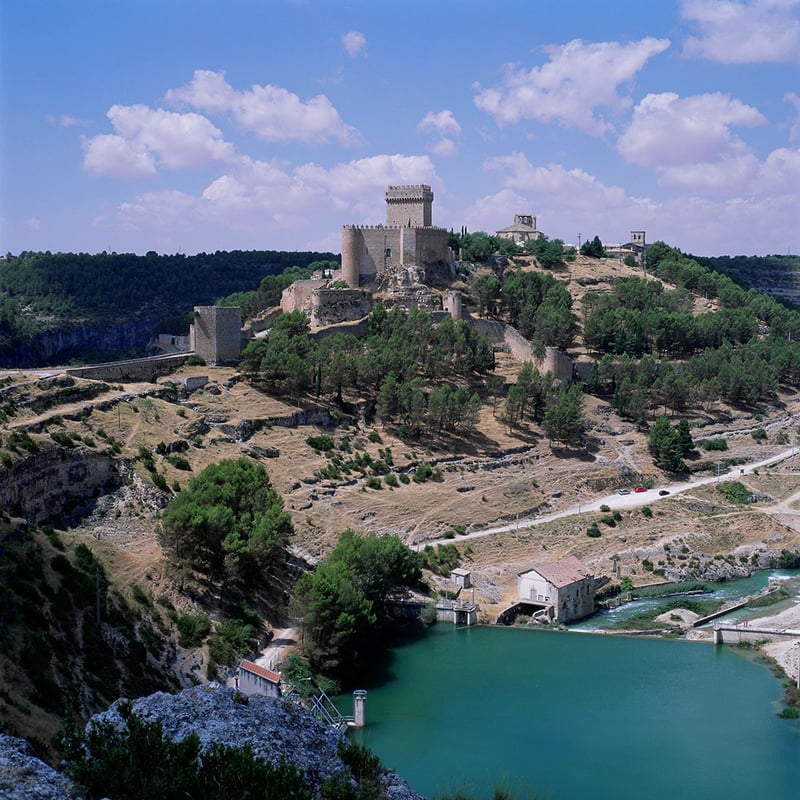
An eighth-century Moorish fortress crowns the hilltop above Alarcón, where the Júcar River curves dramatically around the medieval village below. The 2003 restoration preserved the castle's layered history while creating just fourteen intimate rooms within ancient stone walls. Downstairs, the restaurant draws on centuries of culinary tradition, its menu reflecting both Castilian roots and the Moorish legacy embedded in these very ramparts.
Cuenca Travel Guide: Best Hotels, Restaurants & Experiences 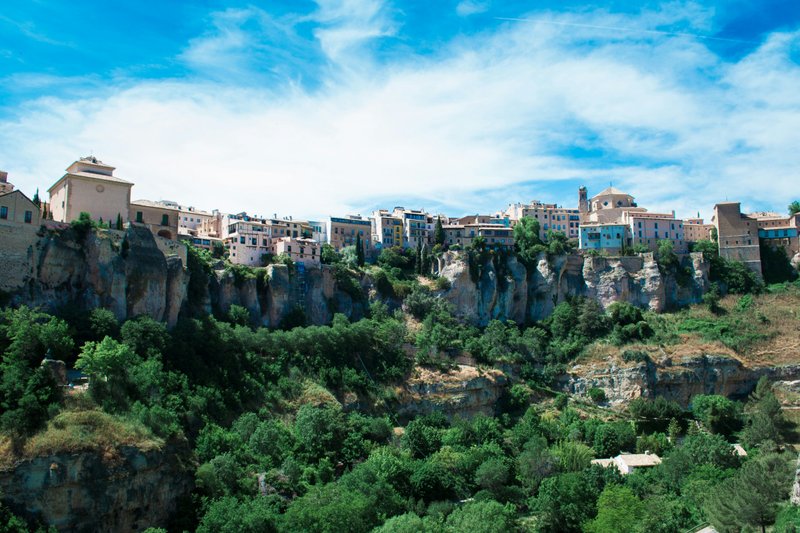
Explore Cuenca
Restaurants (4)
Where to Stay
Where to Eat

★ Michelin
Perched within one of Cuenca's legendary hanging houses, this one-Michelin-starred restaurant offers dramatic views over the Huécar gorge through windows framed by original wooden beams. Chef Jesús Segura's Cocinamos Cuenca menu channels ancestral traditions—trout, hare, pigeon, Judía de la Virgen beans—filtered through a fiercely contemporary lens. His obsession with local wild herbs preserves knowledge that might otherwise vanish.

Michelin Selected
A young couple has built a devoted following in the rugged mountains above Cuenca with their modern, seasonal cooking at Fuentelgato. Guests choose between two formats: the signature tasting menu or Carta Blanca, a more expansive option with varying courses and ingredients for those seeking deeper immersion. The Michelin Plate holder rewards the drive with precise, ingredient-driven cuisine.

Bib Gourmand
Housed within the owners' private residence in Tarancón's quiet chalet district, La Martina delivers Bib Gourmand-recognized cooking rooted in La Mancha traditions. The kitchen applies modern techniques to regional classics, served in a predominantly white dining room warmed by a fireplace or in the glass-fronted Salón de Cristal. An intimate, personal address for travelers exploring Cuenca province.

Bib Gourmand
Three generations of the same family have shaped this Bib Gourmand address near the Júcar river, where Cuenca's culinary traditions receive thoughtful modern treatment. The kitchen delivers regional signatures—copita de ajoarriero brightened with apricots, cod paired with pisto manchego, goat's cheese-stuffed pigs' trotters—in a fireplace-warmed dining room. Rural house rentals extend the stay for those drawn to the surrounding countryside.

Bib Gourmand
Chef Eduardo Albiol commands an open kitchen at Olea Comedor, where transparency defines both the cooking and the philosophy. His Bib Gourmand-recognized repertoire draws from Mediterranean, Asian, and South American traditions, reinterpreting classic preparations with global inflections. The bistronomic format delivers contemporary compositions at accessible prices—a proposition that rewards curious palates seeking substance over spectacle in this Castilian city.

Michelin Selected
Perched beside Cuenca's iconic casas colgadas, this Michelin Plate restaurant inhabits a former storehouse whose rough-hewn history belies its sleek, minimalist interior. The kitchen revisits traditional Cuencan recipes through a contemporary lens, offering two tasting menus—a concise four-course option midweek and a more elaborate six-course progression with wine pairings—that reward travelers seeking substance over spectacle.

Michelin Selected
Within the Leonor de Aquitania hotel, Raff San Pedro occupies the converted stables of a noble stone mansion—rough-hewn walls and vaulted ceilings framing a menu that reimagines Castilian tradition through a contemporary lens. The kitchen's set menus offer a structured exploration of the region's larder, earning Michelin recognition. A handsome setting for unhurried meals in Cuenca's old quarter.

Michelin Selected
Near the source of the Cuervo river, Sierra Alta occupies a rustic dining room where winter means crackling firewood and plates laden with the Serranía de Cuenca's wild harvest. The kitchen's commitment to terroir shows in seasonal game and foraged mushrooms, particularly a memorable revuelto of boletus and perrechicos. Michelin Plate recognition confirms the careful craft behind this mountain table.
Frequently Asked Questions
What makes the casas colgadas architecturally significant?
+
These hanging houses date to the 15th century, built directly into the cliff edge with cantilevered wooden balconies projecting over the Huécar gorge. Only three remain of what was once a larger row, and two now house the Museum of Spanish Abstract Art, displaying works by Chillida, Tàpies, and the El Paso group in a striking dialogue between medieval structure and 20th-century avant-garde.
Which neighborhoods should visitors explore beyond the old town?
+
Cross the San Pablo bridge — a 16th-century iron and wood footbridge spanning the gorge — to reach the San Pablo convent for commanding views back toward the hanging houses. The Barrio del Castillo, the highest point, offers ruins of the old fortress and panoramas across both river valleys. Down in the new town, the Carretería district has a more workaday character with traditional shops and morning markets.
When is the best time to visit Cuenca?
+
Spring brings wildflowers to the surrounding serranía and mild temperatures ideal for walking the gorge trails. Holy Week transforms the old town with solemn processions winding through medieval streets, while the Religious Music Week festival in late March fills churches and cloisters with sacred performances. Autumn offers golden light and fewer crowds, though winters can be bracing at this altitude of nearly a thousand meters.
Nearby Destinations
Explore Spain



Cuenca
Cuenca rises from the confluence of the Júcar and Huécar rivers, its medieval old town gripping a limestone promontory with architectural defiance. The casas colgadas — hanging houses — peer over the gorge with their wooden balconies suspended above the void, a sight that drew artists and writers here long before tourism arrived. Wander through the Plaza Mayor at dusk, when the cathedral's Anglo-Norman façade catches the last light, and you'll understand why UNESCO inscribed this entire fortified quarter as a World Heritage Site in 1996.
The dining scene reflects Castilla-La Mancha's pastoral traditions: morteruelo, a rich game pâté spread across crusty bread; zarajos, lamb intestines wound on vine shoots and grilled over oak; ajoarriero, salt cod pounded with garlic and oil. Restaurants occupy converted medieval cellars and Renaissance mansions along Calle Alfonso VIII and the narrow lanes descending toward the river. Below the old town, the modern city sprawls with more casual tapas bars where locals gather for vermouth and plates of Manchego aged in the region's caves.