


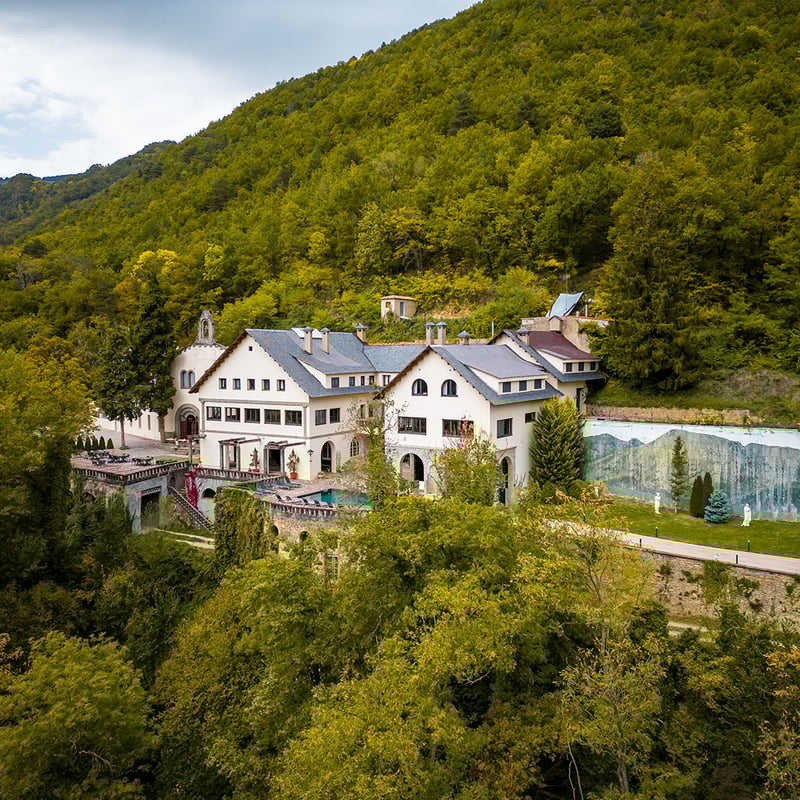
Victorian architecture rises unexpectedly from the Catalan Pyrenees forest—a legacy of the Batlló family's 19th-century residence. Twenty rooms face either a historic courtyard or mountain slopes, while the outdoor pool crowns an arched structure with sweeping valley views. Restaurant La Santa serves live-fire Catalan cooking beneath the vaulted ceilings of a former church, and surrounding national parks reward hikers and stargazers alike.
Catalan Pyrenees Travel Guide: Best Hotels, Restaurants & Experiences 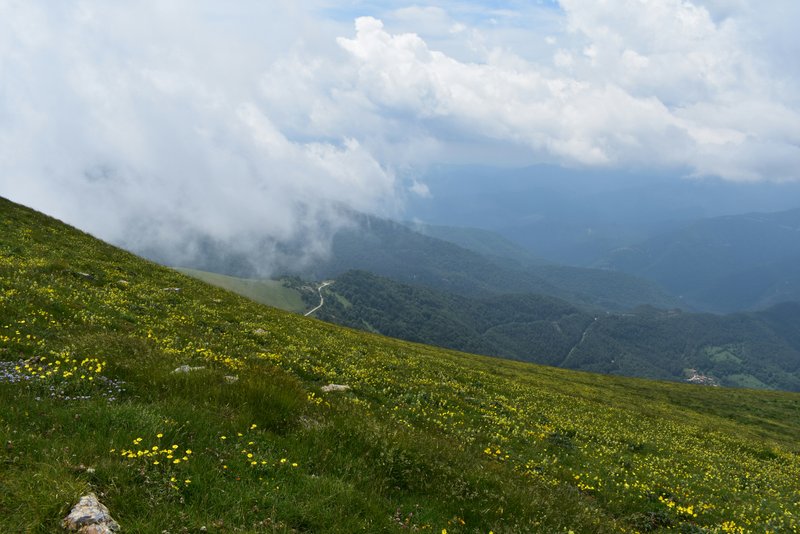
Explore Catalan Pyrenees
Hotels (1)
Restaurants (9)
Where to Stay
Where to Eat

★ Michelin
Chef Zaraida Cotonat and his son helm this one-Michelin-star table in Sort, where a zero-miles philosophy shapes every plate. Chicken from Torre d'Erbull, trout pulled from Tavascán's waters, Bruneta veal, Xisqueta lamb—ingredients travel mere kilometers before reaching the kitchen. The cooking threads Pyrenean tradition through modern technique, resulting in creative compositions grounded in sustainability and an unmistakable sense of terroir.

★ Michelin
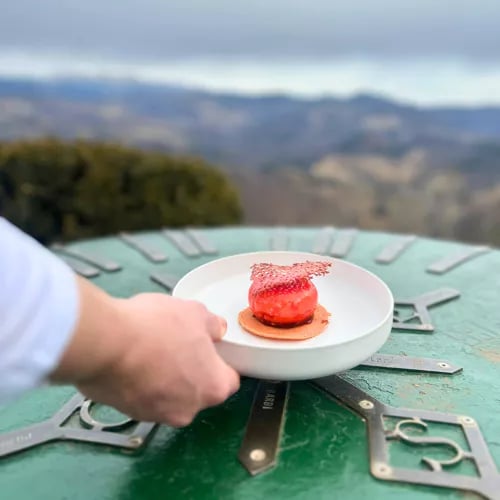
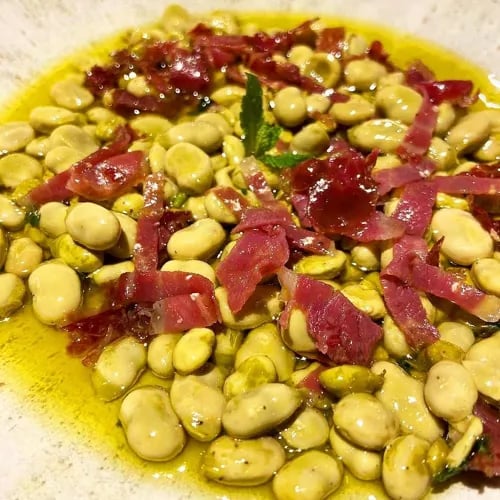
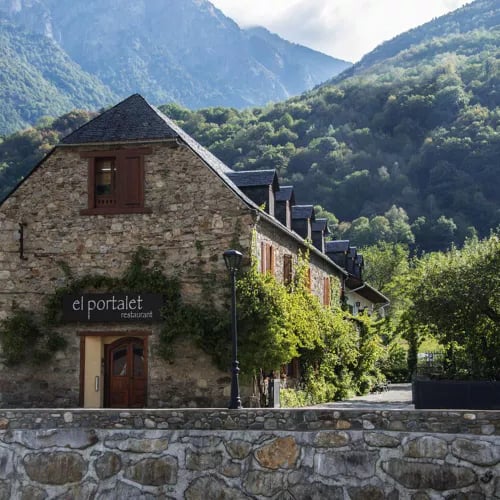
Francesc Rovira, trained under the legendary Santi Santamaria, commands the kitchen of this one-Michelin-starred address housed in a 1730 stone inn. Panoramic windows frame the Pyrenean peaks while plates arrive loaded with wild mushrooms, local charcuterie, and regional meats—creative-contemporary cooking that honors Catalan terroir with aromatic intensity. The tasting menu dedicated to his sister Dolors showcases his most personal work.

Michelin Selected
Behind a Japanese-inspired counter in Puigcerdà, chef Martín Comamala orchestrates every element alone—cooking, serving, narrating each course. His Mediterranean plates, inflected with techniques gathered across Latin American and European kitchens, feature fish bid on personally at Blanes auction and produce from nearby farms. Three tasting formats (eight, eleven, or full experience) shift constantly, making each visit singular.

Michelin Selected
Stags' heads crafted from unexpected materials watch over this intimate Vielha dining room, where mountain aesthetics meet contemporary gastronomy. The kitchen excels at rice preparations and sharing plates, though the certified Palamós prawn tasting menu draws particular devotion. Seasonal specials—wild mushrooms in autumn, for instance—and two lengths of Bistronómico tasting menu reward repeat visits throughout the year.

Michelin Selected
Seasonal Catalan cooking takes a creative turn at this Llívia address, where mountain ingredients anchor a menu built on local terroir. The kitchen's rice dishes draw from Pyrenean tradition, while spring brings creamy black morels with green asparagus and brioche. Autumn sees game appear alongside signatures like veal tartare topped with truffled fried egg—robust plates for appetites sharpened by highland air.

Bib Gourmand
Behind a modest façade in La Pobla de Segur, chefs Clàudia and Jaime have built a reputation for what locals call Pallaresa nouvelle cuisine—Pyrenean tradition refracted through contemporary technique. Their Bib Gourmand kitchen turns out playful signatures like organic chicken magnum with kimchi mayonnaise and trout belly dressed in its own roe, the menu shifting with seasonal mountain produce. Counter seats facing the open kitchen offer the best view of their precise, unhurried craft.

Michelin Selected
Lamb raised on the family's own Ripollès farm anchors the menu at this Michelin Plate restaurant, set within Hostal La Placeta in Camprodon's historic quarter. The kitchen honours Catalan mountain traditions while its Simbiosi tasting menu explores high-altitude ingredients with precision. A compelling address for travellers seeking authentic regional cooking in the Pyrenean foothills.

Michelin Selected
A Michelin Plate holder in the Pyrenean village of Setcases, Can Jepet has been serving traditional Catalan mountain fare since 1959. The family-run dining room maintains a rustic warmth where grilled meats, robust game dishes, and house-made sausages take center stage. Seasonal visitors should time their trip for calçots—the prized local green onions, charred and served ceremonially.

Michelin Selected
Inside a stone house warmed by an open fire and decorated with vintage skis and snowshoes, El Niu serves traditional Pyrenean cooking inflected with French technique. The female owner recites daily specials tableside—perhaps leek pudding dressed in cep mushroom and black truffle sauce, or pig trotter stew braised with snails. A Michelin Plate holder, this mountain address rewards travelers seeking rustic authenticity over polish.

Michelin Selected
Stone walls and warm timber frame a glass-enclosed wine cellar at this Michelin Plate address in Bossòst, where modern cuisine draws heavily on seasonal Pyrenean produce. The kitchen's technical range shows in dishes like flame-grilled aubergine ravioli layered with porcini, black garlic, cured egg yolk, and confit baby goat neck—a signature that rewards adventurous palates. Two tasting menus and à la carte options suit both brief stopovers and leisurely mountain evenings.
Frequently Asked Questions
When is the best season to visit the Catalan Pyrenees?
+
Winter months from December through March offer optimal skiing at Baqueira-Beret and other resorts. Summer and early autumn suit hiking, with September bringing the celebrated mushroom foraging season when local restaurants feature wild boletus and chanterelles across their menus.
What local dishes define Catalan Pyrenean cuisine?
+
Olla aranesa, a slow-cooked stew of meats and vegetables, remains the signature Val d'Aran dish. Trinxat combines cabbage with potato and pork, while escudella provides another hearty mountain broth. Game meats, river trout, and sheep's milk cheeses appear throughout the region's menus.
How accessible are the Catalan Pyrenees from Barcelona?
+
The drive from Barcelona takes approximately three to four hours via the C-16 through the Cadí Tunnel. The Vielha Tunnel provides access to the Val d'Aran. No direct train service reaches the high valleys, making car travel the most practical option for exploring multiple villages.
Nearby Destinations
Explore Spain



Catalan Pyrenees
The valleys of the Catalan Pyrenees carve through some of Iberia's most dramatic alpine terrain, where medieval villages cling to slopes beneath peaks exceeding 3,000 metres. The Val d'Aran maintains its own Occitan language and culinary identity, with hearty olla aranesa stew appearing on tables from Vielha to Arties. Baqueira-Beret draws winter crowds to Spain's most prestigious ski runs, while summer brings hikers to the Aigüestortes i Estany de Sant Maurici National Park and its glacial lakes.
Dining here reflects mountain pragmatism elevated by Catalan creativity. Wood-fired grills dominate restaurant kitchens, turning out lamb from highland pastures and wild game from the surrounding forests. The region's isolation preserved traditions now prized: artisanal cheeses from small dairy cooperatives, trout pulled from rushing streams, and foraged mushrooms that appear across autumn menus. In villages like Taüll, Romanesque churches with UNESCO-listed frescoes stand within walking distance of restaurants serving contemporary interpretations of Pyrenean cuisine.