Skip to content

Caceres

Where to Stay

1. Atrio Restaurante Hotel

3 Michelin Keys· Relais & Châteaux

Behind the medieval stone walls of Cáceres, architects Tuñón and Mansilla carved a strikingly modern hotel into ancient fabric—25 minimalist rooms in pure white, punctuated by original Warhols and Baselitz canvases. The three-Michelin-starred restaurant from chefs Polo and Pérez showcases Extremaduran ingredients—razor clams with Ibérico ham, truffle pâté en croûte—while a legendary cellar stocks vertical collections of Pétrus and Latour.

2. Atrio Cáceres

Architects Tuñón y Albornoz stripped the 15th-century Palacio Paredes Saavedra to its bones—vaulted ceilings, stone arches—then lined it with pale wood and polished concrete, creating interiors that glow with restrained modernism. Just eleven minimalist suites occupy the upper floors, while below, an illuminated courtyard leads to Atrio, the city's three-Michelin-starred restaurant. A small pool and wellness center complete this architectural statement piece.

Where to Eat

1. Atrio

★★★ Michelin· Relais & Châteaux

Three Michelin stars crown this architectural marvel where prize-winning designers Tuñón Álvarez and Moreno Mansilla carved contemporary lines into Cáceres's medieval stone. Chef Toño Pérez, native to this Extremaduran city, orchestrates a single extensive tasting menu around his celebrated 'happy pig'—Iberian pork rendered as fat, ham, dewlap, loin, and jus. The legendary cellar, stocked with historic vintages, completes an essential pilgrimage for serious gastronomes.

2. Javier Martín

Michelin Selected

Javier and Esther have built their life's work in the Nuevo Cáceres neighborhood, where two tasting menus—Origen and Experiencia—showcase the couple's commitment to seasonal, locally sourced cooking. The kitchen excels with dishes like carpaccio of Iberian ham layered with foie gras and tierra de Ibores, or red partridge stuffed with Pedro Ximénez, truffles, and foie gras. Creative cuisine with deep Extremaduran roots.

3. Tupío

Michelin Selected

Chef Guti Moreno forages, hunts, and harvests from the gardens surrounding Finca La Desa to compose his two tasting menus—Tupío and Gran Tupío—where Extremaduran tradition meets restrained modernity. Cod roe 'à la importancia' and wild boar ribs with smoked piparra peppers showcase his command of local terroir. The name itself, from Castúo dialect, means 'satiated'—a fitting promise for diners seeking substance over spectacle.

4. Borona Bistró

Michelin Selected

Named for the traditional corn bread of northern Spain, this intimate address in central Cáceres showcases Extremaduran cuisine through a contemporary lens. Chef Víctor Corchado anchors his menu with a signature fried suckling pig's ear paired with white prawn and lime, its accompaniments shifting with the seasons. The Algarabía tasting menu offers two wine journeys—regional or peninsular—while Rocío Rey ensures warm, precise service throughout.

5. Madruelo

Michelin Selected

A 19th-century building steps from the Plaza Mayor houses this Michelin Plate restaurant dedicated to Extremadura's pastoral traditions. The kitchen turns out regional classics—morcilla, local sausages, slow-cooked Iberian pork stew—alongside rice dishes served for two and several preparations of cod. For travelers seeking an unvarnished taste of the province's culinary heritage, Madruelo delivers with straightforward conviction.

6. Miga

Michelin Selected

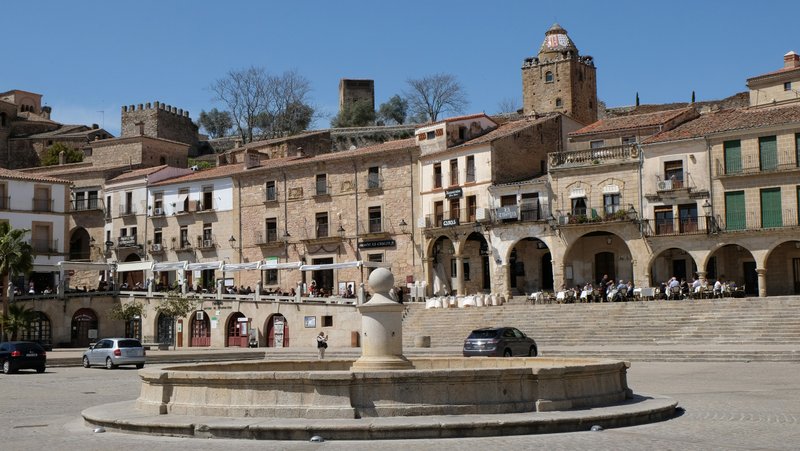
Beside the Arco de la Estrella, the ancient gateway to Cáceres's medieval quarter, Miga occupies a renovated townhouse overlooking Plaza Mayor. The contemporary kitchen honours Extremaduran roots through dishes like migas del maestro—crisp breadcrumbs with pork belly and free-range egg—alongside local Torta del Casar cheese and grilled Retinta beef tenderloin. A tasting menu, Las Niñas, pays homage to the owners' father, celebrated chef Eustaquio Blanco.

7. Torre de Sande

Michelin Selected

A stone's throw from three-Michelin-starred Atrio, Torre de Sande occupies a fifteenth-century mansion where the cooking takes a decidedly relaxed turn. The à la carte and tasting menus showcase Extremaduran essentials—Iberian charcuterie, aged local cheeses, slow-cooked stews, char-grilled meats—punctuated by occasional fusion flourishes. When temperatures allow, the courtyard terrace becomes the preferred setting for unhurried regional feasting.

Frequently Asked Questions

Why was Cáceres designated a UNESCO World Heritage Site?

+

The Ciudad Monumental earned UNESCO status in 1986 for its remarkable concentration of medieval and Renaissance architecture. The walled quarter contains over thirty towers, palaces, and noble houses spanning the 12th to 16th centuries, preserved with unusual completeness due to the city's relative isolation after Spain's colonial era ended.

What is Torta del Casar and where can visitors try it?

+

Torta del Casar is a raw sheep's milk cheese from the nearby town of Casar de Cáceres with a distinctive creamy, almost liquid interior and intensely tangy flavor. The cheese has Protected Designation of Origin status and appears on menus throughout the city, typically served at room temperature with bread to scoop the soft center.

What is the best area to stay for exploring the historic quarter?

+

Properties within or immediately adjacent to the Ciudad Monumental offer direct access to the medieval streets and evening atmosphere. Several converted palaces operate as intimate hotels, allowing guests to experience the old town after day-trippers depart. The Plaza Mayor area provides convenient access while remaining steps from both historic sites and contemporary restaurants.