


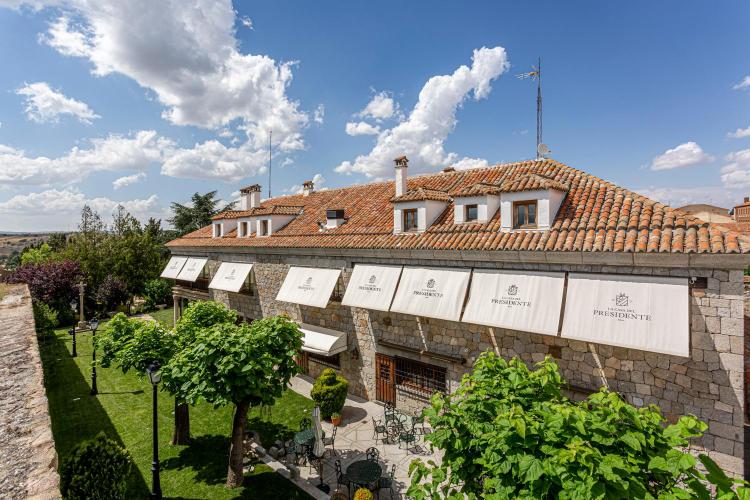
Spain's first democratically elected Prime Minister built this residence against Ávila's medieval ramparts in the 1970s, and his original office—complete with secret escape door—now serves as the lobby. The ten-room boutique property retains its distinguished country-house character, with select suites overlooking the UNESCO-listed walls. Castilian cuisine anchors the restaurant Caleña, while manicured gardens frame a seasonal outdoor pool.
Ávila Travel Guide: Best Hotels, Restaurants & Experiences 
Explore Avila
Hotels (1)
Restaurants (4)
Where to Stay
Where to Eat

★ Michelin· Green Star ●
Chef Carlos Casillas returned to his native Ávila to convert a two-century-old flour warehouse into a one-Michelin-star dining room overlooking the city's medieval ramparts across the River Adaja. His zero-waste kitchen sources from local small-scale producers, shaping two tasting menus—Querer and Quererse—that trace seasonal shifts in the Castilian landscape through naturalistic, minimalist plates. A Green Star underscores the ecological commitment.

Michelin Selected
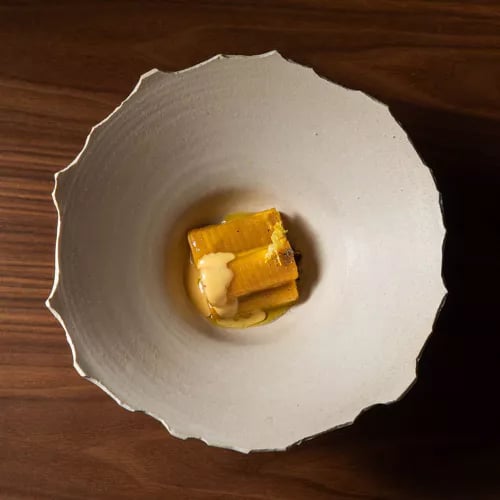
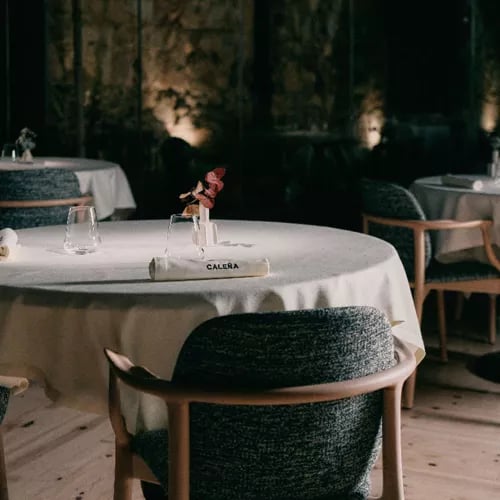
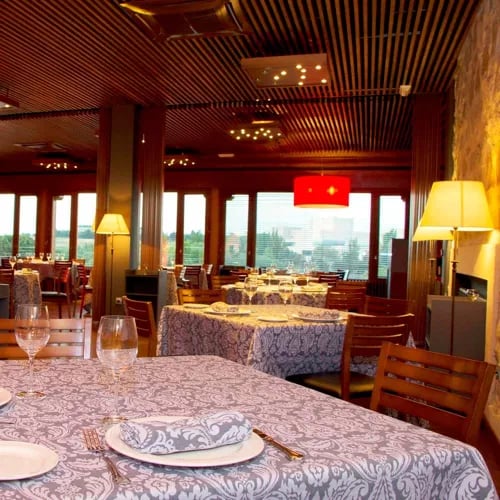
Within a glass-walled garden pavilion pressed against Ávila's ancient ramparts, chef Diego Sanz orchestrates a tasting menu rooted in Castilian tradition yet executed with contemporary precision. The setting—once home to Spain's first democratically elected president—adds gravitas to dishes like Sahagún leeks with cured sardine and garum vinaigrette. Escabeches, slow-cooked stews, and impeccable grilled meats arrive with tableside flourishes, each course a meditation on local terroir.

Michelin Selected
A converted wheat warehouse just beyond Ávila's ramparts, El Almacén frames the city's medieval fortifications through its windows while a family kitchen turns out deeply traditional Castilian cooking. The daily-changing menu carries a personal touch—dishes prepared by Isidora—alongside a signature dripping almond cake that requires advance ordering. Michelin-recognized comfort food with an unbeatable panorama.

Michelin Selected
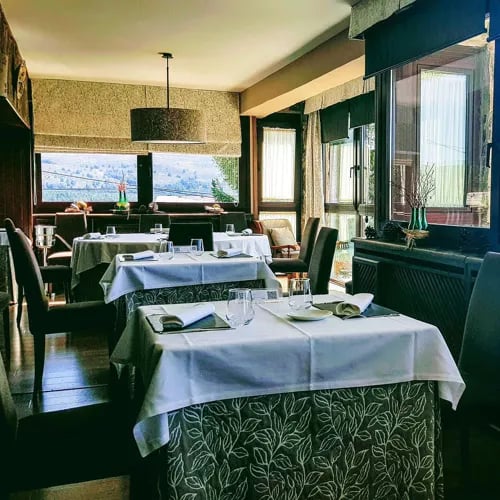
Floor-to-ceiling windows frame the rugged Sierra de Gredos, turning every meal into a contemplation of Castilian wilderness. The kitchen honors regional tradition while applying contemporary refinement—patatas revolconas arrive richly spiced with La Vera paprika and shards of crisp pork crackling, while El Barco white beans simmer alongside house-cured sacramentos. À la carte or tasting menu formats accommodate both leisurely lunches and extended evening explorations.
Frequently Asked Questions
What is the best area to stay in Ávila?
+
The intramuros (within the walls) places you steps from the cathedral, Plaza del Mercado Chico, and the finest restaurants. For panoramic views, accommodations along the eastern ramparts offer direct wall access and sunset vistas toward Cuatro Postes.
What local dishes should I try in Ávila?
+
Chuletón de Ávila — thick-cut steaks from local Avileña-Negra Ibérica cattle — defines the city's tables. Judías del Barco (white beans from nearby Barco de Ávila) and yemas de Santa Teresa, the egg-yolk sweets created by local convents, complete the essential tasting.
When is the best time to visit Ávila?
+
Late spring (May-June) and early autumn (September-October) bring mild temperatures ideal for walking the walls. Summer evenings are pleasant despite hot days, while winter offers atmospheric mists and fewer visitors, though temperatures drop sharply on the exposed meseta.
Nearby Destinations
Explore Spain



Avila
Ávila's medieval walls — the most complete in Spain — encircle a city frozen in amber. Within this granite perimeter, the old quarter unfolds around Plaza del Mercado Chico, where locals gather beneath the Romanesque bell tower of San Juan. The parador occupies a sixteenth-century palace abutting the walls themselves, its restaurant serving cochinillo and chuletón de Ávila, the region's prized beef from cattle raised on the surrounding meseta.
Beyond the walls, the Cuatro Postes viewpoint offers the definitive panorama at sunset, when the ramparts turn gold against the Sierra de Gredos. The city's culinary identity runs to hearty Castilian fare: judías del Barco, yemas de Santa Teresa, and roasted meats from wood-fired ovens. Dining here tends toward stone-walled asadores and family-run establishments where recipes have passed through generations. The café scene clusters around the cathedral square, where morning light filters through narrow calles onto terrace tables.