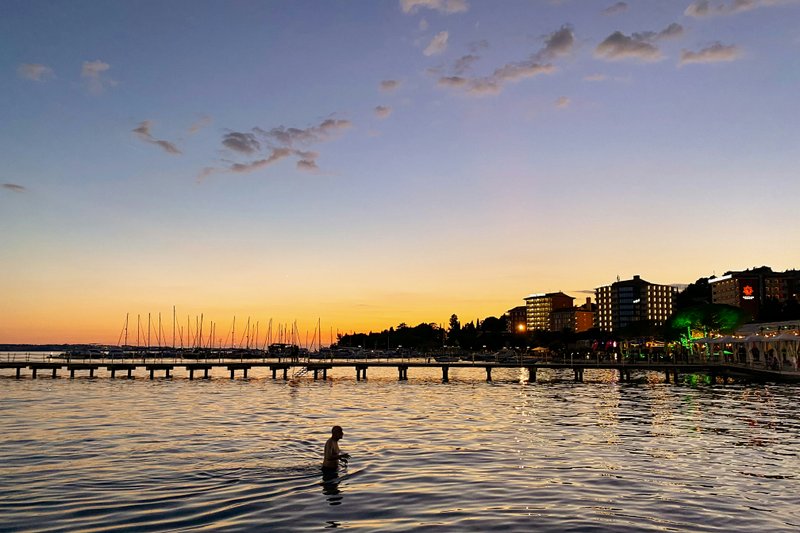
Chef Filip Matjaž personally welcomes diners to his Michelin-starred table before returning to the kitchen to compose an eight-course tasting menu rooted in Slovenian terroir. The approach is minimalist yet imaginative—traditional regional recipes reimagined through contemporary technique, using almost exclusively local ingredients. From the designer dining room in muted greys or the terrace, sweeping views across Piran bay complete the picture.
Fresh herbs in oversized terracotta vases scent the entrance to this intimate Piran address, steps from the Adriatic. The kitchen applies modern technique to local Mediterranean foundations—lobster ravioli with delicate precision, sea bass timed to the second. A cellar of over four hundred wines, selected expressly for pairing, rewards those inclined to linger. Creative cuisine served with quiet confidence.
Named for Sophia Loren, this evening-only restaurant within the Kempinski Palace channels Mediterranean elegance through an Istrian-Italian-French culinary lens. Adriatic seafood dominates the menu—shellfish arrives impeccably fresh, while the turbot steak with prawns, leek, and chive-infused olive oil demonstrates the kitchen's refined technique. Truffle preparations and select meat dishes round out an offering that rewards unhurried, occasion-worthy dining.
An open grill dominates the kitchen at Hiša Torkla, turning out Tomahawk steaks, picanha, and chops from both local and international sources with practiced precision. The hillside setting fills the dining room with natural light through expansive windows, while seasonal Istrian ingredients—asparagus paired with fuži pasta and scampi, truffles folded into silken mashed potatoes—anchor a menu built on regional tradition. A minimalist second room offers intimate winter dinners.
Away from Koper's tourist bustle, Kogo pairs an elegant wine bar with a designer-accented dining room where traditional Slovenian cooking takes center stage. The kitchen assembles generous boards of regional and international charcuterie and cheese before turning to hearty meat-focused plates, with seafood options alongside. A tablet-navigated wine list runs deep, detailed enough to satisfy serious oenophiles seeking local and continental bottles.
Picture windows frame the marina at this Izola dining room, where the kitchen works directly with the day's catch—menus shift according to what fishermen bring in. Rock fish preparations and house-made pastas dressed in inventive sauces anchor a repertoire rooted in Adriatic tradition. The Michelin Plate recognition confirms consistent, carefully executed cooking that rewards travelers seeking authentic coastal flavors over polished scenery.
Along Portorož's seafront promenade, Rizibizi occupies a wood-paneled dining room with a terrace positioned directly above the Adriatic. The kitchen builds its Mediterranean repertoire around pristine fish and meat, with seasonal truffles appearing in inspired combinations—paired with pumpkin and prawns, or enriching a preparation of sea bass. A thoughtfully assembled wine list rewards exploration, while tasting menus offer the most complete picture of the chef's range.
Just outside Koper's centre, this bright, airy dining room draws its strength from the daily fish market haul. Chef Vjekoslav builds colourful, generously sized plates around the freshest catch, while Jan orchestrates the room with quiet confidence. The wine list tilts toward Slovenian labels but ventures into Italian, Croatian, and French territory—champagne included. A Michelin Plate holder suited to unhurried coastal lunches.
Frequently Asked Questions
What makes Piran different from other Adriatic coastal towns?
+
Piran preserves its medieval Venetian street plan almost intact, with no modern high-rises permitted within the old town. The town sits on a narrow peninsula, creating water views from nearly every angle, and its Tartini Square remains a functioning public space rather than a tourist set piece.
When is the best season to visit the Slovenian Coast?
+
May through June and September through October offer the ideal balance — warm enough for swimming, uncrowded, and with restaurants operating at full capacity. July and August bring peak crowds to Portorož especially. Winter sees many establishments close, though Piran maintains year-round life.
Is it possible to visit the Sečovlje salt pans?
+
Yes. The Sečovlje Salina Nature Park opens to visitors and maintains working salt fields using traditional methods. The landscape of channels and evaporation pools attracts significant birdlife. A museum section explains centuries of salt production that once made this coast strategically valuable.
Slovenia's slender Adriatic coastline packs remarkable density into its 46 kilometers. Piran commands attention with its campanile modeled on St. Mark's, narrow streets threading between salt-weathered palazzos, and Tartinijev trg opening directly onto the harbor. Izola retains its fishing village cadence — nets drying on the quay, family-run konobas serving the morning catch. Portorož offers a different register: thermal spas, seaside promenades, and a casino culture dating to Austro-Hungarian resort days.
The culinary identity here owes everything to the sea and the Karst hinterland. Expect branzino prepared simply, istrian pasta shapes dressed with white truffles in season, and Teran wine from the iron-rich terra rossa soil just inland. Small producers dominate; you'll find olive oil pressed from local Istrska belica olives and salt still harvested by hand at Sečovlje. Reservations matter in summer, less so during the shoulder months when Adriatic light turns golden and the coast belongs to locals again.